介词搭配
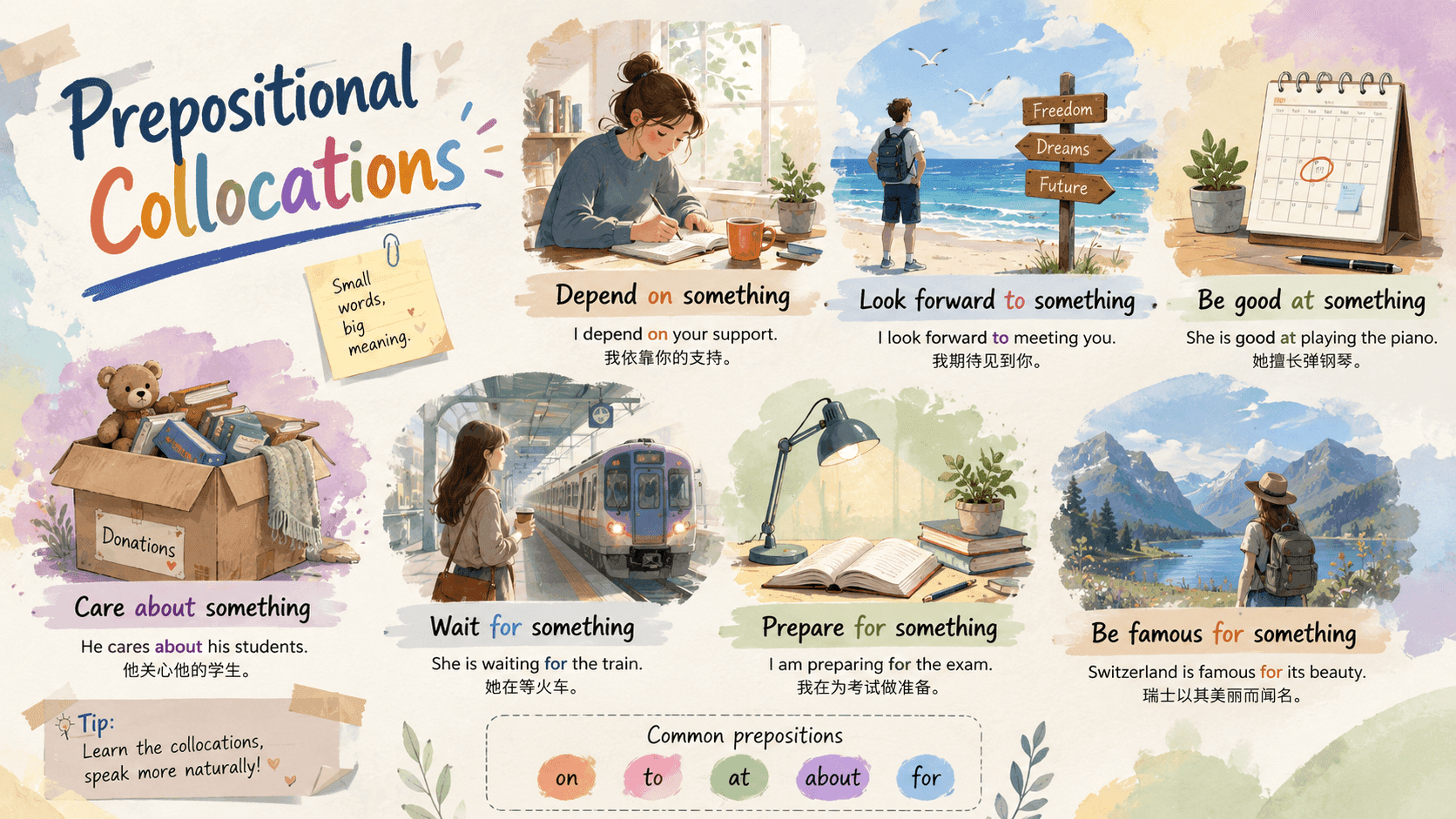
如果说动词搭配为英语表达提供了基础骨架,那么介词搭配就是细致入微的关节和润滑剂——只要用错一个介词,整句话的地道程度和准确性就会大打折扣。很多英语学习者即使学了多年,依旧会写出像“interested about”(应为 interested in)、“depend to”(应为 depend on)、“responsible of”(应为 responsible for)这些常见错误,本质原因在于习惯性地用母语中文的思维去套用英文表达,从而忽视了英语本身的固定用法和习惯搭配。
介词搭配在英语中是需要整体记忆、靠大量输入和练习习得的“硬规则”,而不是可以单靠字面意思或中文逻辑推导得出。例如,“be good at”(擅长)、“wait for”(等待)、“interested in”(对…感兴趣)、“rely on”(依赖)、“approve of”(赞同)等,都是在真实场景和语境下反复出现的惯用搭配。掌握了常见的动词+介词、形容词+介词搭配,不仅能有效避免“中式英语”的直译错误,还能让表达更加自然、流畅,提升写作和口语的地道程度。建议大家每学一个新搭配,就尝试造句,并关注它在英语原文和语境中的真实用法,这样才能真正内化和灵活运用这些看似琐碎但极其关键的表达细节。
动词 + 介词搭配
介词搭配是英语表达中最难掌握但又最重要的部分之一,很多看似简单的动词,其实与特定介词连用时才能表达准确含义。掌握这些搭配不但能避免常见错误,还能让你的英语表达更加地道。下面按照常见的介词进行归类,并补充了一些容易混淆和高频实用的动词短语。
搭配介词 in 的动词
in 后面通常接某个领域、状态、活动,或“在……之中”的情境:
讲解:比如“believe in”可表示“信仰某事物”,而不是简单地“believe something”。这样的区别通常需要语境记忆。
搭配介词 of 的动词
of 常跟在表达“关于/从……来的”、“属于……”等意思的动词后面:
讲解:“take care of” 不能说成 “take care for”;选错介词会变成明显“中式英语”。
搭配介词 on 的动词
on 后面常表示某个具体话题、依赖、影响、持续动作等:
讲解:“work on” 不等于 “work in”,语义存在巨大区别。比如“work in a hospital”(在医院工作)和“work on a project”(做某项工作/项目)。
搭配介词 for / with / to / about 的动词
温馨提示: 人们经常会将这些短语随意换介词,导致意思完全不同,严重时甚至引起误解。建议结合例句和真实语境反复输入和输出,逐渐形成“语感”。如果你对某个搭配不确定时,建议查权威词典(如牛津、朗文),或输入例句到 Google 检索其真实用法和高频搭配。
形容词 + 介词搭配
英语中“形容词 + 介词”结构非常常见,但它们的搭配通常无法直接从中文推出,且具有高度的固定性。换句话说,哪种形容词要用哪种介词常常需要连同常用搭配方式和例句一起整体记忆。下面对常见的形容词+介词高频结构,按照介词类别详细整理归纳。
形容词 + of
表示“在……方面”。常用于描述兴趣、参与、经验、技能等:
| 结构 | 中文释义 | 英文例句 | 中文例句 |
|---|---|---|---|
| proud of | 为……自豪 | I'm proud of what you've achieved. | 我为你的成就感到自豪。 |
| aware of | 意识到 | Are you aware of the deadline? | 你知道截止日期吗? |
| capable of | 有能力做 | You are capable of doing better. | 你有能力做得更好。 |
| afraid of | 害怕 | She is afraid of public speaking. | 她害怕公开演讲。 |
| fond of | 喜欢 | He's fond of hiking. | 他喜欢徒步。 |
| tired of | 厌倦 | I'm tired of excuses. | 我厌倦了一再的借口。 |
| ashamed of | 感到羞耻 | He was ashamed of his behavior. | 他为自己的行为感到羞愧。 |
| jealous of | 嫉妒 | She was jealous of her classmate's success. | 她嫉妒同学的成功。 |
形容词 + with / for / about / to
这些介词和不同形容词搭配后表达的人际关系、情感态度或状态各有特点:
形容词与介词的错误搭配很容易导致“中式英语”或表达失当。如“interested about”是错误搭配,必须说“interested in”;又如“responsible of”不对,应该使用“responsible for”。建议遇到不确定的搭配,多查英英词典例句来验证。
对话示例
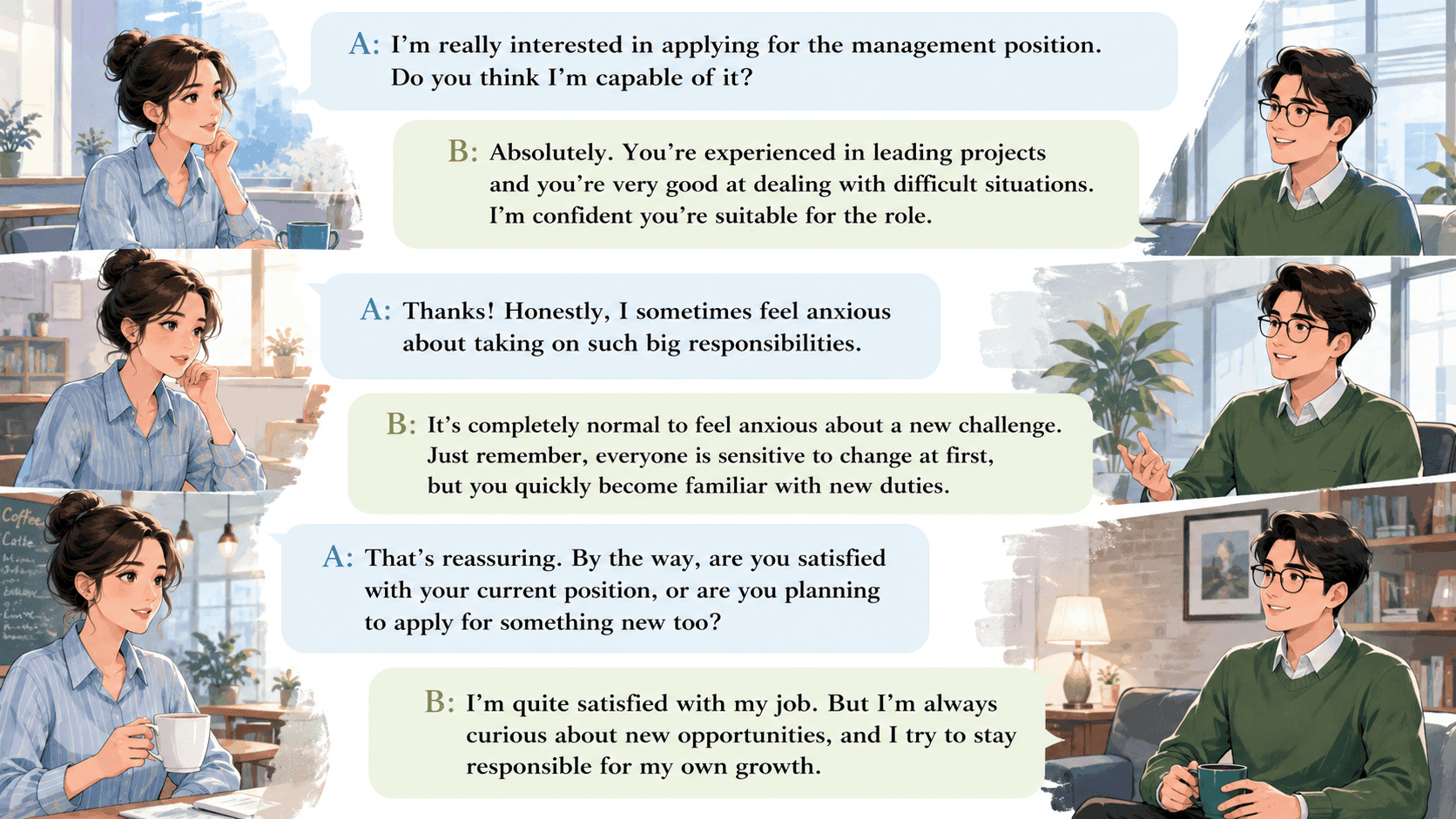
A:I'm really interested in applying for the management position. Do you think I'm capable of it?
我真的很想申请那个管理职位。你觉得我有能力胜任吗?
B:Absolutely. You're experienced in leading projects and you're very good at dealing with difficult situations. I'm confident you're suitable for the role.
当然。你在主导项目方面很有经验,而且非常擅长应对困难局面。我相信你适合这个职位。
A:Thanks! Honestly, I sometimes feel anxious about taking on such big responsibilities.
谢谢你!其实,有时候我对承担这么大的责任感到有些焦虑。
B:It's completely normal to feel anxious about a new challenge. Just remember, everyone is sensitive to change at first, but you quickly become familiar with new duties.
面对新挑战感到焦虑很正常。别忘了,每个人一开始对变化都很敏感,但你很快就会熟悉新职责的。
A:That's reassuring. By the way, are you satisfied with your current position, or are you planning to apply for something new too?
你这么说让我安心了。对了,你对你现在的职位满意吗,还是也想申请其他岗位?
B:I'm quite satisfied with my job. But I'm always curious about new opportunities, and I try to stay responsible for my own growth.
我对现在的工作挺满意的。但我总是对新机会充满好奇,也会尽量对自己的成长负责。
常见用法
- be good at 不是介词+形容词结构,但常与上方内容混淆。例如:She is good at mathematics.
- 有些形容词支持多个介词搭配,语义略微有区别:familiar with(对……熟悉),familiar to(为某人熟悉的对象)。
常见错误警示
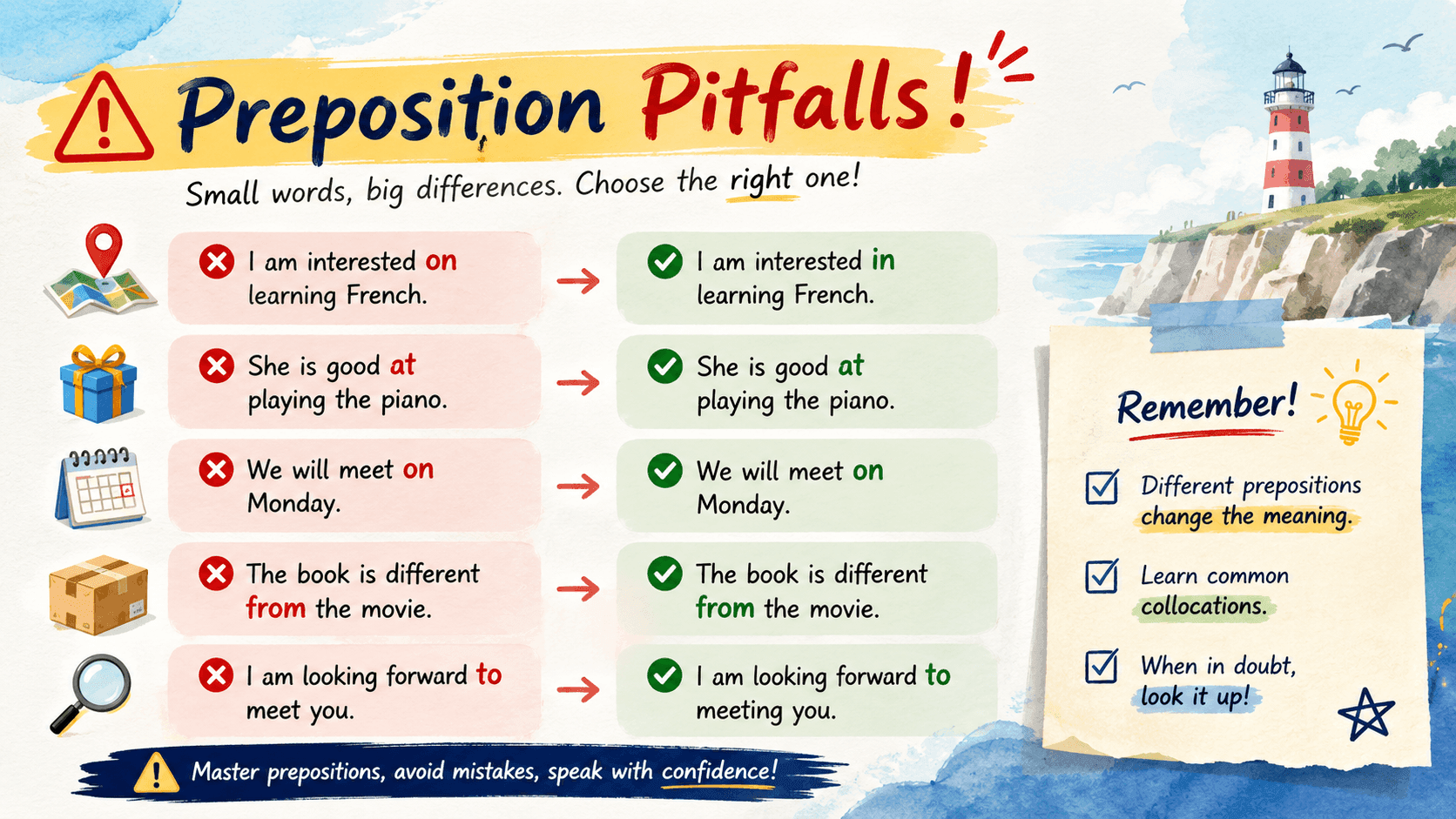
在学习过程中,很多人经常因为母语影响,误用一些形容词/动词+介词的搭配。这类错误不仅仅是小失误,有时候还会让表达变得非常“中式”或让听者觉得意思很奇怪。请务必注意下表这些出错高发的搭配,对比记忆,避免常见的“坑”!
高频介词错误对比
除了上表这些,经常还有以下混淆:
- apply to 和 apply for:apply to (向...申请/适用于...),apply for (申请某物)。
- belong to(属于)前面不要漏掉 to。
- good at(擅长于)不要误用成 good in。
- 有些搭配也要特别注意英汉差异,如“be similar to”(与……相似),不能说成 similar with。
agree to 与 agree with 的重要区分:
记住 agree with + 人(同意某人的观点);agree to + 名词/计划/建议(同意某个方案/计划)。
I agree with you on this issue.(我在这个问题上同意你的看法。)
She agreed to the proposal.(她同意了这个提案。)
两者绝不可混用,否则句意就错了!
练习题
第一题(选择题)
知识点:动词 + 介词——depend 的搭配
下列哪个句子中的介词搭配是正确的?
A. The success of this project depends to everyone's cooperation.
B. The outcome of the meeting depends on how well we prepare.
C. She depends in her family for financial support.
D. The weather depends of the season of the year.
第二题(选择题)
知识点:形容词 + 介词——区分 of / for / with / about
以下四个搭配中,哪一个是正确的?
A. She's very proud for her son's achievements.
B. He's not familiar about the new regulations.
C. I'm really grateful for all your help.
D. Are you satisfied of the current situation?
第三题(选择题)
知识点:agree to vs. agree with 的区分
下列哪个句子使用了正确的 agree 搭配?
A. I completely agree to your analysis of the problem.
B. All team members agreed to the new work schedule.
C. She agreed with the manager's proposal at the last minute.
D. We finally agreed to each other after a long discussion.
第四题(情景问答)
知识点:综合运用动词 + 介词和形容词 + 介词搭配
以下段落中有六个介词搭配错误,请找出并改正:
She's very interested about studying abroad, but she's worried for the high cost. She applied to a scholarship last month, and she's now waiting the results. Her parents are proud for her efforts and have encouraged her to focus in her studies.
第五题(情景问答)
知识点:介词搭配的记忆方法
为什么介词搭配必须“整组记忆”而不能靠中文逻辑推导?请举两个具体例子说明,并提供一种你认为有效的记忆介词搭配的方法。