媒体、传播与旅游地理
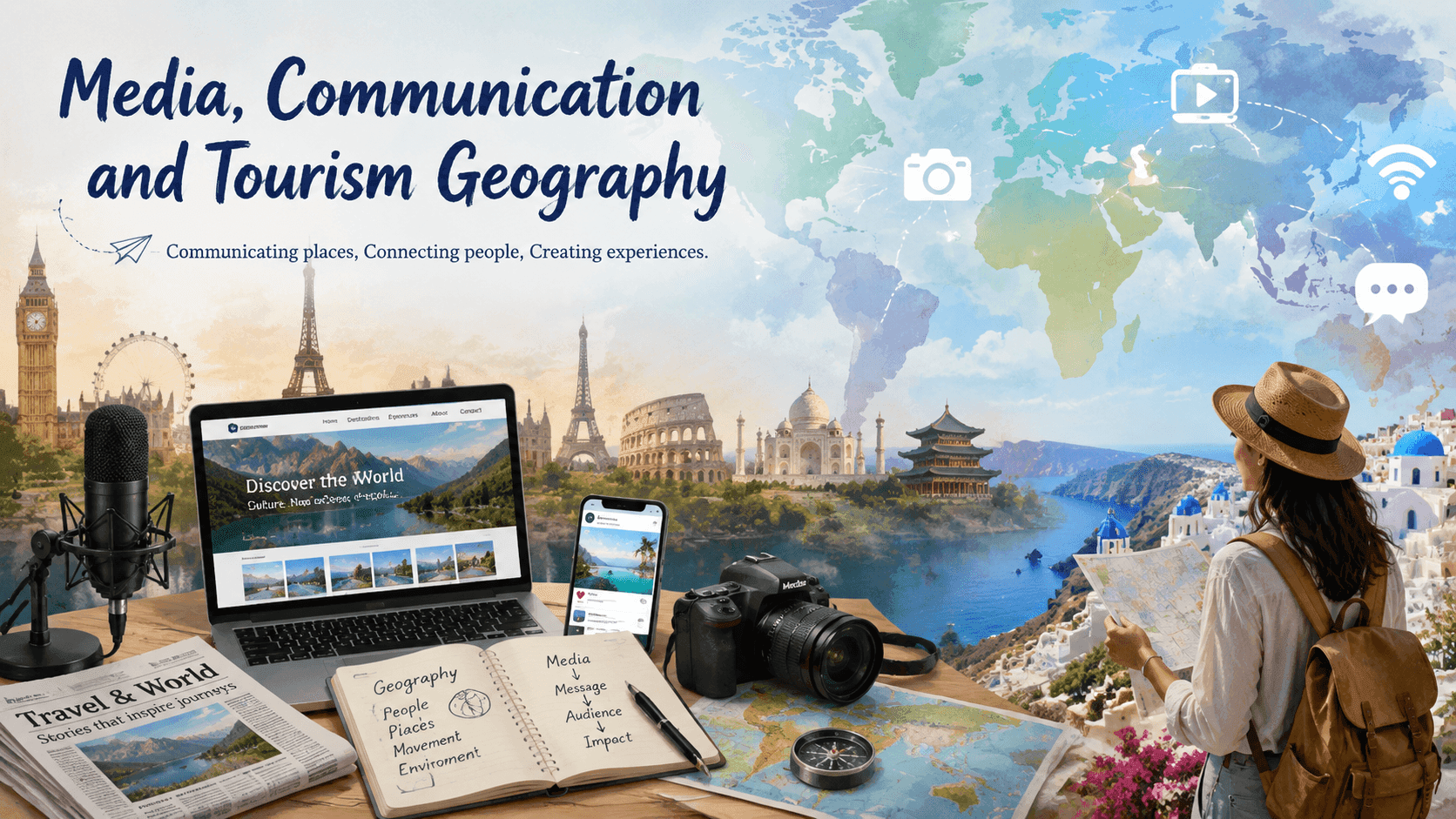
媒体与传播已深刻改变了人们的生活方式与思维模式。我们每日接触的信息往往来自多元渠道,包括新闻报道、社交媒体、播客、流媒体平台等。了解并掌握媒体相关的英语词汇,可以帮助我们更有效地获取、甄别和表达信息。例如,如何判断消息的可信度,如何识别新闻中的偏见或虚假信息,以及如何分析不同媒体内容的影响力,都是现代社交和国际交流中不可或缺的能力。
与此同时,旅游地理也是国际交流与跨文化体验的重要组成部分。熟练掌握旅游相关的表达,不仅有助于规划行程、预订住宿和介绍地理景观,还能增进对不同文化和地区的理解。无论是在实际出行、撰写攻略,还是在学术和外交环境中介绍中国的自然与人文风貌,地理与旅游词汇都极为实用。通过这些领域的英语学习,能够显著拓展语言运用的广度和深度,为跨文化交流和全球视野的培养提供坚实的基础。
媒体与传播
媒体与传播领域正在全球范围内飞速发展,它不仅仅限于传统新闻,还涵盖了新媒体、数字内容、社会化传播等多种形态。熟悉这一领域的核心词汇有助于了解世界信息流通与社会舆论的生成机制,也有利于培养跨文化交际能力和批判性思维。
媒体类型
内容与新闻采编
信息评估与媒体素养
科技进步让信息获取前所未有的便捷,但也让虚假信息和偏见传播变得容易,因而媒体素养与信息判断力变得尤为重要。我们要能主动甄别、独立思考并防范信息“陷阱”。以下是相关核心词汇和表达方式与用法:
- verify a source(核实来源)
- fact-check a story(对一则报道进行事实核查)
- critical consumption of media(批判性地消费媒体内容)
- distinguish between fact and opinion(区分事实与观点)
- reliable vs unreliable sources(可靠与不可靠的来源)
- propaganda(宣传/政治宣传)vs journalism(新闻报道)
- freedom of the press(新闻自由)
- clickbait(标题党/诱饵式标题)
- viral content(病毒式传播的内容)
- algorithm(推荐算法,决定你看到什么内容)
- echo chamber(回音室效应/信息茧房)
- fake news(假新闻)
- media literacy(媒体素养)
- editorial policy(编辑方针)
- conflict of interest(利益冲突,在报道时应避免)
- transparent reporting(透明报道,指公正、无隐瞒的信息披露)
- user-generated content (UGC)(用户生成内容)
- crowdsourcing(众包/群众外包)
- opinion piece(评论文章)
常见表达/句型
- The article seems biased against a particular group.(这篇文章对特定群体有偏见。)
- It's important to distinguish reporting from commentary.(区分报道与评论很重要。)
- Social media algorithms may reinforce your existing beliefs.(社交媒体的算法可能会加强你的固有观念。)
- Always cross-check news from multiple outlets.(总要从多家媒体核实消息。)
- Be cautious of sensational headlines; they may be clickbait.(警惕耸人听闻的标题,它们可能只是“标题党”。)
- Not all sources are equally reliable.(并非所有消息来源都同样可靠。)
- Try to identify the author's perspective or agenda.(试着识别作者的立场或意图。)
- Fact-check statistics and quotes used in articles.(核查报道中使用的数据和引用。)
- Distinguish between fact and opinion when reading a piece.(阅读时要分清事实与观点。)
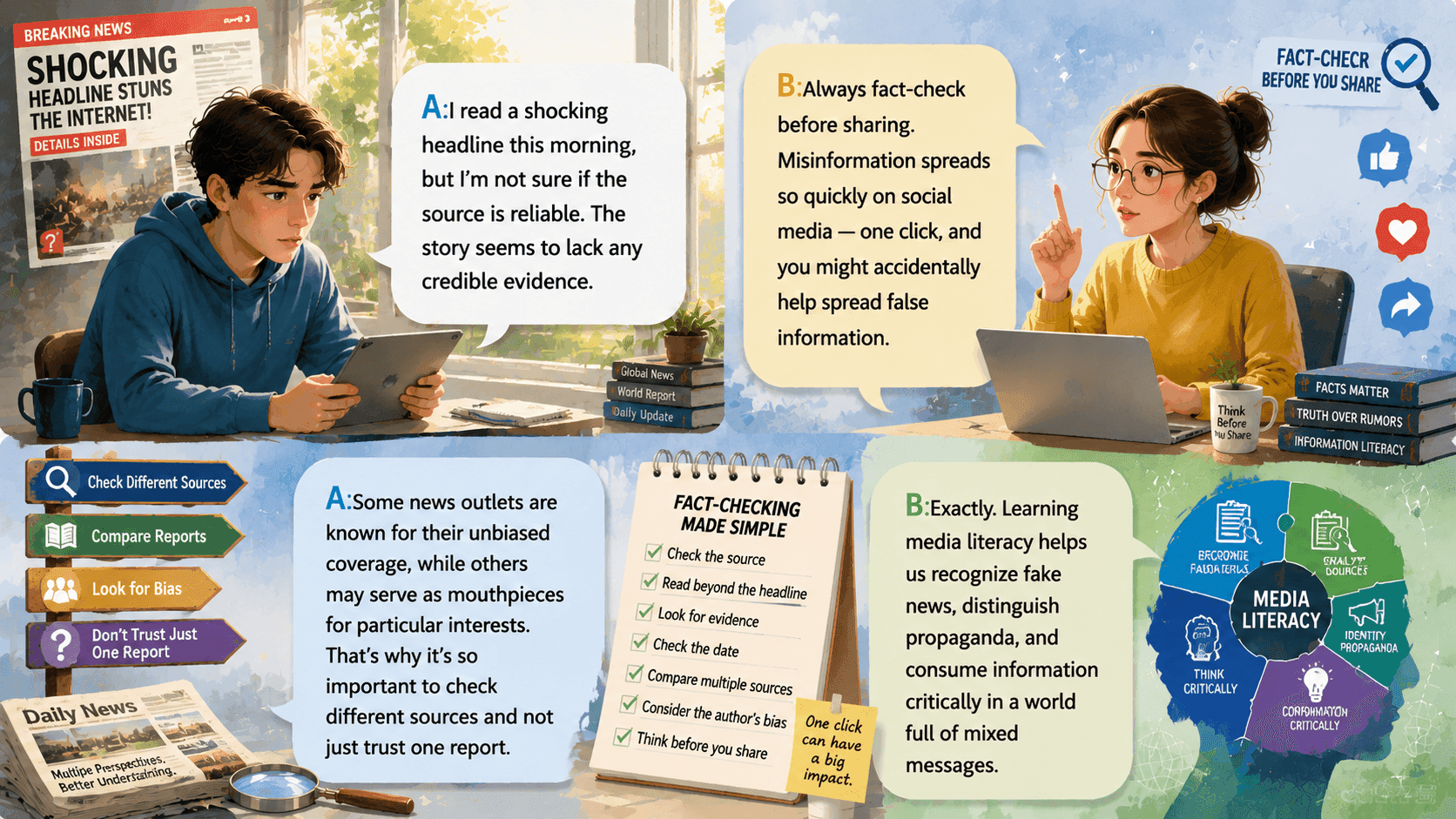
A:I read a shocking headline this morning, but I'm not sure if the source is reliable. The story seems to lack any credible evidence.
我今早看到一个惊人的标题,但我不确定消息来源是否可靠。这则报道似乎缺乏任何可信的证据。
B:Always fact-check before sharing. Misinformation spreads so quickly on social media — one click, and you might accidentally help spread false information.
分享之前一定要先核实事实。错误信息在社交媒体上传播得太快了——一次点击,你可能就无意中帮助传播了虚假信息。
A:Some news outlets are known for their unbiased coverage, while others may serve as mouthpieces for particular interests. That's why it's so important to check different sources and not just trust one report.
有些媒体以其客观报道著称,而另一些可能更像是特定利益的传声筒。因此,参考不同渠道、不要只相信一则报道就显得尤为重要。
B:Exactly. Learning media literacy helps us recognize fake news, distinguish propaganda, and consume information critically in a world full of mixed messages.
没错。学习媒体素养有助于我们辨别假新闻、区分宣传内容,并能在信息纷杂的环境下保持批判性思考。
旅游与地理
旅行计划
地理与景观描述
旅行情景
订票与计划
-
Do you have any recommendations for planning an itinerary to Europe?
你有什么规划赴欧行程的建议吗? -
I made a reservation at a boutique guesthouse.
我在一家精品民宿预订了房间。 -
You should apply for a visa well in advance.
你应该提前申请签证。 -
Could you suggest the best means of transportation from the airport to downtown?
你能推荐一下从机场到市中心的最佳交通方式吗?
在旅途中
-
The landscape along the coastline is breathtaking.
沿海岸线的景色令人叹为观止。 -
Always keep your passport and valuables secure.
一定要保管好护照和贵重物品。 -
It's wise to have some local currency on hand.
带一些当地货币以备不时之需是明智的。 -
The weather here is humid and warm during the monsoon season.
这里在季风季节期间天气湿热。 -
I joined a guided tour to explore the heritage sites.
我参加了导游游览,参观了文化遗址。 -
Sampling local cuisine is always a highlight of my trips.
品尝当地美食永远是我旅行中的一大亮点。
旅行实用语境
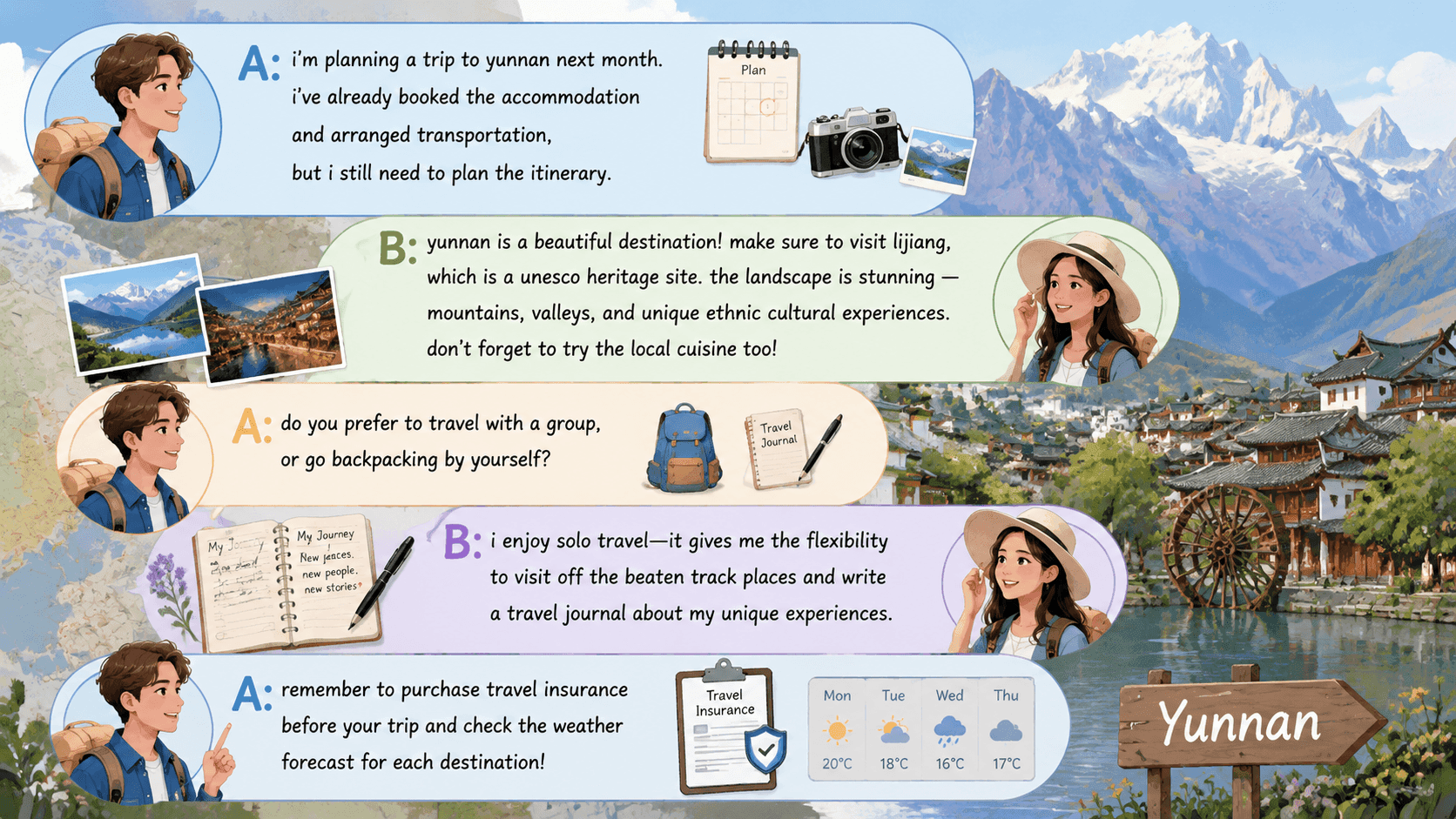
A:I'm planning a trip to Yunnan next month. I've already booked the accommodation and arranged transportation, but I still need to plan the itinerary.
我计划下个月去云南旅行。我已经预订了住宿并安排好了交通,但还需要规划行程。
B:Yunnan is a beautiful destination! Make sure to visit Lijiang, which is a UNESCO heritage site. The landscape is stunning — mountains, valleys, and unique ethnic cultural experiences. Don't forget to try the local cuisine too!
云南是个美丽的目的地!一定要去丽江,那是联合国教科文组织认定的遗址。那里的景观令人叹为观止——有山脉、山谷,还有独特的民族文化体验。别忘了品尝当地美食!
A:Do you prefer to travel with a group, or go backpacking by yourself?
你喜欢跟团旅行还是自己背包自由行?
B:I enjoy solo travel—it gives me the flexibility to visit off the beaten track places and write a travel journal about my unique experiences.
我喜欢独自旅行——这样我可以自由地去那些小众景点,还能写下属于自己的旅行日记。
C:Remember to purchase travel insurance before your trip and check the weather forecast for each destination!
记得出发前买好旅游保险,并提前查好每个目的地的天气预报!
综合运用:媒体与旅游
在现代旅游业中,媒体传播扮演着越来越重要的角色——旅游博主(travel blogger)、旅游纪录片(travel documentary)、社交媒体攻略(social media travel guides)已经成为人们规划旅行的主要信息来源。以下是这个交叉领域的核心词汇:
- travel influencer(旅游博主/意见领袖)
- travel blog(旅游博客)
- go viral(在网上疯传)
- authentic travel experience(真实的旅行体验,区别于“打卡式”旅游)
- overtourism(过度旅游,景区过度拥挤)
- sustainable tourism(可持续旅游)
- digital nomad(数字游民,边旅行边远程工作的人)
- off-season travel(淡季旅行)
- bucket list destination(愿望清单目的地)
练习题
第一题(选择题)
知识点:媒体词汇——bias / misinformation / credibility / source 的运用
以下哪个句子使用了最准确的媒体词汇?
A. The article had no reliable misinformation and all sources were verified.
B. The documentary showed clear political bias in how it presented the facts.
C. This headline is very viral, so it must be credible.
D. The journalist made a source to support the story.
第二题(选择题)
知识点:旅游词汇——itinerary / accommodation / destination / reservation 的区分
以下哪句话在旅游语境中的词汇使用最准确?
A. We made a destination at the hotel for two nights.
B. The travel itinerary included visits to three famous landmarks.
C. She arranged the accommodation for all the necessary transportation.
D. The family traveled to the reservation of the Pacific coast.
第三题(选择题)
知识点:地理描述词汇——landscape / scenery / climate / altitude 的区分
"The region has a _____ climate — warm summers and cold, snowy winters."最合适的填空词是?
A. tropical
B. coastal
C. temperate
D. humid
第四题(情景问答)
知识点:媒体素养词汇的综合运用
请阅读以下描述,并用英文回答问题:
小王在社交媒体上看到一个关于某明星的爆炸性新闻,标题非常吸引人,内容声称该明星做了某件丑闻的事。消息来源只有一个匿名账号,文章没有引用任何其他媒体的报道。
问题:为什么小王在转发之前应该质疑这条信息的可信度?请用媒体词汇回答。
第五题(情景问答)
知识点:旅游词汇综合运用——用英文规划一次旅行
请用英文写一段旅行计划(5-6句话),主题是“规划一次去西藏的旅行”,必须使用以下词汇:destination / itinerary / accommodation / landscape / altitude / cultural experience