健康、医学与环境
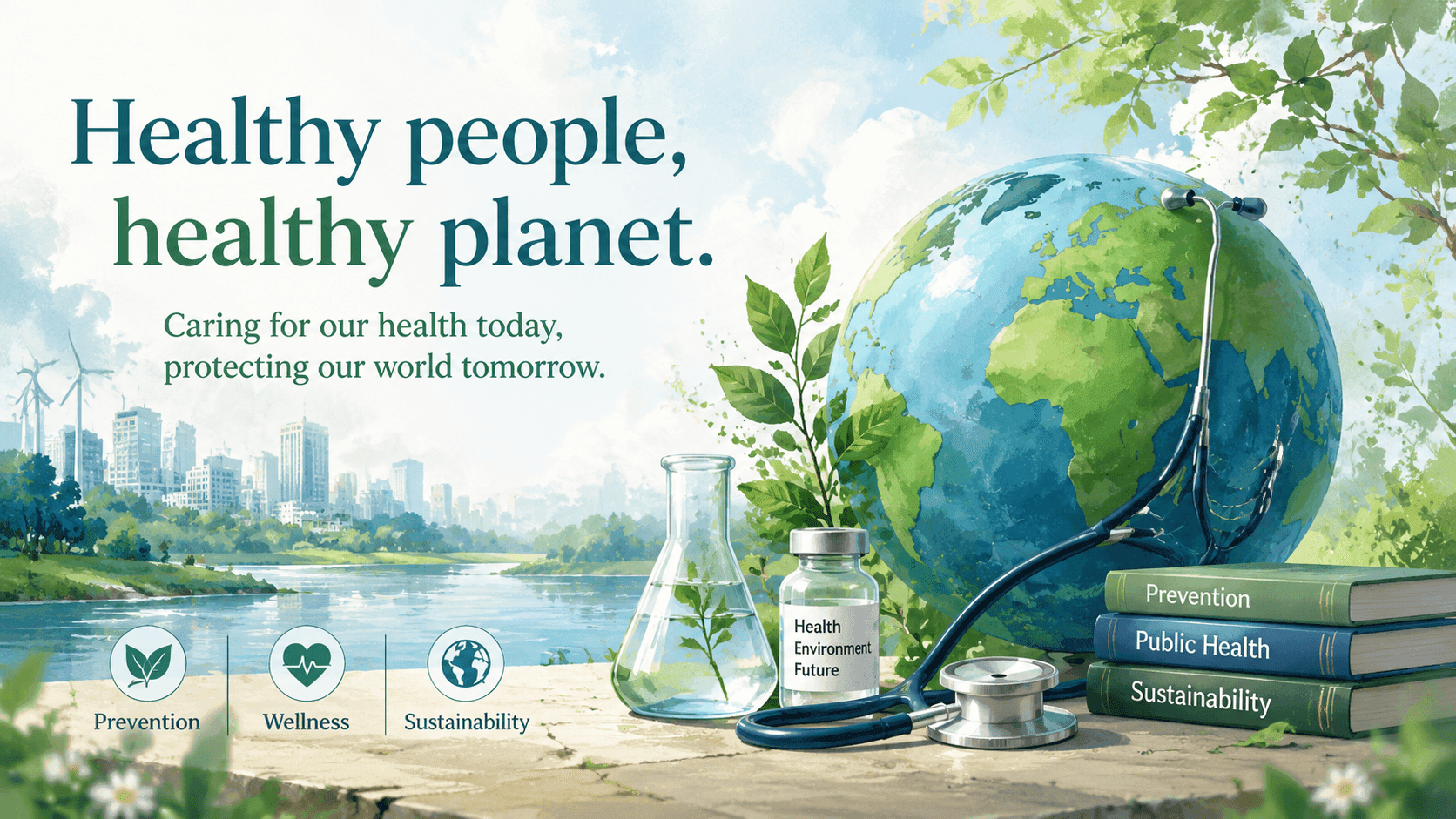
健康与环境是全球范围内备受关注的议题,几乎每一天都会出现在国际新闻、社会讨论、学校课程与政策对话中。随着现代社会的发展,人们越来越重视如何维护身体健康,预防疾病,以及应对医疗体系的挑战。同时,气候变化、生态保护、可持续发展等环保话题也成为世界各国政府和民众讨论的焦点。
用英语流畅地表达健康状况、叙述就医经历、阐述环保理念,是跨文化交流不可或缺的实用能力。例如,在海外旅行、学术交流、媒体阅读、国际考试(如IELTS、TOEFL)或职场沟通中,经常会遇到描述身体症状、咨询医疗建议、讨论气候问题或倡导环保行动的场景。
许多健康和环境相关的专有词汇在英语和汉语之间并非一一对应,部分词来自拉丁语和希腊语(如 symptom、diagnosis、prescription),其拼写和发音对于非英语母语者存在难度,需要反复练习和实际运用。另一方面,环境类词汇及其搭配是议论文和演讲表达的重点内容,合理运用这些术语可以帮助你在正式写作和公共讨论中展现思辨力和专业性。
健康与医学
身体症状与描述
常见身体部位表达
症状描述常用句型:
- I've been suffering from a headache all day.(我头疼了一整天)
- She came down with a cold last week.(她上周得了感冒)
- He's allergic to penicillin.(他对青霉素过敏)
- The doctor diagnosed her with diabetes.(医生诊断她患有糖尿病)
- I feel nauseous after eating seafood.(我吃了海鲜后感到恶心。)
- He's been experiencing fatigue ever since the operation.(手术后他一直感到疲劳。)
- My daughter broke her leg in a car accident.(我女儿在车祸中摔断了腿。)
- I have a persistent cough that won’t go away.(我有持续咳嗽,怎么都不好。)
治疗与医疗流程
- 预约挂号 (Make an Appointment) 常用表达:
- book a consultation(预约看诊)
- general practitioner / GP(全科医生)
- specialist(专科医生)
- online appointment(在线预约) 例句:I need to make an appointment with my doctor.(我需要和我的医生预约。)
- 医生问诊 (Consultation) 常用表达:
- describe symptoms(描述症状)
- medical history(病史)
- blood test(血液检查)
- health screening(健康筛查) 例句:The doctor asked me to describe my symptoms.(医生让我描述我的症状。)
- 诊断阶段 (Diagnosis) 常用表达:
- test results(化验结果)
- X-ray / MRI(X光/核磁共振)
- accurate diagnosis(准确诊断) 例句:The doctor made a diagnosis based on the test results.(医生根据化验结果做出了诊断。)
- 治疗方案 (Treatment) 常用表达:
- prescription(处方)
- medication(药物治疗)
- side effects(副作用) 例句:Take the medication twice a day with meals.(随餐服药,每日两次。)
- 康复与随访 (Recovery) 常用表达:
- recovery period(康复期)
- follow-up appointment(复诊预约)
- regain strength(恢复体力)
例句:She needed weeks of therapy before recovery.(她康复前需要几周的治疗。)
医院常用语
- Where is the nearest pharmacy?(最近的药房在哪里?)
- Do I need a referral to see a specialist?(我需要转诊才能看专家吗?)
- Are you allergic to any medications?(你对某些药物过敏吗?)
- Please take your temperature.(请量一下体温。)
- What are your main symptoms?(你的主要症状是什么?)
- How long have you been feeling this way?(你这种感觉持续多久了?)
- Have you taken any medication recently?(你最近服用过药物吗?)
- Do you have any chronic conditions?(你有慢性疾病吗?)
- Please fill out this medical form.(请填写这份病历表。)
- Wait here, the doctor will see you soon.(请在这里等候,医生很快会见你。)
健康生活方式
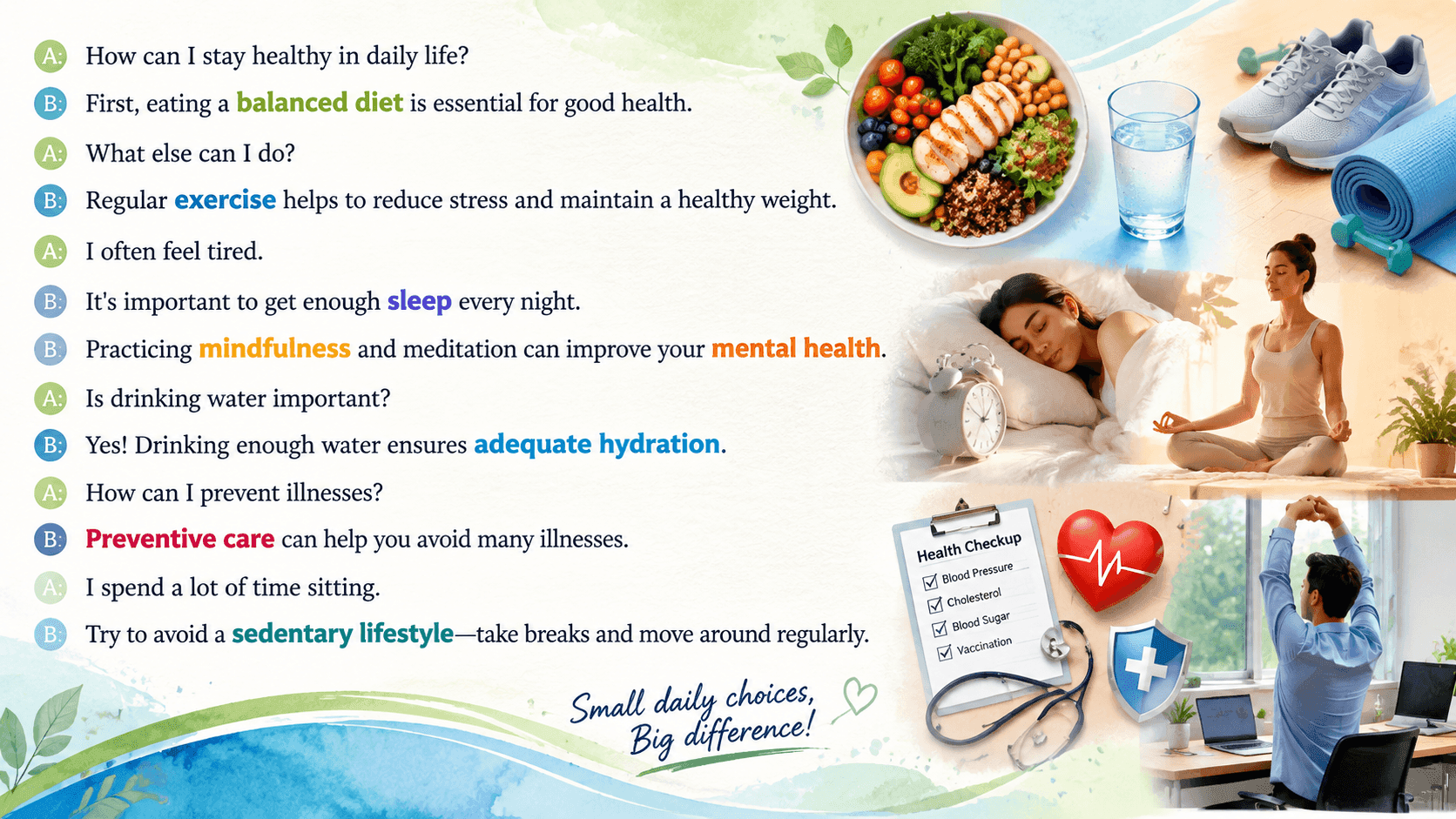
A: How can I stay healthy in daily life?
(我如何在日常生活中保持健康?)
B: First, eating a balanced diet is essential for good health.
(首先,吃均衡饮食对健康至关重要。)
A: What else can I do?
(我还能做些什么?)
B: Regular exercise helps to reduce stress and maintain a healthy weight.
(定期锻炼有助于减轻压力并保持健康体重。)
A: I often feel tired.
(我经常感到疲惫。)
B: It's important to get enough sleep every night.
(每天晚上保证充足的睡眠很重要。)
A: Sometimes I'm very anxious.
(有时候我很焦虑。)
B: Practicing mindfulness and meditation can improve your mental health.
(练习正念和冥想可以改善你的心理健康。)
A: Is drinking water important?
(喝水重要吗?)
B: Yes! Drinking enough water ensures adequate hydration.
(当然!喝足够的水可以确保充分补水。)
A: How can I prevent illnesses?
(我怎样预防疾病?)
B: Preventive care can help you avoid many illnesses.
(预防性医疗可以帮助你避免许多疾病。)
A: I spend a lot of time sitting.
(我常常长时间坐着。)
B: Try to avoid a sedentary lifestyle—take breaks and move around regularly. (尽量避免久坐的生活方式——要定期活动、起来走动。)
环境与自然
环境话题常用搭配
环境议题写作中,动词搭配尤为重要。以下是议论文和新闻中最常出现的动词 + 环境名词搭配:
危机与现状
保护与防御
转型与未来
语境例句
- It is our duty to protect biodiversity and maintain ecological balance.
(保护生物多样性、维护生态平衡是我们的责任。) - Governments must take measures to reduce greenhouse gas emissions.
(各国政府必须采取措施减少温室气体排放。) - The rapid loss of forests will lead to ecosystem imbalance.
(森林迅速减少会导致生态系统失衡。) - Many companies are making efforts to become carbon neutral by 2050.
(许多企业正努力力争在2050年前实现碳中和。) - We all should raise awareness of environmental issues in our communities.
(我们都应该在社区中提高对环境问题的意识。)
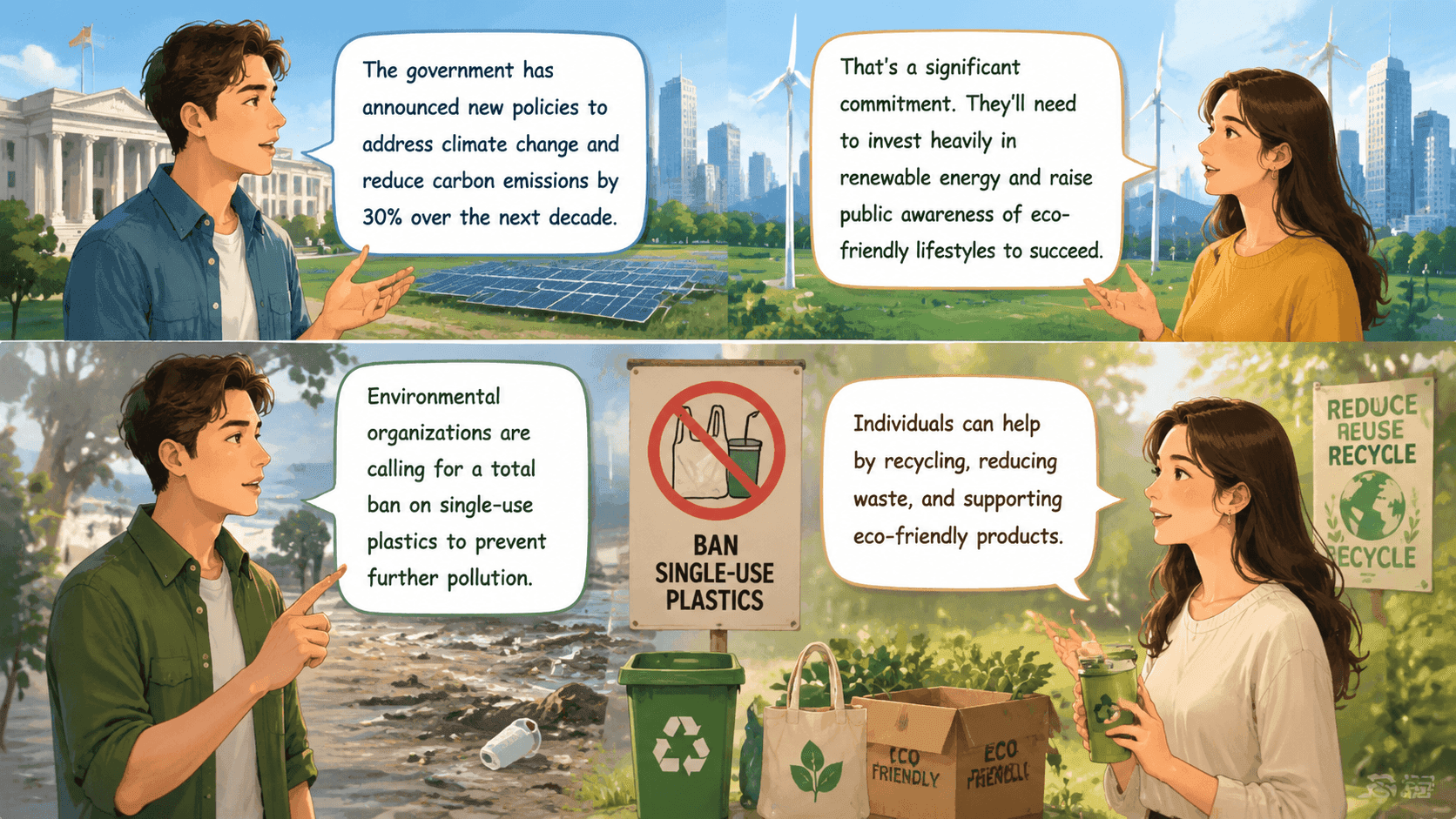
A:The government has announced new policies to address climate change and reduce carbon emissions by 30% over the next decade.
政府宣布了新政策,旨在应对气候变化,并在未来十年内将碳排放减少30%。
B:That's a significant commitment. They'll need to invest heavily in renewable energy and raise public awareness of eco-friendly lifestyles to succeed.
这是一个重大承诺。要成功,他们需要大力投资可再生能源,并提高公众对环保生活方式的意识。
A:Environmental organizations are calling for a total ban on single-use plastics to prevent further pollution.
环保组织呼吁全面禁止一次性塑料制品,以防止进一步的污染。
B:Individuals can help by recycling, reducing waste, and supporting eco-friendly products.
个人可以通过回收、减少废物、支持环保产品来贡献力量。
练习题
第一题(选择题)
知识点:健康词汇——symptom / diagnosis / treatment 的搭配
下列哪个搭配是正确的?
A. make a symptom
B. take a diagnosis
C. receive treatment
D. do a fever
第二题(选择题)
知识点:环境词汇——climate change / global warming / carbon footprint 的理解
“We can all reduce our carbon footprint by using public transport instead of driving.”这句话中,“reduce our carbon footprint”最准确的含义是?
A. 减少我们脚印的实际面积
B. 减少我们的个人碳排放量
C. 减少我们对碳纤维材料的使用
D. 减少全球碳税的支出
第三题(选择题)
知识点:环保词汇搭配——动词 + 环境名词
以下哪组动词 + 名词搭配是正确的?
A. do climate change
B. protect biodiversity
C. make global warming
D. build carbon footprint
第四题(情景问答)
知识点:健康词汇在就医场景中的综合运用
请用英文描述以下就医场景,需包含至少5个本章学习的健康词汇:
“李明感觉身体不舒服,有发烧和头痛的症状。他去看了全科医生,医生检查后开了处方,建议他按时服药,多休息,并在两周后复诊。”
第五题(情景问答)
知识点:环境议题写作——环保词汇的运用
以“我们每个人都可以为保护环境做出贡献”为中心论点,用英文写一段4-5句话的短文,必须使用以下词汇:carbon footprint / renewable energy / eco-friendly / biodiversity / raise awareness