文化、艺术、政治与社会
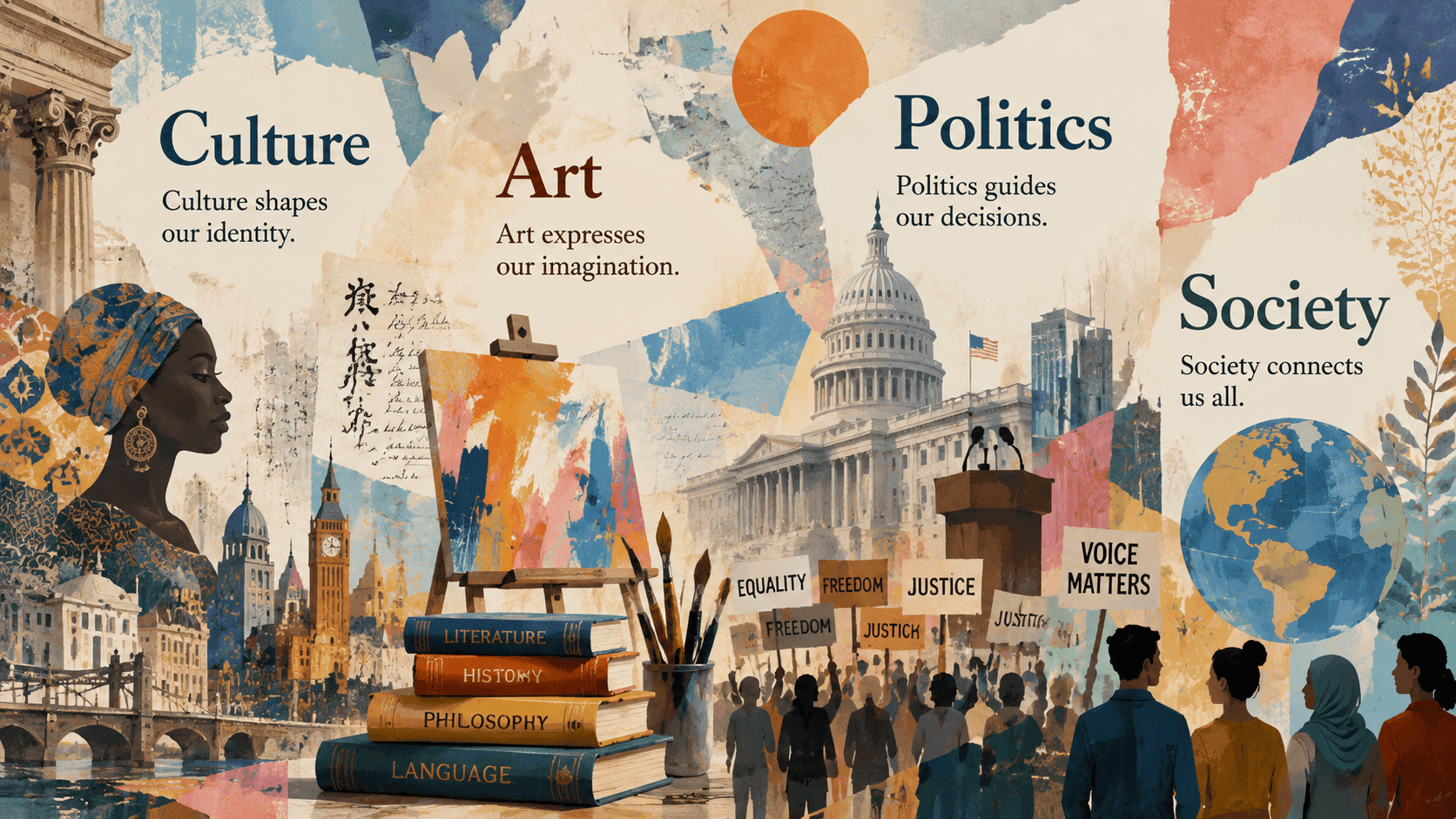
能够自如地用英语交流观点、表达情感,是英语学习的重要目标。当你能用英语评价一幅艺术作品、描述一场文化节日、分析社会现象或参与政治话题时,你的表达能力和思辨水平便大大提升,这标志着你具备了深入跨文化交流的能力。这些领域的话题涵盖广泛,无论是在学术写作、日常对话还是公开演讲中,都是展现思维和表达能力的重要素材。
学习与文化、艺术、政治和社会相关的词汇时,除了掌握字面含义,更需要关注它们在实际语境中的运用方式。许多词汇不仅承载知识内容,还蕴含着社会态度、价值观及文化传统。比如,某些政治术语在不同国家背景下有着截然不同的用法;有关文化与艺术的词汇,往往涉及美学标准和历史变迁。只有结合真实语境去感知和理解,才能将这些词汇真正转化为自己表达思想的工具,做到用词得当、思考深入,进而自信地参与全球化的交流与讨论。
文化与艺术
艺术形式
文化传统
文化评价
谈论文化与艺术

A: Have you ever visited the new art exhibition at the downtown museum?
你去过市中心博物馆的新艺术展览吗?
B: Yes, I went last weekend! The contemporary sculptures and classical paintings were really impressive. I especially liked the installation art in the main hall.
去过,我上周末刚去的!那些当代雕塑和古典画作让我印象深刻。我尤其喜欢主厅里的装置艺术。
A: I agree. It's amazing how diverse and vibrant the local art scene has become. Do you think visiting exhibitions helps people appreciate their cultural heritage?
我同意。现在本地艺术氛围真是多样而有活力。你觉得参观展览有助于人们欣赏自己的文化遗产吗?
B: Definitely. Art connects us with our traditions and also encourages innovative thinking. Preserving authentic art forms is just as important as celebrating new, avant-garde styles.
当然。艺术让我们与传统产生联系,也激发创新思维。保护原汁原味的艺术形式和推崇新的先锋风格同样重要。
A: That's true. I think every community should promote both the preservation of classical art and support for pioneering artists.
说得对。我觉得每个社区都应该既推动经典艺术的保护,也支持开创性的艺术家。
政治与社会
政治概念
政治词汇是英语报刊和考试写作中不可回避的内容,以下是最核心的政治词汇,掌握这些词不仅有助于读懂新闻、杂志和各类文章,也是雅思、托福、考研英语等考试的高频话题。在议论文写作、辩论、甚至日常交流中,这些词汇都极为重要。下面不仅给出词汇本身,还列出了典型搭配和实际应用方向:
社会议题
社会议题涵盖权利与平等、社会问题以及社会变迁等多个重要层面。这些主题与我们的日常生活息息相关,同时也是国际新闻报道、公共政策讨论和学术写作的热点内容。社会议题不仅关乎每个人的切身利益,还反映出一个国家及社会的整体发展水平和文明程度。
在阅读社会新闻、写作议论文、参与辩论或公开演讲时,熟练掌握相关关键词及其高频搭配将帮助我们更有逻辑、更有说服力和批判性地阐述观点。此外,这些核心词汇还能够帮助我们更深入地理解社会现象,准确表达对于社会现状的分析和见解,并积极参与到公共事务与社会治理当中。
权利与平等关键词
在现代社会,平等、公平与包容性发展逐渐成为公众关注的核心价值。理解与表达这些理念时,以下核心词汇及其常用搭配极为重要:
社会问题关键词
涉及社会现实问题和挑战,这些是新闻、社会评论与研究经常关心的焦点:
-
Poverty 贫困 是长期困扰社会的重大难题。Reducing poverty(减少贫困)一直是各国政府的重要目标。只有解决了贫困的根本原因(root causes of poverty),社会才能实现可持续发展。
例句:We need to address the root causes of poverty.(我们需要解决贫困的根本原因。) -
Welfare 福利 指的是由政府提供的支持体系,如医疗、养老和失业补助等。建立健全的 social welfare system(社会福利体系)有助于保障弱势群体。
例句:The government will expand the welfare system.(政府将扩大福利制度。) -
Unemployment 失业 主要指劳动力群体没有工作的现象,尤以青年失业最受关注。Tackling unemployment(解决失业)需要政策与培训的配合。
例句:Job training helps reduce unemployment.(职业培训有助于减少失业。) -
Homelessness 无家可归 是亟需社会关注的问题。无家可归者(homeless population)往往得不到基本生活保障。
例句:Affordable housing helps the homeless.(经济适用房有助于无家可归者。) -
Crime 犯罪 严重影响社会的稳定和安全。降低 crime rate(犯罪率)需要社区参与和有效管理。
例句:Community engagement prevents crime.(社区参与有助于预防犯罪。) -
Corruption 腐败 损害公众信任并阻碍社会发展。Fight corruption(打击腐败)需要提高 transparency(透明度)。
例句:Transparency helps fight corruption.(透明度有助于打击腐败。) -
Inequality 不平等 尤其指收入差距不断扩大的现象。Income inequality(收入不平等)影响社会公平和阶层流动。
例句:Income inequality restricts mobility.(收入不平等限制社会流动性。) -
Stigma 污名化 常见于心理健康等领域,是阻碍人们寻求帮助的重要原因。Break the stigma(打破污名化)有利于推动社会进步。
例句:We must break the mental health stigma.(我们必须消除心理健康的污名化。)
社会变迁关键词
社会结构的演变和全球化趋势也有一批常用的表达:
| 关键词 | 释义 | 核心搭配 | 例句 | 中文 |
|---|---|---|---|---|
| migration | 移民 / 迁移 | international migration, economic migration, migration policy | Mass migration from rural areas has shaped society. | 大规模迁移塑造了现代社会。 |
| urbanization | 城市化 | rapid urbanization, urbanization rate, urban growth | Rapid urbanization increased housing demand. | 城市化导致住房需求增加。 |
| globalization | 全球化 | economic globalization, effects of globalization, globalization trend | We must embrace globalization and protect heritage. | 要拥抱全球化也要保护文化遗产。 |
| population | 人口 | aging population, population growth, population decline | An aging population challenges healthcare. | 老龄化人口对医疗带来挑战。 |
| integration | 融合 / 整合 | social integration, cultural integration, integrate into society | Integration needs effort from all sides. | 融合需要各方共同努力。 |
| conflict | 冲突 | armed conflict, social conflict, resolve a conflict, conflict resolution | Education is vital in conflict resolution. | 教育对解决冲突至关重要。 |
| community | 社区 / 群体 | local community, community engagement, community service | Community engagement is crucial in urban growth. | 社区参与对城市发展非常重要。 |
| cohesion | 凝聚力 | social cohesion, promote cohesion, strengthen cohesion | Shared values strengthen social cohesion. | 共同价值观有助于社会凝聚力。 |
应用举例
写作/口语建议:尝试将不同话题的词汇与搭配进行灵活组合,以丰富观点、论据和解决方案。例如,讨论“poverty”时,可结合“government policy”、“empowerment”、“social welfare”等词语,让表达层次更加多元。
-
The government launched new legislation to combat unemployment and promote social justice.
政府出台新法律以应对失业、促进社会公正。 -
Promoting diversity and inclusion is key to building a harmonious community.
推动多样性和包容性是建设和谐社区的关键。
尝试把所学词汇融入到实际写作和辩论演练中,将帮助你更加灵活自如地表达深层次的社会和政治观点。
社会议题
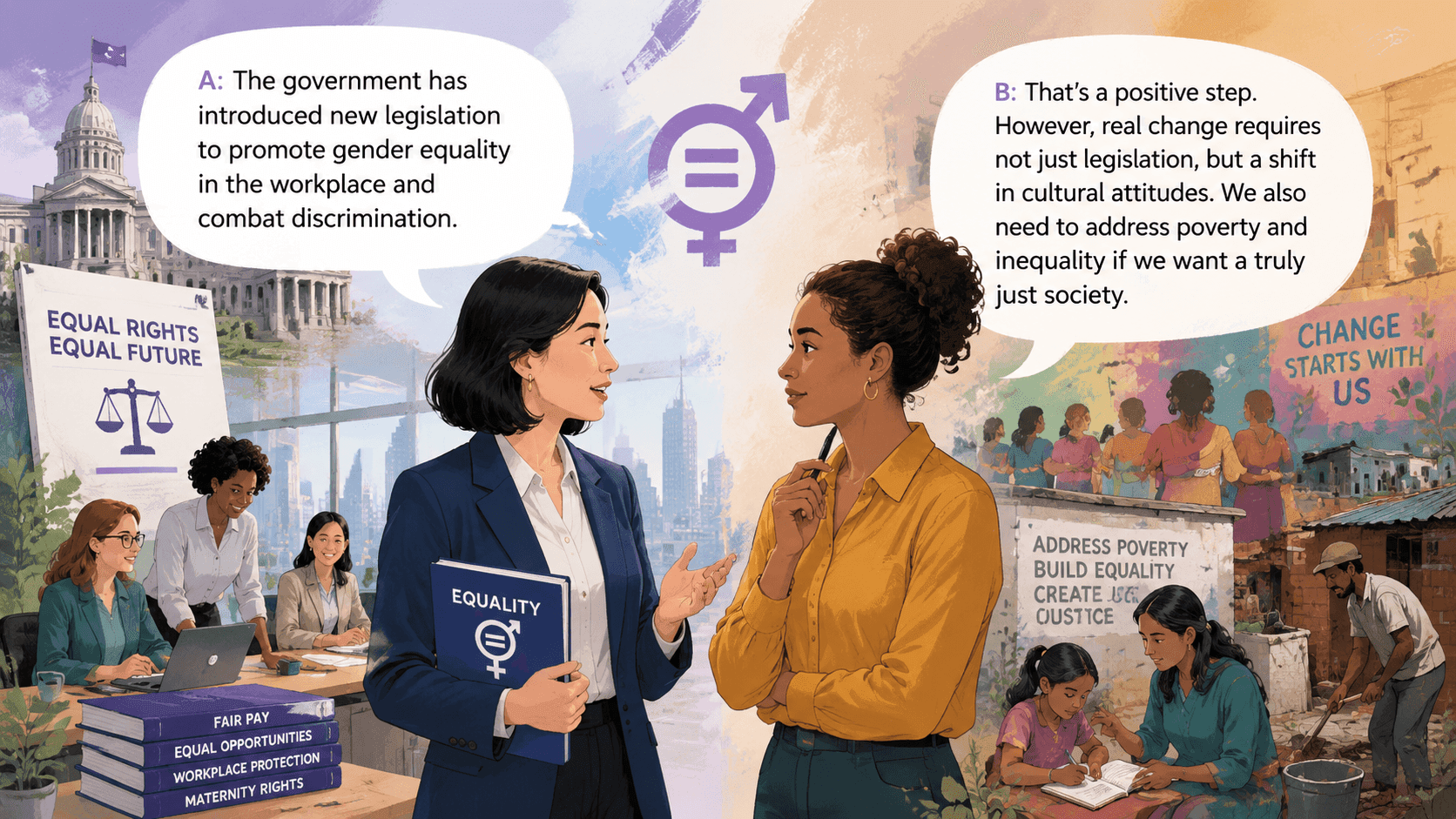
A:The government has introduced new legislation to promote gender equality in the workplace and combat discrimination.
政府出台了新法律,以促进职场性别平等并打击歧视行为。
B:That's a positive step. However, real change requires not just legislation, but a shift in cultural attitudes. We also need to address poverty and inequality if we want a truly just society.
这是积极的一步。然而,真正的改变不仅需要立法,还需要文化观念的转变。如果我们想要一个真正公正的社会,还需要解决贫困和不平等问题。
练习题
第一题(选择题)
知识点:文化词汇——heritage / tradition / custom / ritual 的区分
Every year during the Spring Festival, families gather to have a reunion dinner together. 这里的“reunion dinner”属于哪个层次的文化概念?
A. cultural heritage(文化遗产)
B. national tradition(民族传统)
C. local custom(地方习俗)
D. religious ritual(宗教仪式)
第二题(选择题)
知识点:政治词汇——legislation / policy / reform 的区分
以下哪个句子中词汇使用最准确?
A. The government passed a new policy to reduce carbon emissions.
B. Parliament introduced new legislation to protect workers' rights.
C. The president announced a reform to increase income tax.
D. The government legislated a new policy on environmental issues.
第三题(选择题)
知识点:社会词汇——equality / diversity / inclusion / justice 的含义
以下哪个词最接近“公司致力于雇用不同背景的人才”这一描述的核心概念?
A. justice
B. equality
C. diversity
D. cohesion
第四题(情景问答)
知识点:文化艺术词汇的综合运用
用英文写2-3句话,描述你认为最有文化价值的一种中国传统艺术形式(如京剧、书法、瓷器等),需包含以下词汇中的至少3个:heritage / aesthetic / authentic / iconic / preserve / classical
第五题(情景问答)
知识点:政治社会议题写作——理性表达立场
请用英文就“全球化是否带来了社会不平等”这一议题写一个简短的论点(4-5句话),必须使用以下词汇:globalization / inequality / migration / integration / economic growth