时间与空间
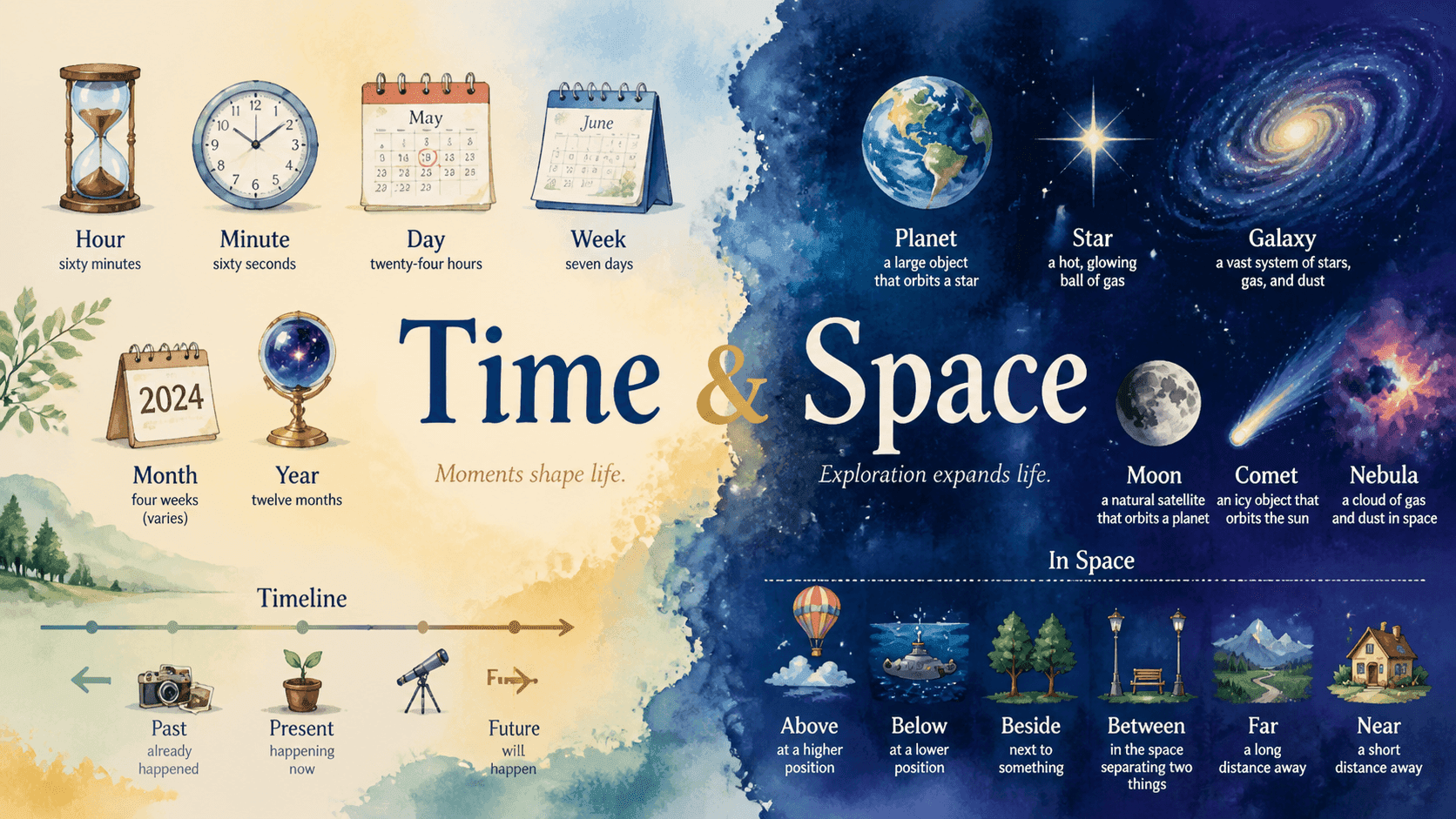
时间与空间是人类认知世界不可分割的两个基础。我们每天都在思考“现在是什么时间”、“距离目的地还有多远”、“这个事件发生在哪里”,这些问题广泛渗透在我们的日常生活与交流中。在英语表达中,关于时间与空间的词汇和短语使用极为频繁,比如描述日期、时刻、周期,或说明方位、地点、距离等场景。清晰理解各类时间单位(如 second, minute, hour, year)和空间表达(如 street, corner, center, direction),能帮助我们更准确地传递和获取信息。
对于母语为汉语的学习者来说,英语中的一些时间和空间介词搭配(如 in time 与 on time、for 与 since、at 与 in 与 on)的使用规律尤为值得关注,不仅因为它们细致地区分语义,还因为很多搭配都是固定且不可随意变换的。要掌握地道的表达,除了理解词汇本身的意义,更要熟悉哪些词与哪些介词连用,例如:说“在街角”是 at the corner,而不是 in the corner;“几年以来”需要 since + 时间点 或 for + 一段时间。
此外,不同场景下的表达侧重也不尽相同,例如在介绍计划安排时常用 schedule, period, deadline 等,在描述经历和回忆时则会涉及 past, present, future 等名词。这些看似细微的区别和用法,实际上构成了英语表达逻辑的基础。深入理解并反复练习这些表达,有助于提升英文沟通的准确度与自然度。
从秒到世纪
基础时间单位
英语时间名词从小到大依次是:second(秒)→ minute(分钟)→ hour(小时)→ day(天)→ week(周)→ month(月)→ year(年)→ decade(十年)→ century(百年)。这些词的使用频率都很高,搭配的介词也各有规定。
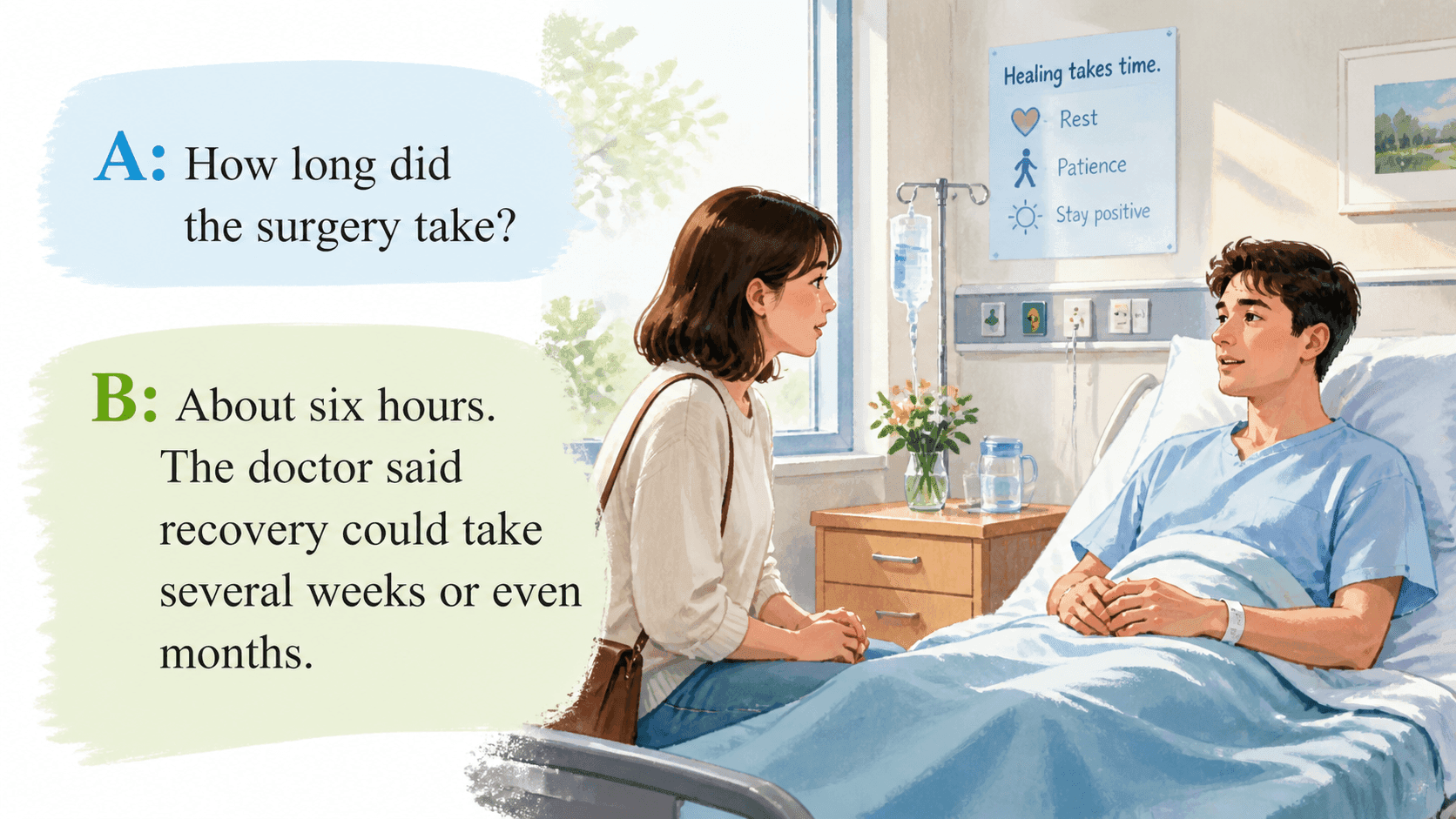
A:How long did the surgery take?
手术花了多长时间?
B:About six hours. The doctor said recovery could take several weeks or even months.
大约六个小时。医生说恢复可能需要几周甚至几个月。
moment / period / schedule / deadline / past / present / future
这几个词描述时间的抽象特质,使用场景更偏向正式表达和书面语。
moment 是“片刻、瞬间”,常用于口语表达请求稍等(Just a moment. / Wait a moment.)或描述时间节点(at that moment = 在那个时刻)。period 是“一段时间、时期”,强调有一定持续时长的时间段:“a period of economic growth”(一段经济增长期)。schedule 是“日程表、计划表”,既作名词也作动词:“The meeting is scheduled for 3 pm.”deadline 是“截止日期”,在职场和学术语境中高频出现,搭配动词通常是 meet a deadline(赶上截止日期)或 miss a deadline(错过截止日期)。
past、present 和 future 描述时间轴上的三个维度。这三个词既可以作名词,也可以作形容词,使用时要注意词性。
-
In the past, people communicated by letter. 在过去,人们用信件沟通。
-
In the present, we use smartphones. 在当下,我们用智能手机。
-
The future of communication is hard to predict. 通信的未来很难预测。
-
Just a moment, please. I'll check the information for you. 请稍等片刻,我会帮您查询信息。
-
We had a period of rapid economic growth last year. 我们去年经历了一段经济快速增长期。
-
The meeting is scheduled for next Monday at 9 am. 会议安排在下周一上午九点。
-
I have to finish my report before the deadline. 我必须在截止日期前完成报告。
时间介词
这一组时间介词的辨析是中国学习者的难点集中区,每个词的含义看似相近,实则有明确的语法界限。
for / since 的区别
for 和 since 都用来描述某事持续到现在的时间,但两者的起点不同:for 后面接“时间段”(一段时长),since 后面接“时间点”(某个具体的起始时刻)。两者通常配合现在完成时使用。
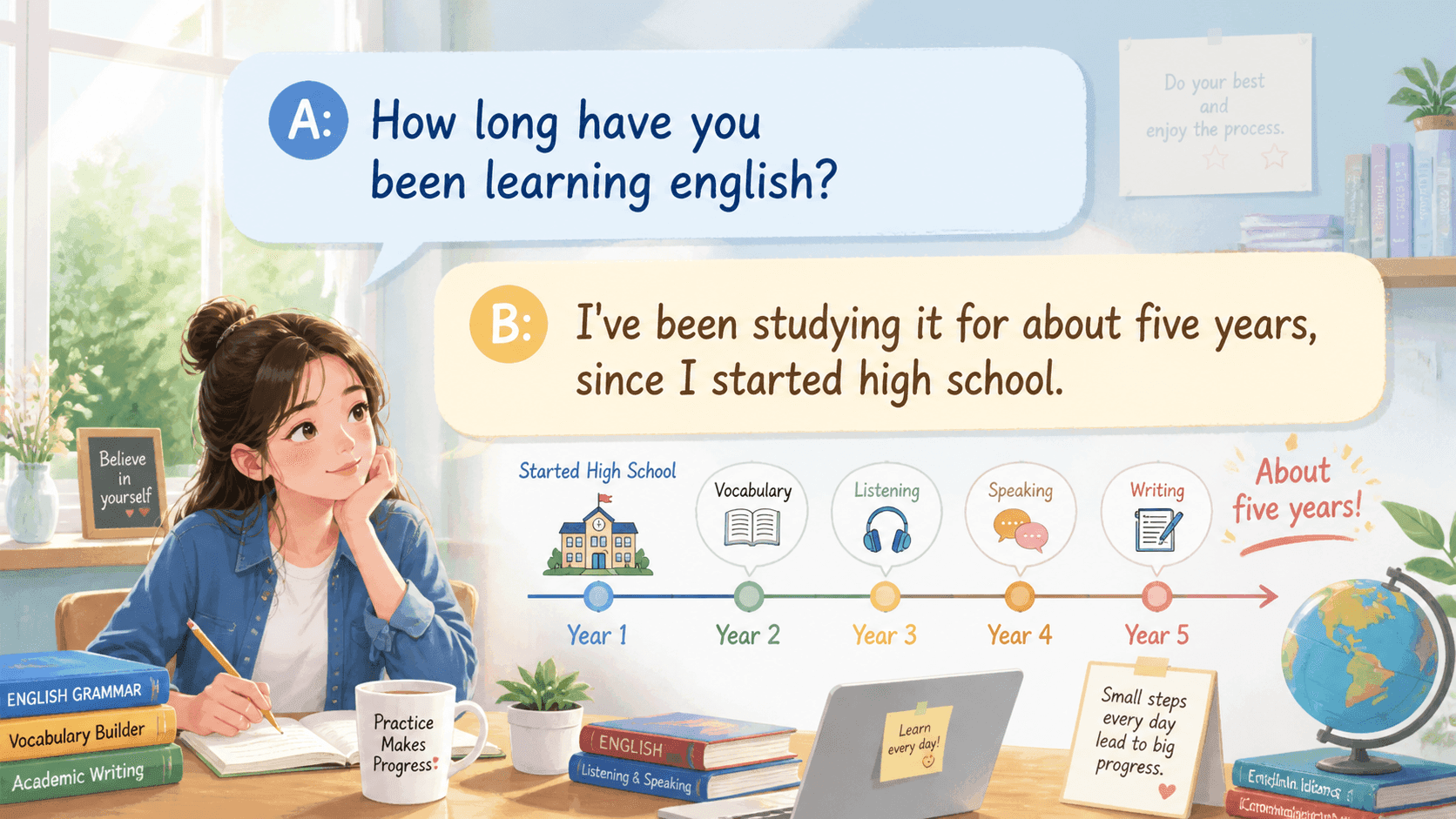
A:How long have you been learning English?
你学英语多长时间了?
B:I've been studying it for about five years, since I started high school.
我学了大约五年了,从高中开始的。
“for about five years”是时间段;“since I started high school”是时间点(高中开始那个时刻)。两者描述的是同一件事的不同表达角度。
ago 的用法
ago 是副词,放在时间段之后,表示“距离现在多久以前”,与一般过去时配合使用(不用完成时)。
She moved to Beijing three years ago. 她三年前搬到了北京。
The accident happened just a few minutes ago. 事故就在几分钟前发生的。
“I have met him two days ago.”是典型错误——ago 与一般过去时搭配,不能与现在完成时连用。正确写法是“I met him two days ago.”另一个常见错误是“since two years”——since 后面只接时间点,不接时间段,“since two years”没有意义,应改为“for two years”(时间段)或“since two years ago”(时间点)。
in time 与 on time 的区别
这两个短语都与时间有关,但含义截然不同:in time 是“及时”(赶上了,没有错过),on time 是“准时”(严格按照预定时间)。
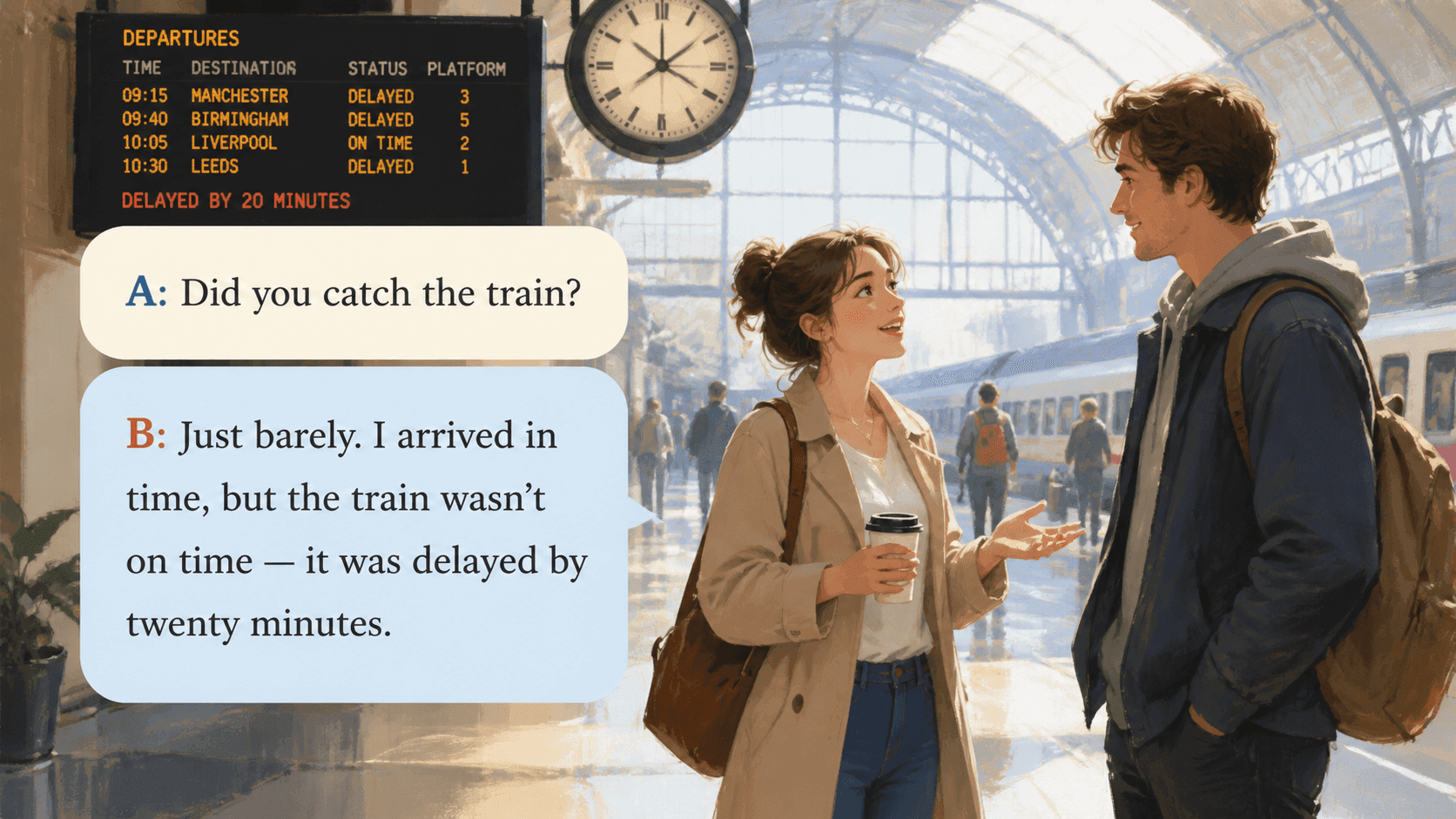
A:Did you catch the train?
你赶上火车了吗?
B:Just barely. I arrived in time, but the train wasn't on time — it was delayed by twenty minutes.
勉强赶上了。我及时到了,但火车不准时——晚点了二十分钟。
“arrived in time”= 及时到达(没有错过火车);“wasn't on time”= 火车没有按预定时间发车(晚点了)。
频率与顺序
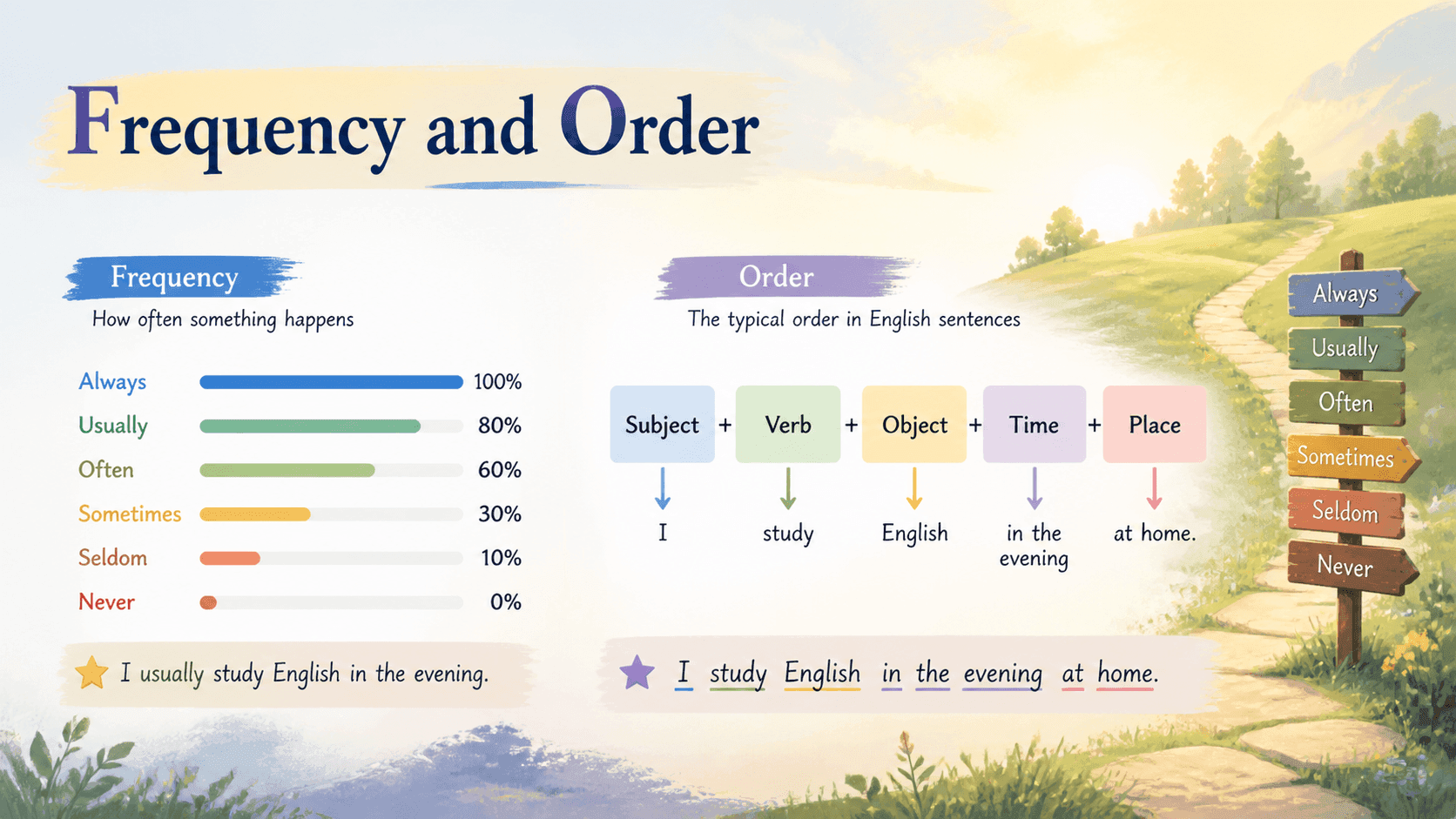
频率副词(always / usually / often / sometimes / rarely / never)在英语句子中的位置非常有规律:通常放在 be 动词后、实义动词前。例如:“He is always late.”(他总是迟到),“She often goes to the gym.”(她经常去健身房)。“I sometimes feel tired.”(我有时感到累),“They are never absent.”(他们从不缺席)。
常见的频率副词及其代表频率,从高到低依次为:
为了更好掌握这些副词的使用,可以看以下示例:
- She always finishes her homework before dinner.
她总是在晚饭前完成作业。 - I usually walk to work.
我通常步行上班。 - We often eat out on weekends.
我们周末经常在外面吃饭。 - He sometimes forgets his keys.
他有时会忘记带钥匙。 - They rarely watch TV.
他们很少看电视。 - I never smoke.
我从不抽烟。
小提示:频率副词常出现于一般现在时,但有时也能用于其他时态,表达相关动作发生的频率。
顺序词(first / then / next / after that / finally / last)用于描述步骤、流程或事件的先后顺序,特别适合口头或书面说明操作流程、讲故事等场景。这些词帮助表达事情的递进和逻辑顺序。
常见顺序词及其用法如下:
- first(首先)
- then(然后)
- next(接下来)
- after that(在那之后/随后)
- finally / last(最后)
例如,烹饪流程中就会用到这些顺序词:
First, preheat the oven. Then, mix all the ingredients. Next, pour the batter into the pan. After that, check the oven temperature. Finally, bake for 30 minutes.
首先,预热烤箱。然后,将所有食材混合。接下来,将面糊倒入烤盘。之后,检查烤箱温度。最后,烘烤30分钟。
其它生活与学习中的顺序表达举例:
- First, open your book.
首先,打开你的书。 - Next, read the first paragraph.
接下来,读第一段。 - After that, answer the questions.
然后,回答问题。 - Finally, check your answers.
最后,检查你的答案。
通过合理使用频率副词和顺序词,可以让表达更准确清晰,无论是在日常交流还是书面表达中,都会大大提升英语表达的条理性和自然度。
空间名词
位置与方向名词
place / area / region / location / position / distance / direction / center / edge / corner 这些词描述空间中的位置和方位关系,是日常英语中不可或缺的表达工具。
-
PLACE(地方/场所) 是最常用、最通用的表示“地点”的单词。它可以指任何地方,有时在口语中还可以泛指自己的住处。例如:Let's meet at your place.(我们在你家见面吧。)
-
AREA / REGION(区域/地区):Area 着重于“区域”或“范围”,常指某一限定的空间;而 Region 更多用于正式或行政意义上,表达较大、较抽象的“地区”。例如:This area is famous for its food.(这个地区以美食闻名。)The Asia-Pacific region.(亚太地区。)
-
LOCATION / POSITION(位置/坐标):Location 偏正式,通常指精确的地理位置;Position 不仅可以表示空间中的相对位置,也可指“职位”或“立场”。例如:The location of the store is convenient.(商店的位置很方便。)A senior position in the company.(公司里的高级职位。)
-
DISTANCE / DIRECTION(距离/方向):Distance 说明两个地点之间的远近,侧重距离的长短;Direction 则指方位或方向,表达朝向。例句:What is the distance from your home to the office?(你家到办公室有多远?)Which direction is east?(东边在哪?)
-
CORNER / EDGE / CENTER(空间定点):这些词常与对应介词搭配,用来标明具体空间位置。例如:at the corner(在街角);on the edge of the forest(在森林的边缘);in the center of the room(在房间正中央)。
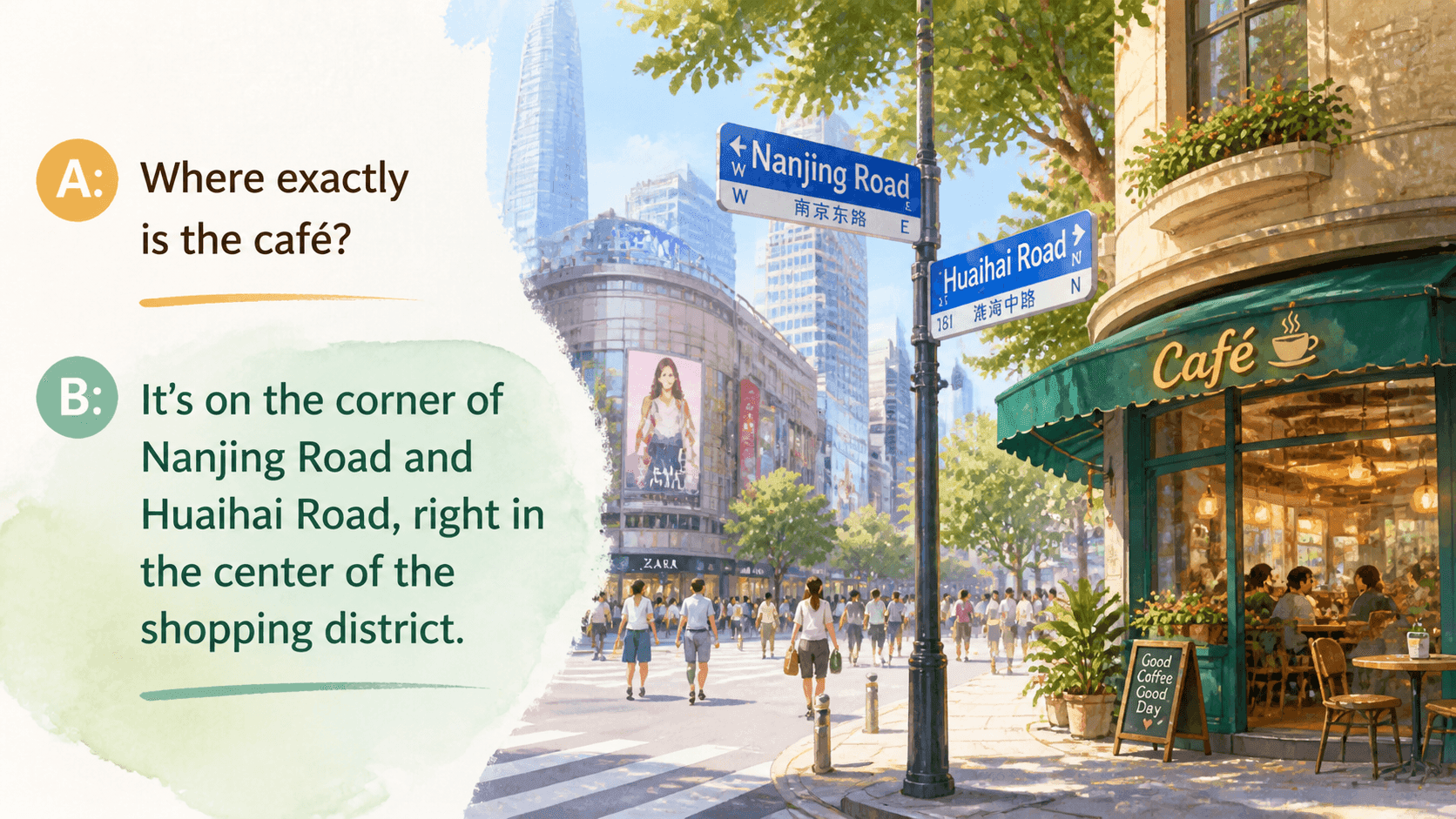
A:Where exactly is the café?
咖啡馆在哪里?
B:It's on the corner of Nanjing Road and Huaihai Road, right in the center of the shopping district.
在南京路和淮海路的街角,就在购物区的中心地带。
- The children are playing in the corner of the classroom.
(孩子们正在教室角落里玩耍。) - There’s a beautiful garden at the edge of the park.
(公园边缘有一个美丽的花园。) - Please put the vase in the center of the table.
(请把花瓶放在桌子中央。)
相关短语
- in the middle of nowhere(在荒郊野外)
- on the outskirts of the city(在城市的边缘/郊区)
- at a distance(在一定距离之外)
场所名词与介词搭配
home / house / office / school / city / country / street / road / park / store / market / hospital 这些常用场所名词,在与介词的搭配中有不少特殊规律和易混点,需要细致掌握。
机构功能和地点区分(无冠词 vs 有冠词)
许多机构名词(如 school、hospital、church、prison 等),在表示“去该地从事其本职功能”时,前面不用冠词;若仅指建筑本身(具体场所/地点),则加上 the:
备注: 类似的还有 church, prison 等,当表示“参与本职活动”(如做礼拜、服刑等)时不用冠词,单纯指地点则要用定冠词 the。
- work / stay / be at school/university/church/prison 侧重“在其中从事活动”,例:Children are at school from Monday to Friday.(孩子们周一至周五在上学。)
- She works at the hospital on weekends.(她周末在医院上班,此时有 the,因为是工作人员,但 on weekends 强调的依然是地点。)
“在家/出国/去市中心” 等特殊场所表达
home 是一个特殊的地点词,前面既不加冠词也不加介词:
- go home(回家)
- be at home(在家里)
不会说 in home、go to home。
同理,abroad(出国)、downtown(去市中心)、overseas(去海外)等表达也不加 to:
- go abroad(出国)
- go downtown(去市中心)
例句鉴别:
She's still at school — classes don't finish until 5 pm.
她还在上学——课要到下午五点才结束。
Her father is in hospital, so she's going to visit him at the hospital after school.
她父亲住院了,所以她放学后要去医院探望他。
解析:
- 第一处“at school”= 参加学习(功能性,无冠词)
- “in hospital”= 住院接受治疗(功能性,无冠词,英式用法)
- “at the hospital”= 到医院这个建筑去(位置概念,with theirs)
The students had lunch at school.
学生们在学校吃午饭。(强调在上学期间的场所)
He visited his uncle in the hospital yesterday.
他昨天在医院看望了他的叔叔。(强调地点)
My brother is studying abroad.
我弟弟正在国外留学。
After the concert, we walked home together.
演唱会结束后我们一起步行回家。
常见易混搭配
说明:有些表达(如 in bed / at table / at home / go abroad / go downtown)属于英语里的习惯搭配或省略冠词介词的用法,牢记其规范形式,特别注意那些容易受汉语影响写错的搭配。
通过上面这些细致的讲解和例句补充,希望你能更准确区分不同空间、场所词汇的表达方式和用法,从而提升实际英语表达的准确性与地道性。
练习题
第一题(选择题)
知识点:for / since / ago 的用法区分
下列哪个句子是正确的?
A. I have known her since three years.
B. She finished the project two hours ago.
C. He has worked here for since 2020.
D. They lived in Shanghai for ten years ago.
第二题(选择题)
知识点:in time 与 on time 的含义区别
选出最符合中文含义的英文句子:“会议准点开始,但我赶到的时候刚好没有迟到。”
A. The meeting started in time, and I arrived on time.
B. The meeting started on time, and I arrived on time.
C. The meeting started on time, and I arrived in time.
D. The meeting started in time, and I just made it.
第三题(选择题)
知识点:at school / at the school / in hospital / in the hospital 的功能性与地点性区别
选出最符合语境的选项:
“His daughter is _____ and can't come home until the end of the semester. His wife is visiting him _____ right now.”
(他女儿在上学,学期结束前回不了家。他妻子现在在医院里看望他。)
A. at school / at hospital
B. in school / in the hospital
C. at school / in the hospital
D. at the school / at the hospital
第四题(情景问答)
知识点:频率副词的含义层次与顺序词的使用
用频率副词(always / usually / often / sometimes / rarely / never)描述你(或某个虚构人物)的日常习惯,要求在一段三到四句话的描述中使用至少三个不同频率的副词,并体现其频率高低的层次感。
第五题(情景问答)
知识点:place / location / position 的语义差别,以及空间介词 at / on / in 与场所名词的搭配
阅读下面这段描述,找出其中的两处介词使用错误并改正,说明原因:
“The coffee shop is in the corner of the street. The manager's office is in the third floor. I'll wait for you in home.”