物品与事物
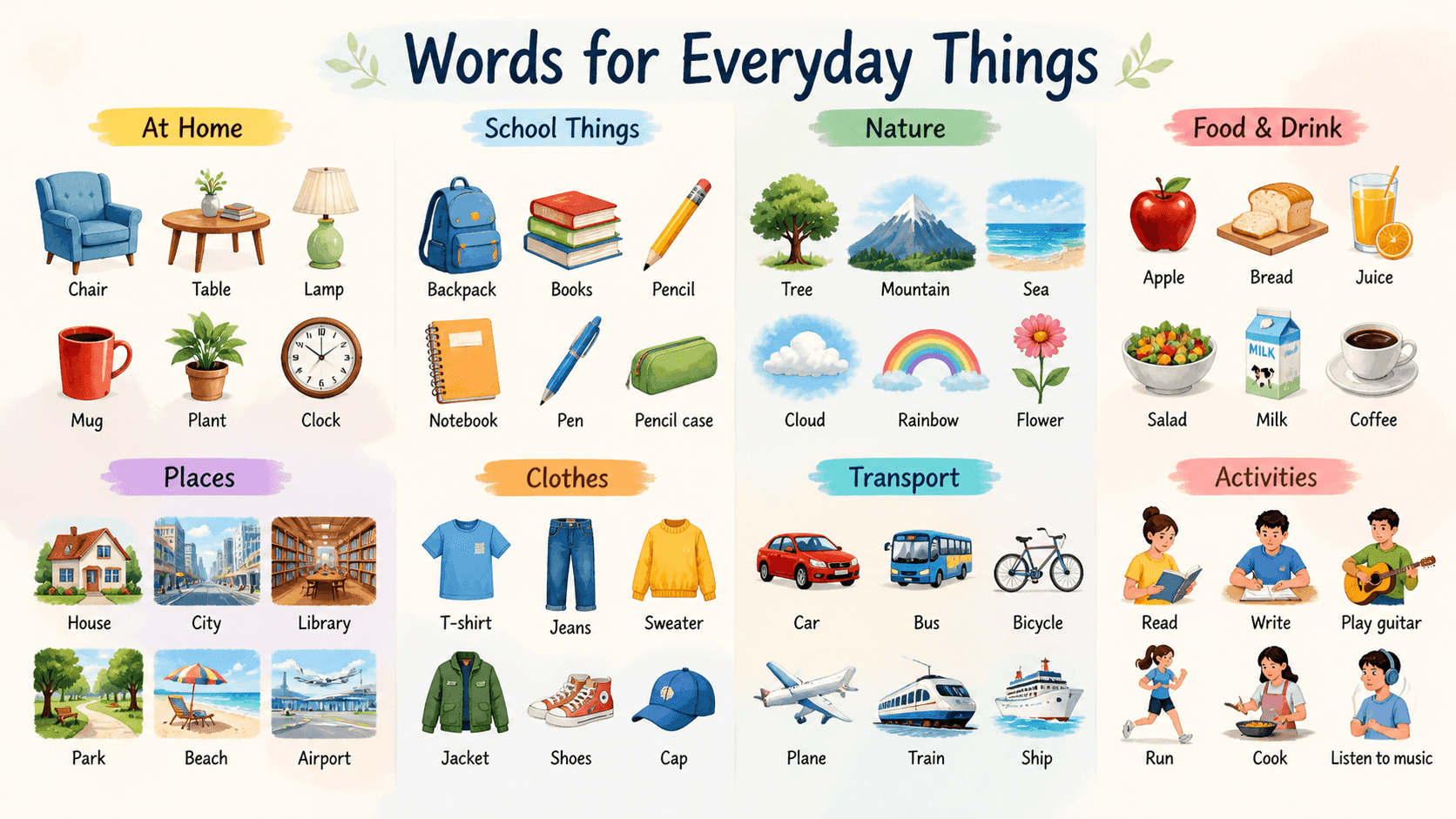
日常生活中会经常接触到各类物品的名词,比如食物(food)、水(water)、手机(phone)、汽车(car)、钥匙(key)等,这些具体物品的词汇,是日常交流的基础。同时,抽象事物的名词同样非常重要,比如主意(idea)、计划(plan)、问题(problem)、原因(reason)、机会(chance)等。这类词语不像具体物品那样能看见摸得着,但却频繁出现在表达思想、分析和交流观点的语境中。掌握这些抽象名词有助于更准确地表达想法和逻辑。
在使用英语名词时,还要特别注意区分可数名词和不可数名词。可数名词一般可以用a、an修饰,也能直接加-s变为复数;比如phone → phones, car → cars。但有些名词是不可数名词,比如advice(建议)、information(信息)、news(新闻)、furniture(家具)、luggage(行李)等,这些词前不能加a/an,也不能直接加-s变复数。例如不能说“an advice”或“informations”。
在实际写作和口语交流中,很多学习者会在这些词的用法上出错,比如把advice误写成advices,或在news后面用复数动词(如news are)。正确表达时可以用“some advice”、“a piece of news”等结构。区分可数与不可数名词的用法,是写出地道英语、避免生硬和错误表达的重要基础。
日用物品
最高频的日常名词
food、water、money 是生活中出现频率最高的三个物质名词,三者都是不可数名词,不能直接加 -s。
- food(食物):泛指所有食物的总称概念,不能说 foods(除非强调种类:different foods from around the world),通常表达量用 some food / a little food / enough food。有时候可以用 a meal(正餐)来自然地表示一顿。
- water(水):通常也不用加 -s,用量可以说 some water / a glass of water / a bottle of water / a drop of water / a little water。
- money(钱):同样不可数,只能说 some money / a sum of money / an amount of money / a lot of money,不能说 moneys。money 表示总的“钱”这个抽象概念,而不是具体的一张或一枚。
这些不可数名词在英语表达中极为基础,但在翻译自中文时容易误用复数或加不合适的冠词。在实际表达中,可以通过量词、容器、单位来表达“多少”概念。
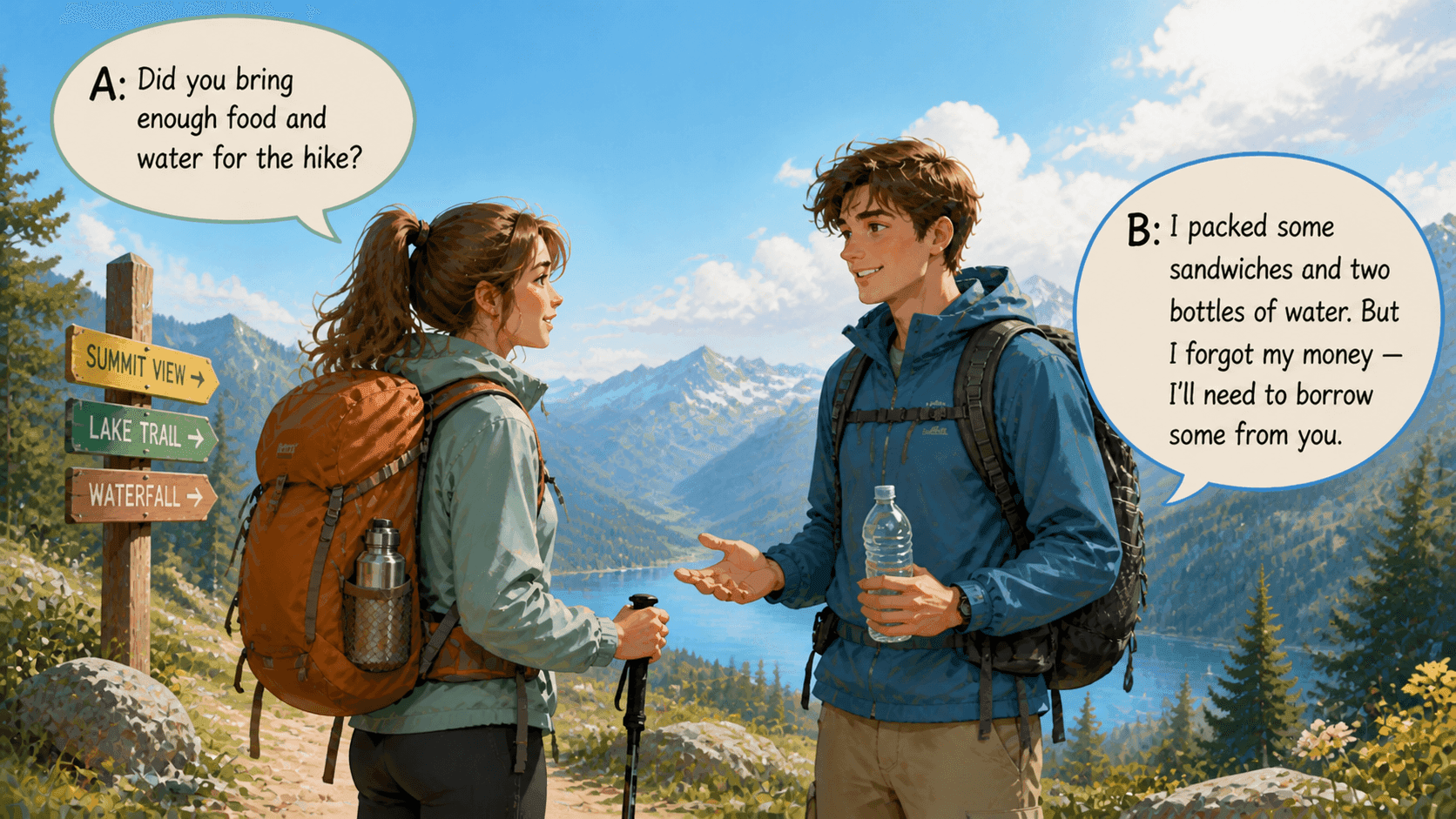
A:Did you bring enough food and water for the hike?
你带了足够的食物和水去徒步吗?
B:I packed some sandwiches and two bottles of water. But I forgot my money — I'll need to borrow some from you.
我带了几个三明治和两瓶水。但我忘了带钱——得跟你借一点。
- I only have a little money left. (我只剩下一点钱。)
- Can I have a glass of water? (我能喝一杯水吗?)
- We prepared enough food for everyone. (我们准备了足够的食物。)
book、phone、computer、car、key、bag、table、chair、door、window、clothes、shoes 这些都是可数名词,使用时要注意单数和复数的转换。
注意:
- clothes(衣服)看起来像复数,其实它没有单数形式,指“衣服”(总称),不能说a clothe。如果要表达一件衣服,需要用 a piece of clothing 或 an item of clothing。
- shoes(鞋)总是一个复数(成对出现),即使只说一双鞋也是 a pair of shoes 而非 a shoe(除非强调一只)。类似的还有 trousers(裤子)、scissors(剪刀)等。
- I can't find my keys. (我找不到钥匙了。)
- My clothes are in the bag by the door. (我的衣服在门边的包里。)
- How many computers do you have? (你有几台电脑?)
- There are five chairs around the table. (桌子周围有五把椅子。)
- Please take your shoes off before entering.(进门前请脱鞋。)
自然物质
air / water / light / fire / land / ground / sky / weather / nature 这些词描述自然界物质与现象,大部分为不可数名词,不能随意加 -s。
- The sun is shining in the sky.(太阳在天空中照耀。)
- There is not enough light in this room.(这房间光线不足。)
- Be careful with fire.(小心火。)
light 这个词非常典型:
- 作“光”,“阳光”讲时,不可数:Light is necessary for plants.
- 作“灯”,具体某个/几盏灯讲时,可数:There are three lights in this room.
The weather in spring is perfect — fresh air, warm light, and the sound of nature all around.
春天的天气美极了——清新的空气、温暖的光线,还有四周大自然的声音。
不可数名词专题
这些词是我们最容易犯错的一批名词——它们在中文里都有对应的可数概念,但在英语中却是不可数名词,绝对不能加 -s,也不能用 a 或 an 来修饰。很多不可数名词,表示的是一种整体、抽象、集合或不可分的事物,它们需要用“some”“a piece of...”“a bit of...”“a little...”等结构或量词短语来修饰。
还有非常常见的 money, water, time, advice, progress, paper(指“纸”时), coffee(咖啡总称),以及抽象类如 happiness, beauty, music, research 等,全部不可数。
“Can you give me some advices?” “I need some informations.” “The news are shocking.” “She bought many furnitures.” “We made a progress.”——这些都是典型的中式错误,几乎每个中国学习者在某个阶段都会犯。
记住:advice / information / news / furniture / equipment / luggage / homework / bread / progress / traffic / money / paper(纸)/ coffee(饮品总称)/ research 等词永远是不可数名词,绝不能在后面加 -s,也不能直接加 a/an;其中 news 后面永远用单数动词(The news is...)。
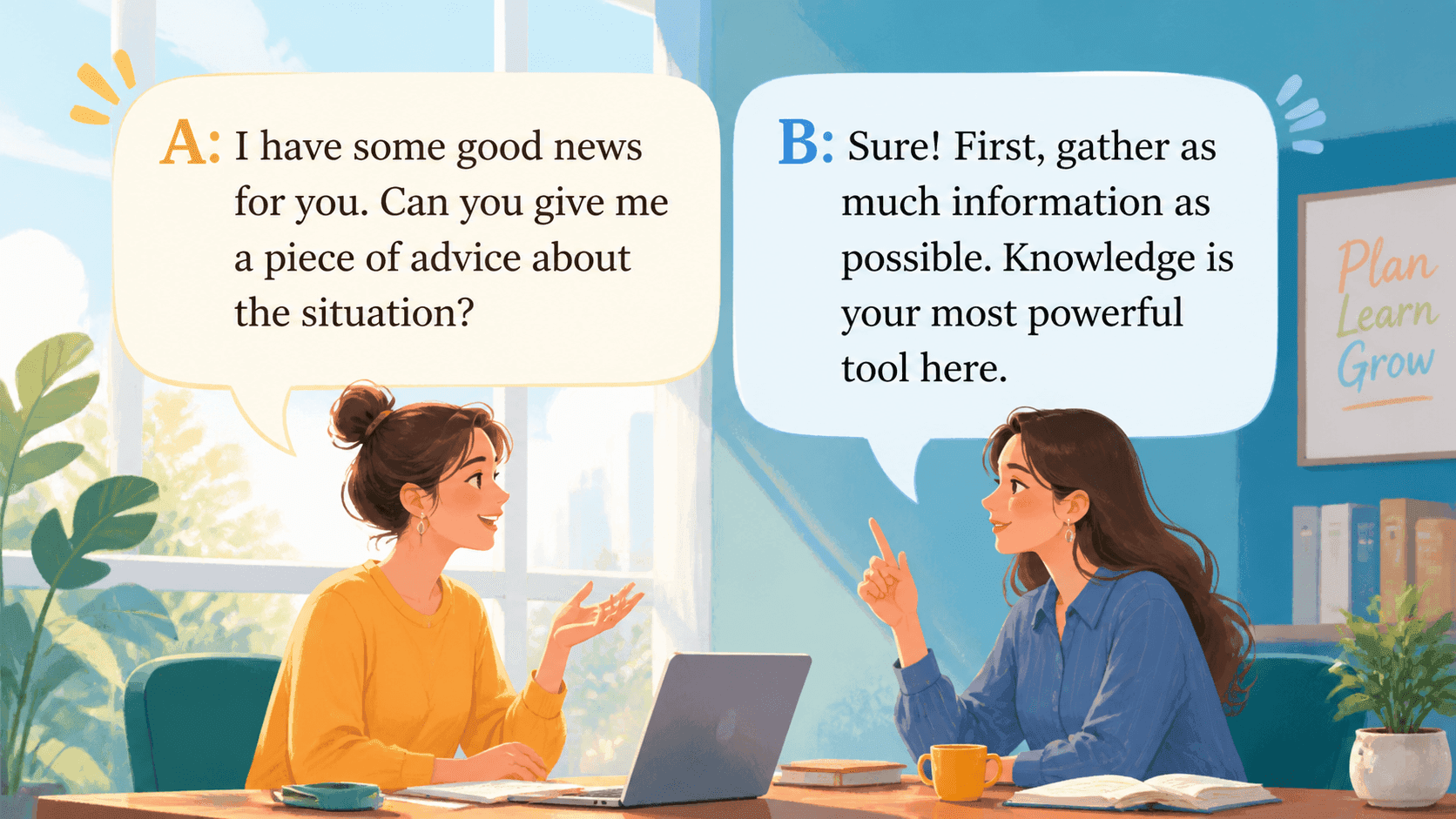
A:I have some good news for you. Can you give me a piece of advice about the situation?
我有个好消息告诉你。关于这个情况你能给我一些建议吗?
B:Sure! First, gather as much information as possible. Knowledge is your most powerful tool here.
当然!首先,尽可能多地收集信息。知识是你最有力的工具。
- How much bread do you want?(你想要多少面包?)
- There isn't much traffic on the road this morning.(今天早上路上车不多。)
- I don't have much money left.(我没剩多少钱了。)
- We made good progress last week.(我们上周进展不错。)
“some good news”“a piece of advice”“as much information as possible”“Knowledge is”“good progress”“much money”“some bread”——每个例子都体现了不可数名词的正确用法。请牢牢记住它们在英语中没有复数形式,也不能随意加a/an。
注意:a paper ≠ paper!“a paper” 通常指“一篇论文/文章/报纸”,而不定冠词a/an用在paper前时已经从“纸”这个不可数名词变成了“具体的论文/讲稿/报纸”等可数名词。类似地,coffee不可数(总称饮品),但可以说 a coffee(= a cup of coffee)。
抽象概念
这一组词是日常表达和写作中极其常见的“思维工具词”,用来组织想法、描述情况和表达逻辑。
idea 是“想法、主意”,可数名词:“I have an idea.”“She came up with several good ideas.”plan 是“计划”,可数:“What's your plan?”“We need a backup plan.”problem 是“问题/麻烦”,与 question 的区别非常重要:question 是提出来需要回答的问题,problem 是需要解决的麻烦或困难。

A:Do you have any questions about the project?
关于这个项目你有什么问题要问吗?
B:Not really. But there is a problem — we don't have enough budget to finish on time.
没有什么问题。但有个麻烦——我们的预算不够按时完成。
第一处 question = 询问的问题;第二处 problem = 面临的困难/麻烦。两者在中文里都是“问题”,但英语中含义完全不同,不能混用。
reason 是“原因、理由”,常与 for 或 why 搭配:“the reason for his decision”“the reason why she left”。way 有两个主要含义:“方式、方法”(a way to do sth / a way of doing sth)和“路、方向”(on the way home / Which way is it?)。
type / kind / sort 都表示“类型/种类”,三者基本可以互换,但 type 更正式,kind 更口语,sort 偏英式:“What type of music do you like?”“What kind of person is he?”“It's some sort of machine.”
There are many ways to improve your English. 提高英语的方法有很多。
The key is finding the right type of practice that suits your learning style. 关键是找到适合你学习风格的那种练习方式。
Having a clear plan will help you stay organized and motivated. 有一个清晰的计划会帮助你保持条理和动力。
She always has creative ideas for our projects. 她总是能为我们的项目提出有创意的想法。
If you run into a problem, don't hesitate to ask for help. 如果你遇到问题,不要犹豫去寻求帮助。
Let's discuss the reasons behind this result. 让我们讨论一下这个结果背后的原因。
What's your way of remembering new words? 你记忆新单词的方法是什么?
This is the most effective type of exercise for beginners. 这是一种对初学者最有效的锻炼方式。
情境与结果
fact 是“事实”,常与 the 连用(the fact that...),也可以在 in fact(事实上)这个固定短语中出现。situation 是“情况、处境”,比 condition(条件、状况)更侧重某一具体的处境或局面。
chance 有两个含义:“机会”(a chance to do sth)和“可能性”(There's a good chance that...)。不能和 opportunity 完全混用——opportunity 更强调“有利的机会”,chance 则更口语化,也包含“机缘巧合”的意思。
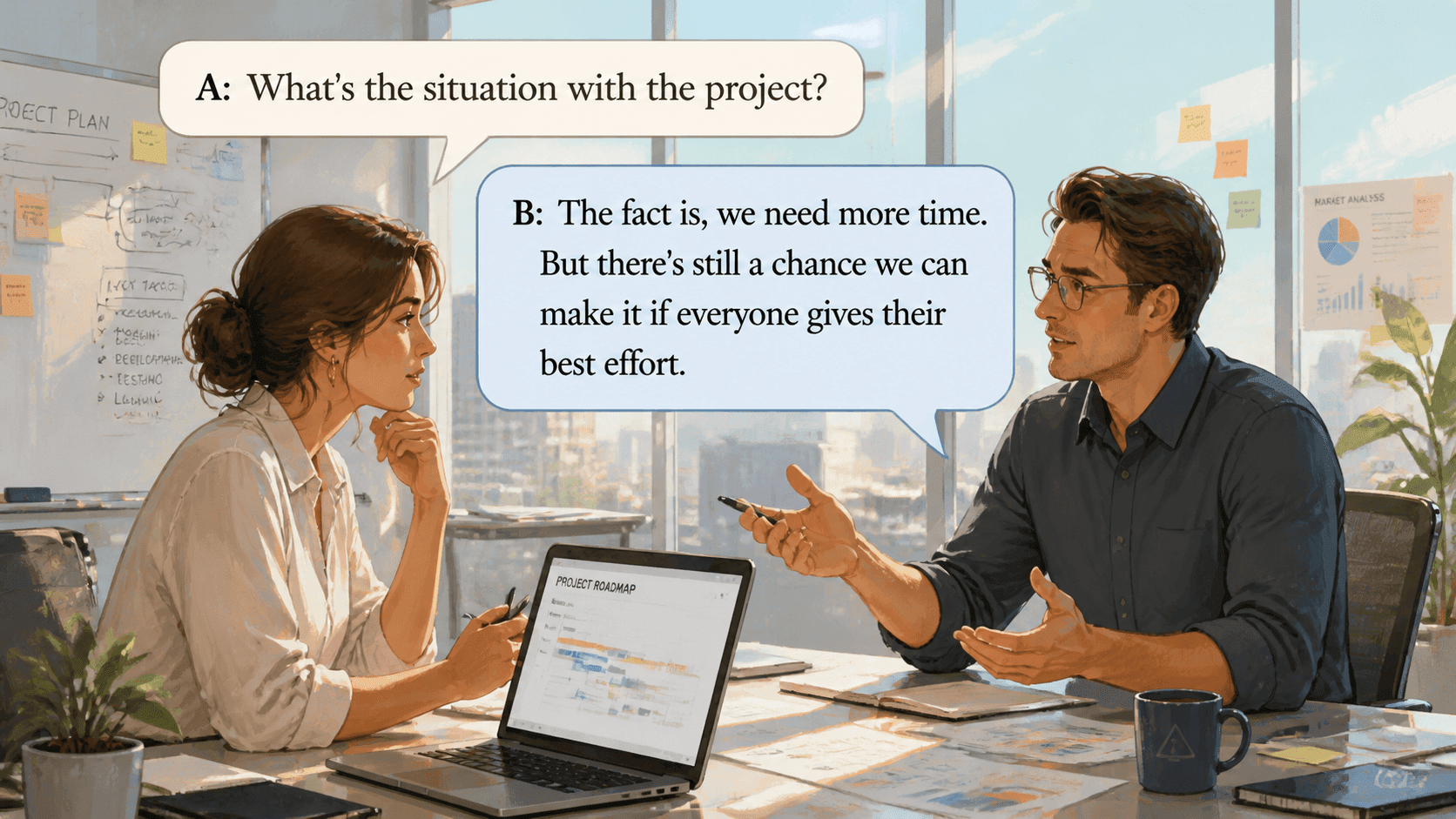
A:What's the situation with the project?
项目现在的情况怎么样?
B:The fact is, we need more time. But there's still a chance we can make it if everyone gives their best effort.
事实是,我们需要更多时间。但如果大家都全力以赴,我们还有机会做到。
result 是“结果”,与 consequence 的区别在于:result 是中性词(the result of the test = 考试成绩),consequence 常暗示负面结果(the consequences of the decision = 决定带来的后果)。example 是“例子、示例”,常见搭配:for example(举个例子,后跟完整句子)和 such as(比如,后跟名词/名词短语)。
练习题
第一题(选择题)
知识点:不可数名词不能加 -s,也不能用 a / an 修饰
下列哪个句子使用了正确的名词形式?
A. She gave me some very useful advices about the interview.
B. The news are very surprising — I can't believe it.
C. We need some more information before making a decision.
D. I bought a new furniture for my apartment last week.
第二题(选择题)
知识点:question 与 problem 的含义区别
选出最符合语境的词:
“After the presentation, the audience had several _____ about the research methodology. There was also a major _____ with the data — some numbers didn't add up.”
A. problems / question
B. questions / problem
C. questions / question
D. problems / problem
第三题(选择题)
知识点:clothes 的特殊用法,以及“a pair of”的表达
下列关于 clothes 和 shoes 的说法,哪个是正确的?
A. She is wearing a very nice clothe today.
B. I need to buy a new shoe for the wedding.
C. He left his clothes on the chair and his shoes under the bed.
D. There are a clothe in the washing machine.
第四题(情景问答)
知识点:不可数名词的量化表达(a piece of / some / a set of 等)
将下列中文表达翻译成英文,注意使用正确的量化词组:
① 一条建议 ② 两条信息 ③ 一件家具 ④ 一件行李 ⑤ 一则好消息
第五题(情景问答)
知识点:idea / plan / reason / way / chance 在日常表达中的综合运用
用以下词汇(每个词至少用一次)描述一个你(或某个虚构人物)解决问题的过程:idea, plan, reason, way, chance。要求叙述连贯,不少于4句话。