数量与程度表达
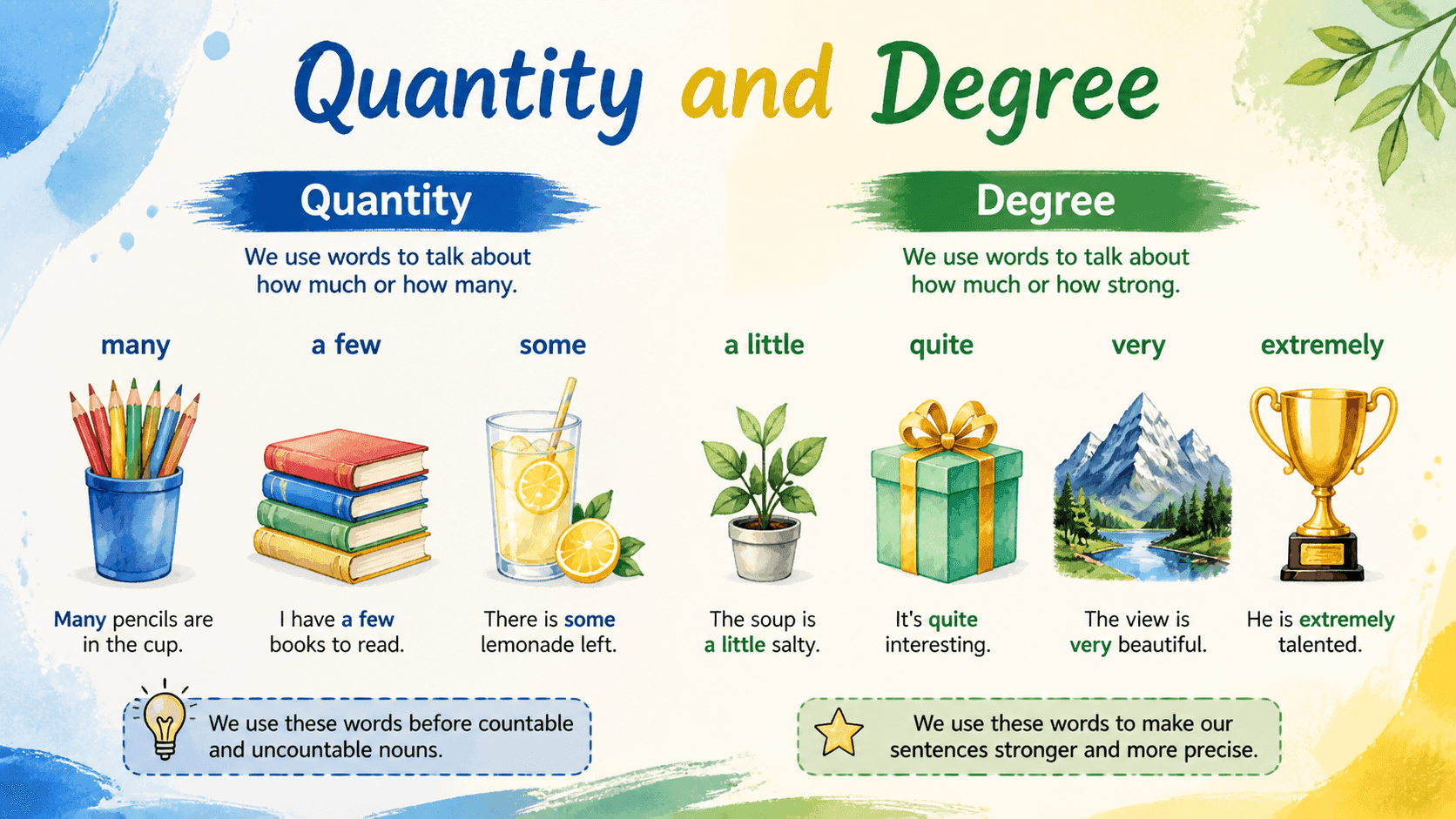
在中文中,我们可以用“很多”“一点”“几乎没有”等表达数量,几乎不加思索,使用非常灵活。但在英语里,表达同样的意思时,必须考虑所描述的名词到底是“可数”还是“不可数”。正因为如此,像 much, many, a little, a few 这些常见的数量词,会根据名词类别分成两套完全不同的用法体系。比如,“很多钱”和“很多朋友”,前者要用 much money,后者要用 many friends;而“一点点糖”是 a little sugar,“几个错误”则是 a few mistakes。
如果没有区分清楚,把数量词随意和名词搭配,语义很容易变得完全相反,甚至让人难以理解。例如,a few 和 few 在“几个朋友”和“几乎没有朋友”这两种情境中的语气正好相反。与之类似,a little 和 little 对于不可数名词也会产生“正面”(有一些)和“负面”(几乎没有)的差异。
此外,英语中对数字的表达方式、数量的模糊说法(如 about, nearly, over 等),以及 so, such, too, enough 这类用来加强语气或描述程度的词,也各自有严格的搭配规律。这些细节不仅是英语口语和写作中必须掌握的基本功,还是提升语言精准表达能力的重要部分。有时候,单词用法一旦出错,会直接影响句子的意思——尤其是在与数量、程度、范围相关的表达中,正确选择词汇非常重要。
数量词的可数与不可数分工
英语中描述数量的限定词分为两大类:只能用于可数名词的,和只能用于不可数名词的。另外还有一些两者都能用的“通用”词汇。

A:Do we have enough ingredients for the dish?
我们有足够的食材做这道菜吗?
B:We have a lot of vegetables and a little oil. But we only have a few eggs, and there's much less flour than I thought.
我们有很多蔬菜和一点点油。但鸡蛋只有几个,面粉比我想象的少很多。
“a lot of vegetables”——蔬菜是可数名词,用 a lot of 正确;“a little oil”——油是不可数名词,用 a little 正确;“a few eggs”——鸡蛋是可数名词,用 a few 正确;“much less flour”——flour 是不可数名词,用 much 修饰程度词 less,正确。
a few 与 few 的对立
这是一个细微但非常重要的区别,是英语里常见的语法陷阱之一。稍不注意就会在表达中传递出完全相反的态度,不仅影响交流,还容易让人误解你的本意。
核心要点:
- a few 里有 a,暗示“有一些,数量少但不一定足够”,语气比较积极,传达出一种“满足”或乐观;
- few 没有 a,强调“几乎没有,非常少”,语气消极,表达“缺乏、寥寥无几”的意思;
- a little 和 little 用法与含义在不可数名词上完全平行:a little = 有一点点(正面),little = 几乎没有(负面)。
I have a few friends in this city — it's nice to know someone here.
(我在这个城市有几个朋友——认识几个人还是不错的。)
I have few friends in this city — it can get quite lonely.
(我在这个城市几乎没有朋友——有时候挺孤独的。)
两句话的区别只在于有没有 a,实际表达的情感却天差地别:
- 前者“a few friends”说明“朋友不多但毕竟有几位”,语调里有一丝温暖和安慰;
- 后者“few friends”则强调“朋友寥寥,缺乏社交”,透露出失落或孤独。
- There are a few cookies left.(还剩下一些饼干。)——至少还能吃到,挺欣慰的。
- There are few cookies left.(几乎没饼干了。)——快吃光了,明显不足。
- She speaks a little French.(她会一点法语。)——有这方面的能力。
- She speaks little French.(她几乎不会法语。)——基本没法沟通。
这类结构还有一个常见扩展:very few 和 very little,进一步强调极少、极少量。例如:
-
Very few students passed the test.(几乎没有学生通过考试。)
-
I have very little patience left.(我几乎没有耐心了。)
注意,a few/few 只搭配可数名词,a little/little 只搭配不可数名词。
“I have little time but a few ideas.”——这句话里 little 修饰不可数名词 time(时间很少,语气偏负面),a few 修饰可数名词 ideas(有几个想法,语气正面),两处都用得非常地道。整句话传递出:虽然时间紧迫(挑战),但自己的思路还挺丰富(希望),是一种积极面对困难、寻找突破的心态。
反之,“I have a little time and few ideas.” 表达“我有一点点时间,但几乎没什么想法”,这里的 few 则暗示一种无助。
much / many 在不同句型中的使用
much 和 many 都有“许多”的意思,但它们的用法与语感有很大区别。
- many 用于可数名词(books, friends, ideas, mistakes 等),
- much 用于不可数名词(water, time, money, information 等)。
肯定句中:a lot of / lots of 更常用
在现代英语口语里,英语母语者很少在肯定句中用 much 或 many,而是更倾向于用 a lot of 或 lots of,这样听起来更加自然和地道。
- a lot of 和 lots of 既可修饰可数名词也可修饰不可数名词。
- 书面语、正式或强调语境下才偶尔用 much/many。
例子:
- I have a lot of friends. ✅
I have many friends.(口语少用) - She gave me a lot of advice. ✅
She gave me much advice.(生硬)
否定句 & 疑问句中 much / many 才高频
much / many 在否定句和疑问句中用得最多,也更自然。这是因为英语表达“没有多少”或者“到底有多少”时,much/many 简洁直接。一般不用 a lot of。
-
I don't have much time.(我没有多少时间。)
-
There aren't many people here today.(今天这里没有多少人。)
-
Do you have many friends? (你有很多朋友吗?)
-
Is there much water left?(还剩下很多水吗?)
形式题例详解

A: Did you take many photos on the trip?
旅途中你拍了很多照片吗?
B: Not many. I didn't have much time for sightseeing. But I took a lot of videos instead.
不多。我没有太多时间观光。不过我拍了很多视频。
分析:
- “Did you take many photos?”——疑问句,用 many,这种提问很自然;
- “Not many.”——否定回答,继续用 many,很口语化;
- “I didn't have much time for sightseeing.”——否定句,不可数 time,用 much;
- “But I took a lot of videos.”——肯定句,可数名词 videos,用 a lot of 更自然流畅;
这种搭配是地道英语表达的典型逻辑。
其他常见搭配扩展
“How many?” 是常见可数名词提问;“How much?” 是不可数名词提问。
much/many 常与 too(太多)、so(如此多)、as(像……一样多)搭配
- I ate too much chocolate. (我吃了太多巧克力。)
- So many people came to the concert.(来音乐会的人太多了!)
- We didn't spend as much money as last time.(花的钱不如上次多。)
口语小贴士
much/many 在带有“so/too/as/very/how/only”修饰时,用在肯定句也很常见。例如:
- She doesn't have many friends.(否定句)
- She has so many friends!(so + many,肯定句)
记忆口诀
- 肯定句用 a lot of,否定/疑问用 much / many。
- many 配可数,much 配不可数,灵活切换更地道。
大量情况 a lot of/lots of 比 much/many 用得多,除非是在否定句、疑问句或书面语环境。熟练掌握不同句型的选择,表达才会像母语者一样自然!
so / such / too / enough 的搭配规则
这四个程度词(so, such, too, enough)是英语写作和口语中非常高频且实用的程度副词或限定词,但它们的搭配结构各不相同,稍有偏差就会出错。深入掌握它们的用法,可以让你的表达更地道、更富层次。
so 与 such 的搭配对比
so 修饰形容词或副词(so + adj/adv),such 修饰名词短语(such + (a/an) + adj + n),也可用于强调“如此……以至于”。含义相近,都用于强调,但搭配对象不同——务必牢记结构差异。
结构说明和错误
-
“so” 通常直接修饰形容词或副词(so clever, so fast);也有 so many books 和 so difficult a question 等结构。
-
“such” 后面要有名词,可单独用名词(如 such kindness),也可带上 a/an 及修饰语(如 such a bad idea, such an interesting book)。
-
两者都可和 that 引导原因结果句(结果状语从句)搭配,表达“……以至于……”。
-
错误示例:
❌ It was so a good movie.(so 不能修饰 a + 名词,应为 such a good movie)❌ It was such good that I cried.(such 后必须有名词,应为 such a good movie 或 so good)
The presentation was so impressive that the entire board applauded. 演讲太精彩了,以至于整个董事会都鼓起了掌。
She gave such a powerful speech that everyone was moved. 她发表了如此有力的演讲,让在场所有人都深受感动。
- so impressive = so + 形容词
- such a powerful speech = such + a + 形容词 + 名词
两句话含义相近但结构完全不同。so 不能和名词连用,such 不能单独修饰形容词。
常用搭配
- so + 形容词/副词(so interesting / so quickly)
- such + a/an + 形容词 + 可数单数名词(such a big house)
- such + 形容词 + 不可数名词或复数名词(such delicious food / such talented people)
- so/such ... that ... 引出结果
- so 与 too/very/how 也常见(so/too/very happy, how fast)
too 与 enough 的用法扩展
too 表“太……了”,带一点消极或超出期望的意味。enough 表“足够……”,可修饰形容词或名词,且位置要注意。
too 的结构
too + adj/adv(用于肯定句)
- The water is too hot to drink.(水太烫,喝不了。)
- He spoke too fast for me to understand.(他说得太快我听不懂。)
还可以和 much/many/ few/little 搭配:
- There are too many people here.(这里人太多了。)
- We spent too much money.(我们花钱太多。)
enough 的结构
adj/adv + enough(形容词/副词+enough)
- She isn't tall enough to reach the shelf.(她不够高拿不到架子上的东西。)
- He didn't run fast enough.(他跑得不够快。)
enough + n(enough 放在名词前)
- We have enough food for everyone.(我们有足够的食物。)
- Do you have enough time?(你有足够时间吗?)
enough 还可用于否定句和疑问句,表示“不足、够不够”:
- There isn't enough space in the car.(车里空间不够。)
典型易错点
too 通常引出消极结果,“太多以至于……不行”,而 so 只是“很”或“如此”没有过度意味。例如:
- It's so cold!(好冷!/如此冷!——中性/强调)
- It's too cold to go outside.(太冷了,没法出门。——超出承受范围)
总结口语记忆口诀
- so 跟形容词/副词,such 跟名词短语,不可互换;
- too 表“太……”,通常含有过量、消极含义;
- enough 可在名词前/形容词或副词后,“够/不够”要注意顺序;
- so / such 常与 that 引结果从句,too...to... 表“太……而不能……”。
数字与约数的表达
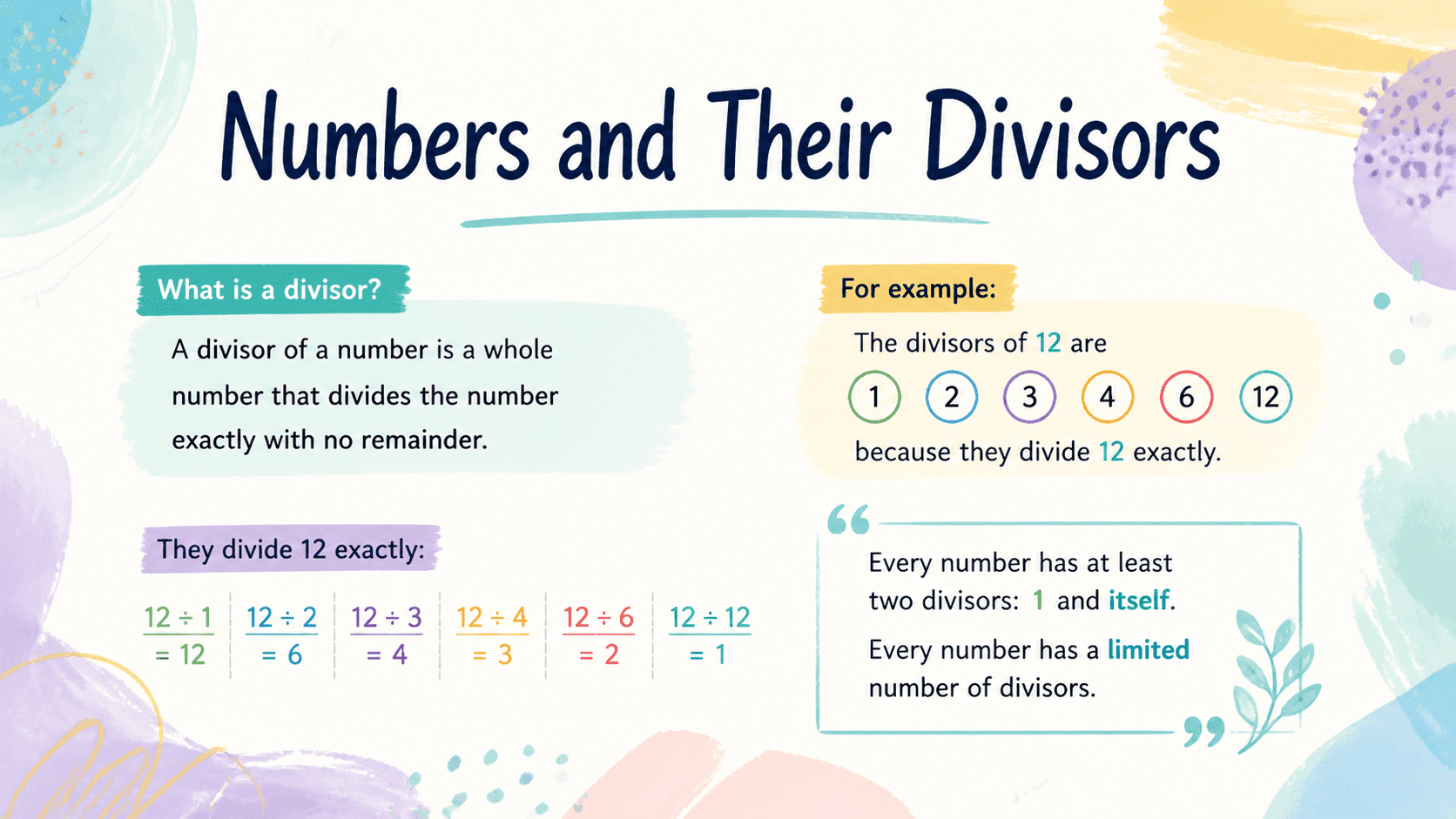
基数词与序数词
英语数字表达有以下几个常见难点:
- 大数字分位方式与中文不同:英语用 thousand(千)、million(百万)、billion(十亿), 没有“万”这个单位,要注意换算。
- 中间不加 and,直叙即可。例如 31,450: thirty-one thousand four hundred (and) fifty (美式口语一般省略 and)。
序数词
用于表示顺序(the first, the second, the third...)。前三个有特殊写法,从第四开始规律加-th,但注意部分拼写:
- fifth(不是 fiveth)
- eighth(不是 eightth)
- ninth(去掉 e 后加 th)
- twelfth(不是 twelveth)
- 日期表达“几月几日”用序数词,如 July 4th。
- 楼层、排名等也都用序数词(the 5th floor,第五层;finish third,第三名结束)。
分数、百分比和倍数表达
分数表达
- 分子(多少份)用基数词,分母(第几份)用序数词。分子大于 1 时分母加-s。
- one third(三分之一);two thirds(三分之二);a quarter/one fourth(四分之一);three quarters(四分之三)。
- half(一半),单独专有,不是 one second。
百分比表达
- “百分之……”——percent 置于后面,20% = twenty percent。
- Only ten percent of the class passed the test.(班级里只有百分之十的人及格。)
About two thirds of the students passed the exam. 大约三分之二的学生通过了考试。
Nearly half of the budget has already been spent. 近一半的预算已经花出去了。
约数表达(大约/超过/将近...)
- about / around / approximately:你能放心用于正式或口语,均可表达大概数量,如 about 100 people。
- roughly:偏口语,表示相对粗略估计。
- nearly / almost:表示“将近/差不多”,暗示实际值稍微低于数字。
- over / more than:用于“超过某数”,强调实际数大于基础数。
- just over / just under:表示“刚刚超/不足”。
- up to:表示“最多达到……”。
- as many as/ as much as:强调数量诸多。
- There were about 30,000 spectators at the event.(大约有三万观众。)
- The city has nearly 15 million residents.(该城市有将近一千五百万居民。)
- Last year, the company's revenue exceeded two hundred million yuan.(去年公司营收超过两亿元。)
- Almost half of the participants agreed with the proposal.(几乎一半的参与者同意该提案。)
- Roughly a third of the food was left uneaten.(大约三分之一的食物没有被吃完。)
The conference attracted over five hundred participants — approximately twice as many as last year.
会议吸引了五百多名参会者——大约是去年的两倍。
小结口诀
- about/around/approximately/roughly 后跟数词,“大约多少”
- nearly/almost “接近”,实际值稍小
- over/more than “超过……”
- 倍数表达“twice as many/much as …”、“three times the amount/number of ...”
运用这些表达,让你的数字叙述更精确、地道!
练习题
第一题(选择题)
知识点:可数名词与不可数名词数量词的选择
下列哪个句子中数量词与名词搭配正确?
A. She doesn't have many patience for slow learners.
B. There are much problems with the current system.
C. He gave me a few useful advice about the project.
D. We don't have much time left — let's hurry.
第二题(选择题)
知识点:a few / few 与 a little / little 的正负含义对比
选出与中文意思完全匹配的英文句子:“他有几个支持他的朋友,虽然不多但很重要。”
A. He has few friends who support him — it's quite important.
B. He has a few friends who support him — it means a lot.
C. He has little friends who support him — it means a lot.
D. He has a little friends who support him — it's quite important.
第三题(选择题)
知识点:so 与 such 的搭配结构区别
选出语法正确的句子:
A. It was so a difficult question that no one could answer it.
B. She is such talented that everyone admires her.
C. The weather was so terrible that the match had to be cancelled.
D. He made such impressive performance that he got a standing ovation.
第四题(情景问答)
知识点:大数字的英语表达(thousand / million / billion)和约数表达(about / over / nearly)
将下列中文数量表达翻译成英文:
① 大约三万人参加了这次活动。
② 这座城市有将近一千五百万居民。
③ 公司去年的收入超过了两亿元人民币。
④ 大致一半的受访者表示满意。
第五题(情景问答)
知识点:much / many / a lot of 在不同句型(肯定/否定/疑问)中的使用习惯
在日常口语中,以下三种句型各有对应的更自然的数量词选择。请完成这段对话,在空格内填入最自然的数量词(much / many / a lot of / lots of 之一),并简要说明选择理由:
A:Did you see _____ people at the exhibition?(疑问句)
B:Yes, there were _____ visitors — it was really crowded.(肯定句)
A:I'm surprised. I didn't think there would be _____ interest in modern art.(否定句 + 不可数名词)