人与社会

描述“人”的词汇是任何语言中最基础、最常用的词汇类别之一。人与人之间的交往、沟通和合作构成了社会,因此表达人类个体、群体及其社会身份的名词频繁出现在日常表达、书面语和正式场合。例如,要准确介绍自己和他人,描述年龄阶段、性别、职业、家庭成员、社会角色或所属群体,都离不开对相关词汇的准确掌握。
此外,英语中许多与“人”相关的名词有特殊的单复数变化和用法,不仅有规则名词加 -s/-es 的简单变化,也有许多不规则形式,如 child/children、man/men、person/people 等。这部分内容是英语词汇学习中的重点,也是中国学习者经常出错的环节。通过深入理解和练习这些单词及其语法特征,能够更流畅、更地道地描述人的各种社会和身份关系,并在实际交流中避免常见语法错误。
人的基本身份
person 与 people 的使用规则
person 是“个人”,强调一个具体且独立的个体,常用于强调单数、个人属性。例如:“She is a very responsible person.”(她是一个很有责任心的人)。而 people 是“人们、人群”,通常作复数使用,表示多个人,是集合概念。例如:“People are friendly here.”(这里的人都很友好)。
注意:这两个词的关系不是简单的单复数关系——people 虽然常作为 person 的复数出现,但在语言习惯和用法上并不完全对等。people 并不是 person 的“加-s”复数形式,而是表达集体时专门使用的词汇。在绝大多数情况下,person 的复数直接用 people。
person 的复数有两种:日常英语中几乎总是用 people,例如:
There were ten people at the party.(聚会上有十个人)
Three people are waiting for you outside.(有三个人在外面等你)
但在极其正式、法律或官方文件中,有时会用 persons,例如:
Maximum 10 persons(最多10人,见于电梯、门口标识等)
Missing persons report(失踪人员报告,警方文件用)
一般口语和写作中不建议用 persons,因为显得生硬或者过度正式。

A:How many people came to the meeting?
有多少人来开会了?
B:About fifteen people. But there was only one person who asked questions — everyone else just listened.
大概十五个人。但只有一个人提了问题——其他人都只是在听。
people 还可以用作“民族、族群”的意思。例如:“the peoples of Asia”就是指“亚洲各民族”。这种用法下,peoples 才会出现复数形式,如“the indigenous peoples of the world”(世界原住民族)。此时的 peoples 表达不同类型、多个民族或族群。
常见错误
❌ "one people"(不表示“一个人”,而是“一个民族”) ✅ "one person"(一个人)
△ "five persons"(语法正确,日常表达更常用 five people) ✅ "five people"(五个人)
man / woman / child 的不规则复数
英语有一些常用词,其复数形式是不规则的,不能单纯套用“加-s”或“-es”规律,这也是中国学习者高频出错的地方。这些词必须单独记忆。
特别强调:woman 的复数 women,发音为 /ˈwɪmɪn/,不是按拼字母拼出“wo-men”,实际发音与字母不同。此外,man/men, woman/women 在口语和听力上尤其要注意区分。
adult、teenager、elderly
- adult(成年人):单复数遵循常规,加 -s,即 adults。
- teenager(青少年,13-19岁):复数 teenagers。
- elderly 通常为形容词,表示“年长的”,但在英语中常作为名词,特指“老年人群体”,如 the elderly(老年人们)。the elderly 做主语时作复数看待(the elderly are...)。
-
The women in this team are very talented.(这个团队里的女性都非常有才华。)
-
Children must be accompanied by an adult.(儿童必须由成人陪同。)
-
The elderly in this city receive free bus passes.(该市的老年人可以免费乘公交。)
掌握这些基础词汇的单/复数形式和发音,不仅能避免常见语法、表达错误,还能提升你的英文口语与书面表达的准确度和自然度。
生命阶段

这组词汇用来描述人生不同阶段,掌握它们的区别与用法有助于准确表达人物年龄背景、社会地位以及代际差异。在实际运用时,要分清楚各词的语体风格(正式/口语/书面)与感情色彩。
-
Baby(婴儿)
Baby 指一岁左右甚至更小的孩子,是生命最初的阶段。这个词既可用于正式描述,也常见于日常亲昵用语。
例句:The baby is sleeping.(婴儿正在睡觉。) -
Child(儿童 / 孩子)
Child 通常泛指13岁以下的未成年人。语气中性、正式,适用于各种场合,包括书面和口语表达。
例句:She has two children.(她有两个孩子。) -
Kid(小孩,口语)
Kid 是 child 的更口语/亲切的表达,常见于非正式情境,也经常用作昵称。朋友、家人之间也常相互称为 kid。
例句:Hey, kid! Come over here.(嘿,孩子!过来。) -
Teenager(青少年)
Teenager 通常指13-19岁的青少年,强调正处于青春期。口语中常简化为 teen,指的是这个年龄段的年轻人。
例句:Teenagers need more sleep.(青少年需要更多的睡眠。) -
Youth(青年时期 / 年轻人)
Youth 既可以表示“青年时期”,也可指年轻人整体。这个词常暗含理想、朝气、冲动等色彩。
例句:The youth of today.(当今的青年。) -
Adult(成年人)
Adult 指18岁或以上的成年人,身心发育成熟,能够独立承担社会责任,是社会的主要成员。
例句:Adults only.(仅限成年人。) -
Elderly(老年人群体)
Elderly 原为形容词(年长的),日常用中常作名词,指老年人群体。the elderly 常用复数结构,体现尊重。
例句:The elderly are respected here.(这里对老年人很尊重。) -
Generation(一代人 / 世代)
Generation 强调代际关系,常在社会变迁、生活方式、价值观等层面的讨论出现。
例句:The next generation of leaders.(下一代领导者。)
Every generation faces its own challenges. 每一代人都面临自己的挑战。
Today's teenagers are growing up in a very different world from their parents. 今天的青少年是在一个与父母那个时代截然不同的世界里长大的。
此外,英语中有许多用“the + 形容词”来泛指某一类人的表达,需特别注意用法逻辑和搭配习惯:
- the elderly(老年人):前面必须加定冠词 the,且视为复数主语(the elderly are...)。也可以说 the elderly people,但 the elderly 更简洁、正式。
- the young(年轻人)、the poor(穷人)、the disabled(残障人士)、the unemployed(失业者)等,这类表达多用于泛指特定群体,常出现在新闻、正式写作、演讲等场合。
The young need opportunities.(年轻人需要机会。)
在非正式语境中,“old people”虽然语法无误,但“the elderly”更为委婉且正式,显示出尊重。
- Babies need a lot of sleep.
婴儿需要很多睡眠。 - These kids are playing in the yard.
这些小孩在院子里玩。 - The young are full of energy.
年轻人充满活力。 - Many adults struggle to balance work and life.
很多成年人难以平衡工作与生活。 - The previous generation valued stability more than freedom.
上一代人更看重稳定而非自由。
通过掌握上述表达及语法搭配,可以更加准确自然地描述人生不同阶段、交际语境和社会现象。
社会关系
描述家庭和人际关系
family 既可指“家庭(整体)”,也可指“家庭成员”。当 family 表示整体概念时,通常用单数动词;当强调家庭成员个体时,可用复数动词(尤其在英式英语中)。
My family is very important to me. 我的家庭对我来说非常重要。
My family are all coming to the dinner on Sunday. 我的家人周日都要来吃饭。
第一句 family 指整体概念,用 is;第二句 family 指家庭成员们,用 are(英式英语的集体名词习惯)。
neighbor 是“邻居”,colleague 是“同事”(正式),coworker 是更口语化的“同事”。partner 的含义非常灵活:可以是商业伙伴(business partner)、合作者(research partner),也可以指伴侣(romantic partner)。在现代英语中,partner 越来越多地用于泛指伴侣,而不区分婚姻状态。

A:Who is that? Is she your colleague?
那是谁?她是你同事吗?
B:No, she's my neighbor. We happened to work in the same building.
不是,她是我邻居。我们碰巧在同一栋楼里工作。
team / group / community / society / public
这几个词都描述由人组成的集合,但范围和含义各有侧重。
team 强调有共同目标和协作关系,通常指较小的组织单位;group 是更泛化的“群体/组”,不强调协作;community 是“社区/社群”,强调共同居住或共同利益的归属感;society 是“社会”,指更宏观的社会整体或某一社会组织;public 是“公众/民众”,通常与“the”连用,the public 表示普通大众。
The community center offers free classes for the public. 社区中心为公众提供免费课程。
Our team worked with several groups across the company. 我们团队与公司内多个部门合作。
职业与角色
job / career / occupation / profession 的层次差别
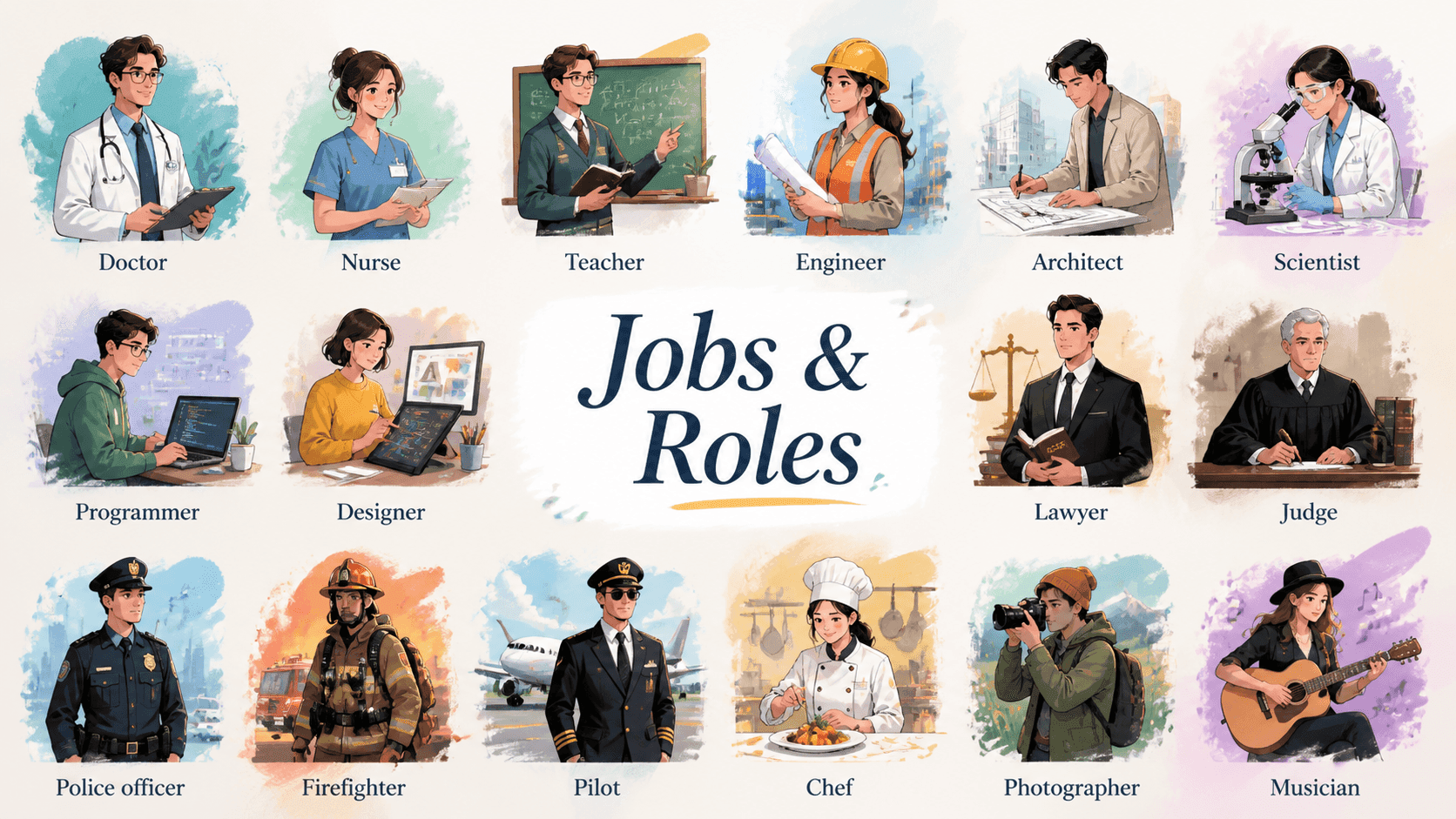
这四个词都与“工作”相关,但含义深度不同。job 是最日常的表达,指具体的一份工作职位;career 是“职业生涯”,指一个人在某领域较长时间的发展轨迹;occupation 是正式/书面用语,多出现在表格填写(填“职业”那一栏);profession 特指需要专业培训和认证的职业,如医生、律师、教师等。
She found a new job last month. 她上个月找到了新工作。
She's been building a successful career in marketing for ten years. 她在市场营销领域已经积累了十年的成功职业生涯。
He listed his occupation as “engineer” on the application form. 他在申请表上填写的职业是“工程师”。
Law is a respected profession that requires many years of study. 法律是一项需要多年学习的受人尊敬的职业。
employee / employer / manager / leader / owner
这组词描述职场中的角色关系:
- employee:员工,受雇者。注意拼写与 employer 区别。区分方法:employ 是“雇用”,employee 是被雇用的“–ee”(被动方)。
- employer:雇主,用人方。
- manager:经理/管理者,负责管理一个团队或部门的人。
- leader:领导者,强调领导力和影响力,不一定是正式职务。
- owner:拥有者/所有者,描述所有权关系。
The owner of the company started as a regular employee twenty years ago and worked his way up to become the CEO.
这家公司的老板二十年前从一名普通员工做起,一路晋升成为了CEO。
The manager held a meeting with all employees to discuss the new project.
经理召集所有员工开会讨论新项目。
The employer provides health insurance for every employee in the company.
雇主为公司每位员工提供健康保险。
Our team leader is an inspiring person who motivates us every day.
我们的团队领导是一位鼓舞人心的人,每天都激励着我们。
The restaurant owner greeted every customer with a smile.
餐厅老板对每一位顾客都面带微笑地打招呼。
customer / client / citizen / resident
customer 和 client 都是“客户”,但有语境差别:customer 用于一般零售和服务行业(买东西的顾客),client 用于专业服务行业(律师、会计、咨询等的委托方)。citizen 是“公民”,强调与国家或政府的法律关系;resident 是“居民”,强调在某地居住的事实,不一定涉及国籍或公民身份。
As a long-term resident of this city, she feels like a true citizen. She knows every local business and is a loyal customer at most of them.
作为这座城市的长期居民,她感觉自己是真正的市民。她认识每一家本地商铺,是其中大多数的忠实顾客。
The law firm's client was very satisfied with the service he received.
这家律师事务所的客户对所获得的服务非常满意。
Every citizen has the right to vote in the election.
每个公民都有权利在选举中投票。
Many residents attended the neighborhood meeting last night.
许多居民昨晚参加了社区会议。
The store is known for its excellent customer service.
这家店以优质的顾客服务而闻名。
As his lawyer's client, he received regular legal advice.
作为律师的客户,他定期收到法律建议。
The city government organized an event to encourage citizens to recycle.
市政府组织了一次活动,鼓励市民进行垃圾回收。
Long-time residents often know all the best local restaurants.
长期居民往往知道本地所有最棒的餐馆。
练习题
第一题(选择题)
知识点:person 与 people 的使用区别
下列哪个句子使用正确?
A. There were many person waiting outside the theater.
B. She is a very kind people.
C. Only one person in the group spoke up during the meeting.
D. The peoples of this city are very friendly.
第二题(选择题)
知识点:不规则复数形式
下列哪组单复数形式全部正确?
A. child → childs / tooth → teeths / leaf → leafs
B. man → men / woman → womens / foot → feet
C. child → children / knife → knives / tooth → teeth
D. leaf → leaves / person → peoples / woman → woman
第三题(选择题)
知识点:customer / client / citizen / resident 的语境区分
选出最符合语境的词:
“The law firm has been working with the same _____ for over fifteen years. They handle all of the company's legal matters.”
A. customer
B. client
C. resident
D. employee
第四题(情景问答)
知识点:job / career / occupation / profession 的使用差别
下面有一个求职者在回答面试问题,请指出他的用词问题并修改:
“I've been working in this job for about ten years. I think this job is a very noble profession. I love what I do.”(我从事这份工作大约十年了。我认为这份职业是非常高尚的职业。我热爱我所做的事。)
第五题(情景问答)
知识点:集体名词 team / group / community / society 的语义区别
用以上四个词(team / group / community / society)分别造一个句子,确保每个词的使用场景准确体现其语义特点,并在括号内简要说明选词理由。