时间状语从句
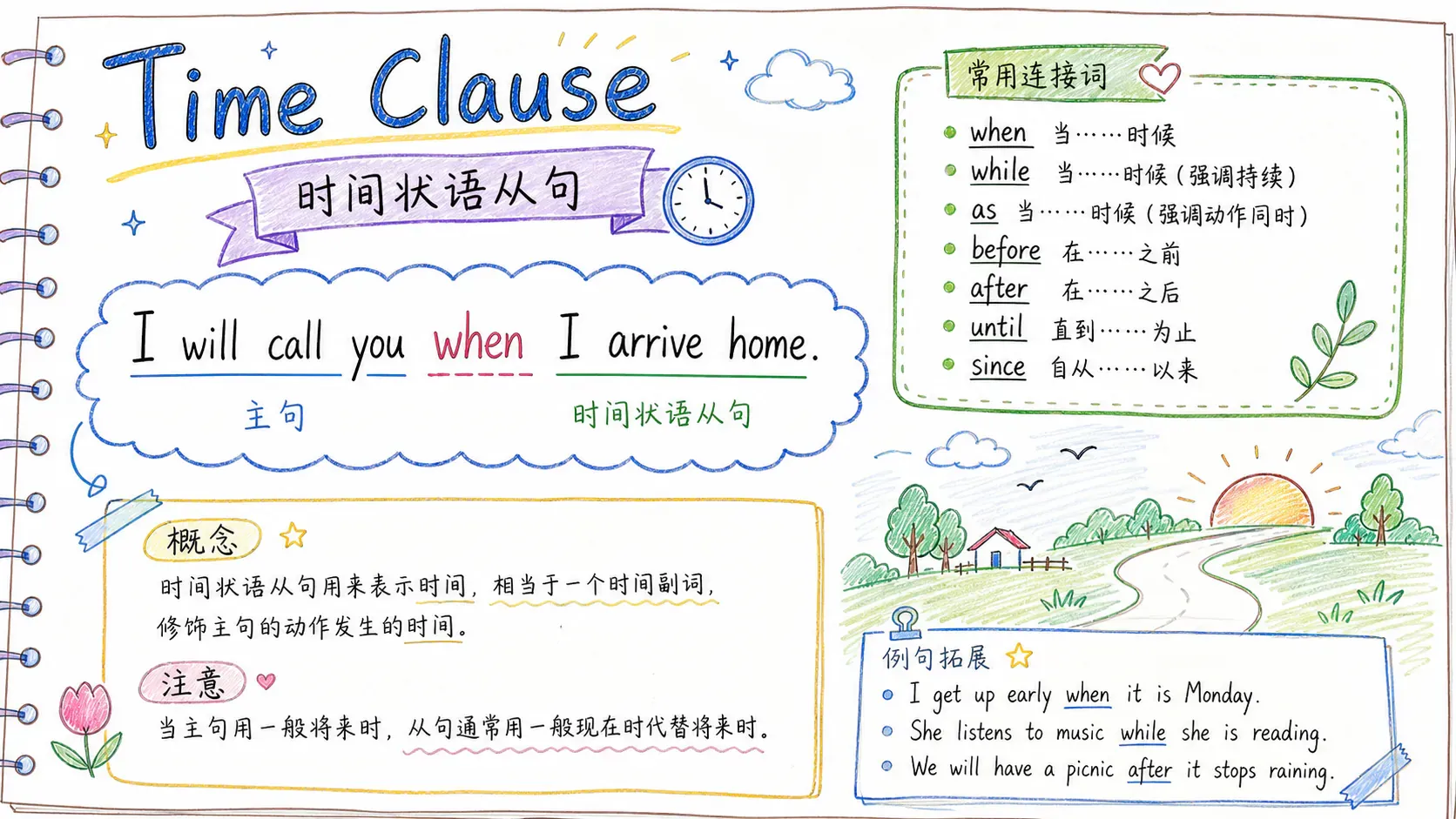
状语从句是一种用来修饰主句动词的从句,能够补充说明动作发生的时间、原因、条件、结果、目的或让步等多种信息。例如,我们可以用状语从句描述一个动作在什么时间发生(时间状语从句)、为什么发生(原因状语从句)、满足什么条件时会发生(条件状语从句)、即使遇到什么障碍仍然发生(让步状语从句)等。
在表达时间关系时,英语中存在多种连接词,例如 when, while, as, before, after, until, since, as soon as, once, whenever 等。不同的时间连接词侧重不同的时间逻辑,有些强调时间点,有些则描述动作的持续、先后顺序或者事件的同步。合理运用这些连接词,可以让句子表达更加严密准确,帮助你详细描述事件的顺序、背景以及动作之间的微妙关系。例如:
- “When I finished my homework, I went out to play.”(当我完成作业时,我出去玩了。)
- “While he was reading, the phone rang.”(他正在读书的时候,电话响了。)
- “As the sun was rising, the city woke up.”(太阳升起的时候,城市苏醒了。)
通过掌握各类时间状语从句的用法,你可以更自然、清晰地讲述事件的发展过程、表达时间先后与因果关系,让句子更加丰富和富有条理。
When / While / As:三种“当……时”
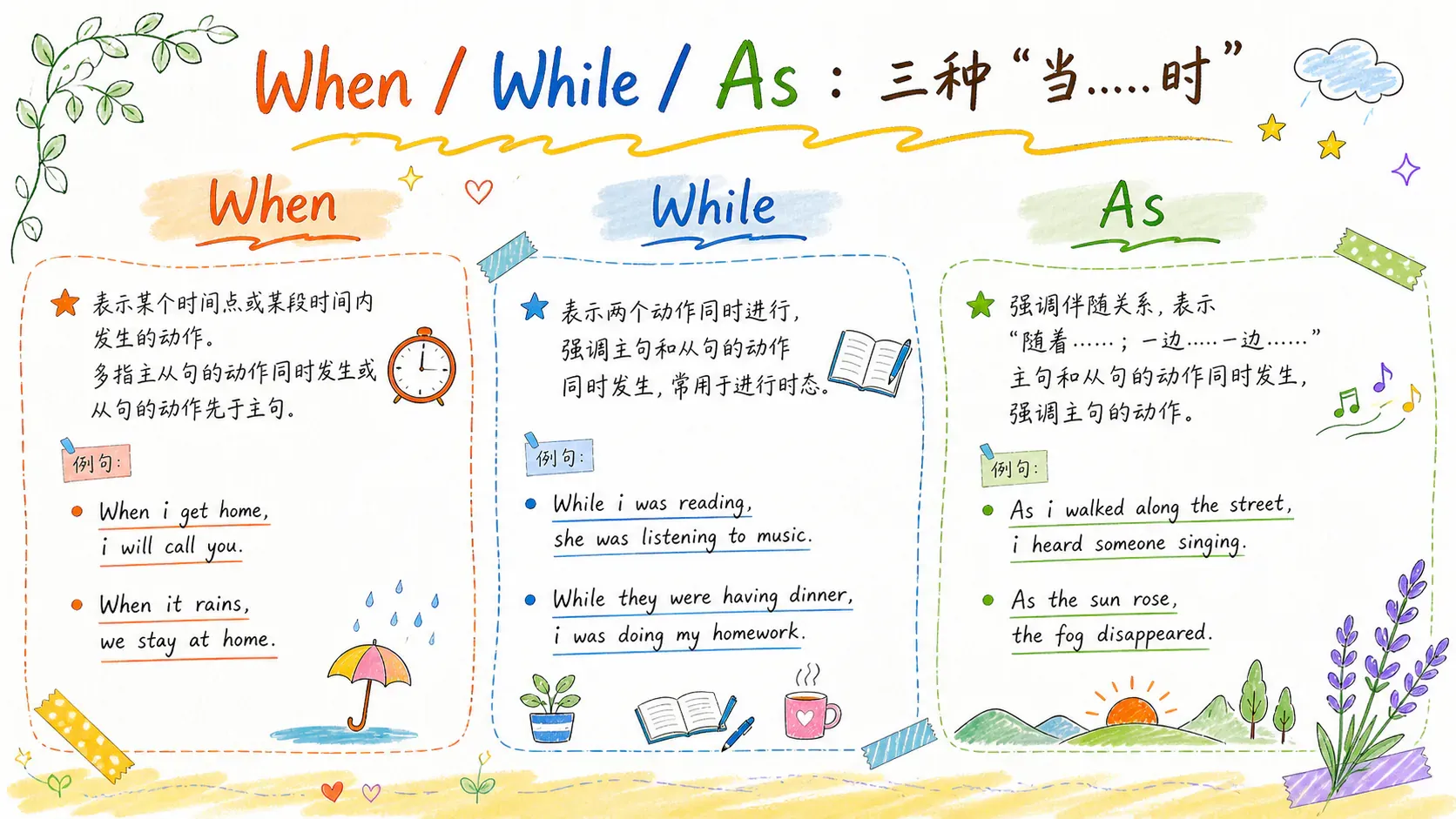
这三个连接词都可以翻译为“当……的时候”,但实际上他们的侧重点和语境大不相同。如果使用不当,容易导致逻辑混乱或语义不准确。下面详细区分三者的用法,并通过更多实例加深理解。
When:强调“点动作”或具体时刻
特点:
- 表示“某一时刻”或“一个动作发生的瞬间”。
- 常用于已经完成的动作(瞬时动词),主句的行为常常紧接在 when 引导的动作之后发生。
- 强调“点”的概念,而不是持续发生的背景。
When I arrived at the station, the train had already left.
当我到达车站时,火车已经开走了。(“到达”为瞬时动作)
When she heard the news, she burst into tears.
她听到这个消息时,立刻哭了出来。(“听到”是点动作,立刻“哭”)
When 也能用于描述两个动作同时发生(尤其是两个持续性动作),但此时语义更加宽泛,while 更加准确、自然。例如:
- When I was studying, my sister was listening to music. 当我在学习的时候,我妹妹在听音乐。(when 可以用,但 while 更自然)
While:强调持续动作的同时进行
特点:
- 表示“在……期间”,强调动作的持续性或习惯性,与主句的动作贯穿发生。
- 通常从句用进行时,表示动作正在展开。
While she was cooking dinner, her children were doing homework in the living room.
她在厨房做饭的时候,孩子们在客厅做作业。(两个持续动作同步进行)
I fell asleep while I was watching the movie.
我看电影的时候睡着了。(“看电影”为背景,“睡着”为主要事件)
- While I was waiting for the bus, it started to rain.
我等公交的时候开始下雨了。 - Don't talk while you are eating.
吃饭的时候不要说话。
若主句和从句都是延续性动作,while 是最佳连接词;若动作是点时间,则优先用 when。
As:强调同步发生或同步发展、变化
特点:
- 表示“两件事同步进行”或“随着……逐渐发展”,强调事件平行推进或状态的渐变。
- 常用于表示变化趋势或两件事的共同进行,有时带有“正当……时”或“就在……时”的含义。
As she grew older, she became more patient with others.
随着她年纪渐长,她对他人变得更有耐心。(as 强调同步增长与变化)
As I was leaving the office, I ran into my old classmate.
我正要离开办公室时,遇见了我的老同学。(as 带有“恰巧”的感觉)
- As the days passed, the weather got colder and colder.
随着日子一天天过去,天气越来越冷了。 - As they were talking, the teacher entered the room.
在他们聊天的时候,老师走进了房间。
小结对比:
- When 突出“点”,动作多为瞬间性。
- While 突出“背景”,两个延续性动作平行。
- As 更强调同步推进,有时强调变化、有时强调偶然。
可以用如下对比帮助记忆:
- When I entered the classroom, the bell rang.(“进入”为点动作)
- While I was studying, my friend was playing games.(持续性动作并行)
- As the concert began, the audience became quiet.(随着/正当……时)
小练习: 判断下列句子用 when 还是 while 还是 as:
- ______ I was driving to work, I listened to the news.
- ______ he opened the door, the dog rushed out.
- ______ the sun was setting, the sky turned orange.
Before / After:先后顺序
Before 和 After 明确表达两件事的先后关系,用于说明一件事发生在另一件事之前或之后。
- Before:某事发生在另一件事之前。
- After:某事发生在另一件事之后。
Before you sign any contract, make sure you understand every clause.
在你签任何合同之前,确保你理解每一条款。(before 从句的动作在主句动作之前发生)
After the presentation ended, everyone gathered around to ask questions.
报告结束后,大家都聚拢过来提问。(after 从句的动作在主句动作之后发生)
可以用 before/after 引导的时间状语从句放在句首或句末:
-
Make sure you understand every clause before you sign any contract.
在你签任何合同之前,确保你理解每一条款。 -
Everyone gathered around to ask questions after the presentation ended.
报告结束后,大家都聚拢过来提问。
注意时态: 当主句为过去时,从句也用过去时。若要表达两个过去动作的先后,常用过去完成时(had + done)进一步强调先发生的动作。
After she had finished the report, she finally allowed herself to relax.
在她完成报告之后,她才终于让自己放松下来。(had finished 表示先完成,then relaxed,过去完成时强调顺序)
Before I had left the house, I checked all the windows.
在我离开房子之前,我检查了一下所有窗户。(had left 强调动作顺序)
有时 even before 或 just after 用于更强调时间上的紧接或意外:
-
Even before the alarm rang, I was already awake.
甚至在闹钟响之前,我就已经醒了。 -
Just after he left, it started to rain.
他刚离开,就下起雨来了。 -
Wash your hands before you eat.
吃饭前要洗手。 -
We called the taxi after we finished dinner.
我们吃完晚饭后叫了出租车。
Until / Till:“直到……为止”
Until(或非正式写法 till)表示一件事持续到某个时间点才停止或发生变化,经常用于描述“状态改变”或“等待结束”的节点。until 和 till 可互换,但 until 更常见于正式场合。
I waited at the café until she arrived.
我在咖啡馆等到她来了为止。(等待的动作持续到她到达那一刻)
Don't make any announcements until the deal has been officially confirmed.
在交易正式确认之前,不要做任何公告。(否定句里的 until:一直不做,直到...)
句型说明:
- 肯定:动作/状态持续到某一时点。
She studied until midnight.(她一直学到半夜) - 否定:一直不做某事,直到某件事发生。
He didn't leave until the show was over.(他一直没离开,直到演出结束)
till与until举例:
-
I'll stay here till/until you come back.
我会待在这里,直到你回来为止。 -
Can you wait till 5 o'clock?
你能等到五点钟吗?
句子里只有 until 或 till 生效的起点,强调“这之前一直……”。
Since:“自从……以来”
Since 引导的时间从句说明一段持续时间的起始点,常与完成时搭配,表达“自从某一过去时刻起持续到现在”。
She has been working at this company since she graduated from university.
她从大学毕业起就在这家公司工作了。(since 表示开始时间点,与现在完成时 has been working 搭配)
It has been three years since we last met.
我们上次见面已经三年了。(since 引导的时间从句,It has been + 时间段 是常用结构)
常见结构:
-
主句用现在完成时,since 引导的从句用一般过去时
I have known John since we were children.
我从我们还是孩子的时候就开始认识约翰了。 -
It has been + 时间段 + since + 过去式
It has been months since it rained here.
自从这里下雨以来,已经过去几个月了。 -
My phone hasn't worked properly since I dropped it.
自从我把手机摔了以后,它就一直不好用。 -
Since you left, things haven't been the same.
自从你离开之后,这里就再也不一样了。
since 也可作介词,直接加具体时间点:
I haven't seen her since last summer.
自从去年夏天以后,我就再也没见过她。
As soon as / Once / Whenever
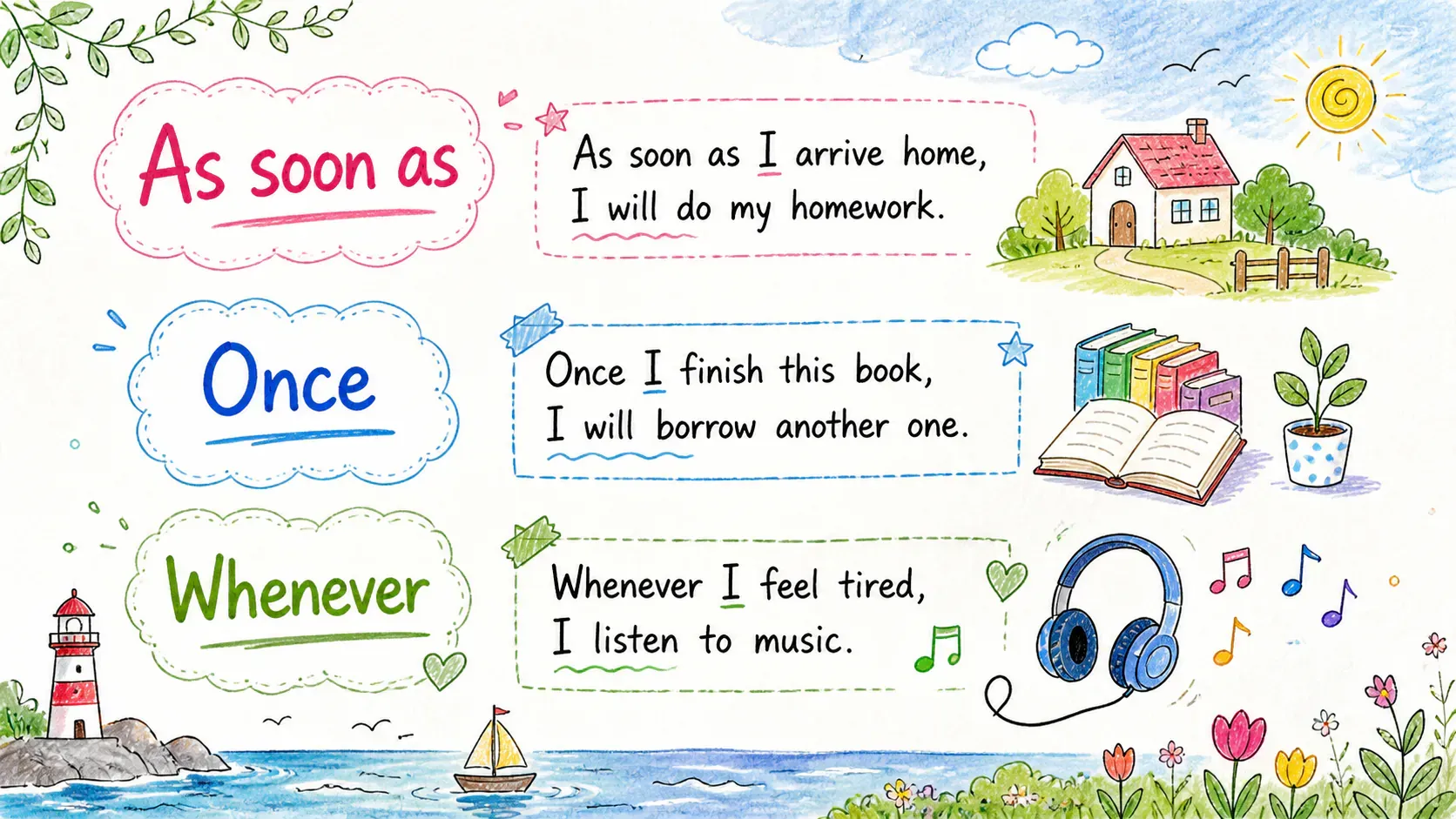
As soon as(一……就……):强调两个动作紧密衔接,前一个动作一发生,后一个动作立刻跟上。它常用于描述两个动作之间没有延迟,体现“立刻”“马上”的感觉。
As soon as the doctor confirmed it was nothing serious, I felt an instant wave of relief.
医生一确认没什么大问题,我立刻松了一大口气。(as soon as 强调即时的连续)
- As soon as I finished my homework, I went out to play.
我一做完作业就出去玩了。 - Please call me as soon as you arrive.
你一到就给我打电话。
Once(一旦……就……):与 as soon as 类似,但 once 更强调“某个条件达成后,情况就改变了”。once 经常表达某个动作或状态完成后,另一个动作就自然而然发生,具有“一经发生,后果持续”的含义。
Once you understand the basic grammar rules, learning becomes much faster.
一旦你理解了基本语法规则,学习就会快很多。(once 表示“达到这个节点之后,情况持续改变”)
- Once you start exercising regularly, you'll feel much better.
一旦开始规律锻炼,你会感觉好多了。 - Once the meeting is over, we can discuss the next steps.
一旦会议结束,我们可以讨论下一步。
Whenever(每当……):表示每次某件事发生时,另一件事也随之发生,强调重复性和习惯性。它用于泛指条件,每次该情况出现,结果就会发生。
Whenever I feel stressed, I go for a long walk to clear my head.
每当我感到压力大时,我就去长走一段路来清醒头脑。(whenever 表示规律性的每次都这样)
- Whenever you need help, just let me know.
每当你需要帮助的时候,随时告诉我。 - She smiles whenever she sees a puppy.
每当看到小狗时,她都会笑。
小贴士
时间状语从句的时态规则与条件句相同:如果从句说的是将来的情况,从句里用一般现在时,不用 will。比如应该说:“When she arrives(✓)”,不要说 “When she will arrive(✗)”。
-
As soon as the rain stops, we will go outside.
雨一停,我们就出去。(as soon as 从句用一般现在时) -
Once you finish the task, you can take a break.
你一完成任务就可以休息了。 -
Whenever I travel abroad, I buy souvenirs for my friends.
每当我出国旅行时,我都会给朋友带纪念品。
这些连词都可以用来连接时间状语从句,使表达更灵活、更有层次感。记得在写作或口语中合理区分它们的语气和侧重点。
情境对话
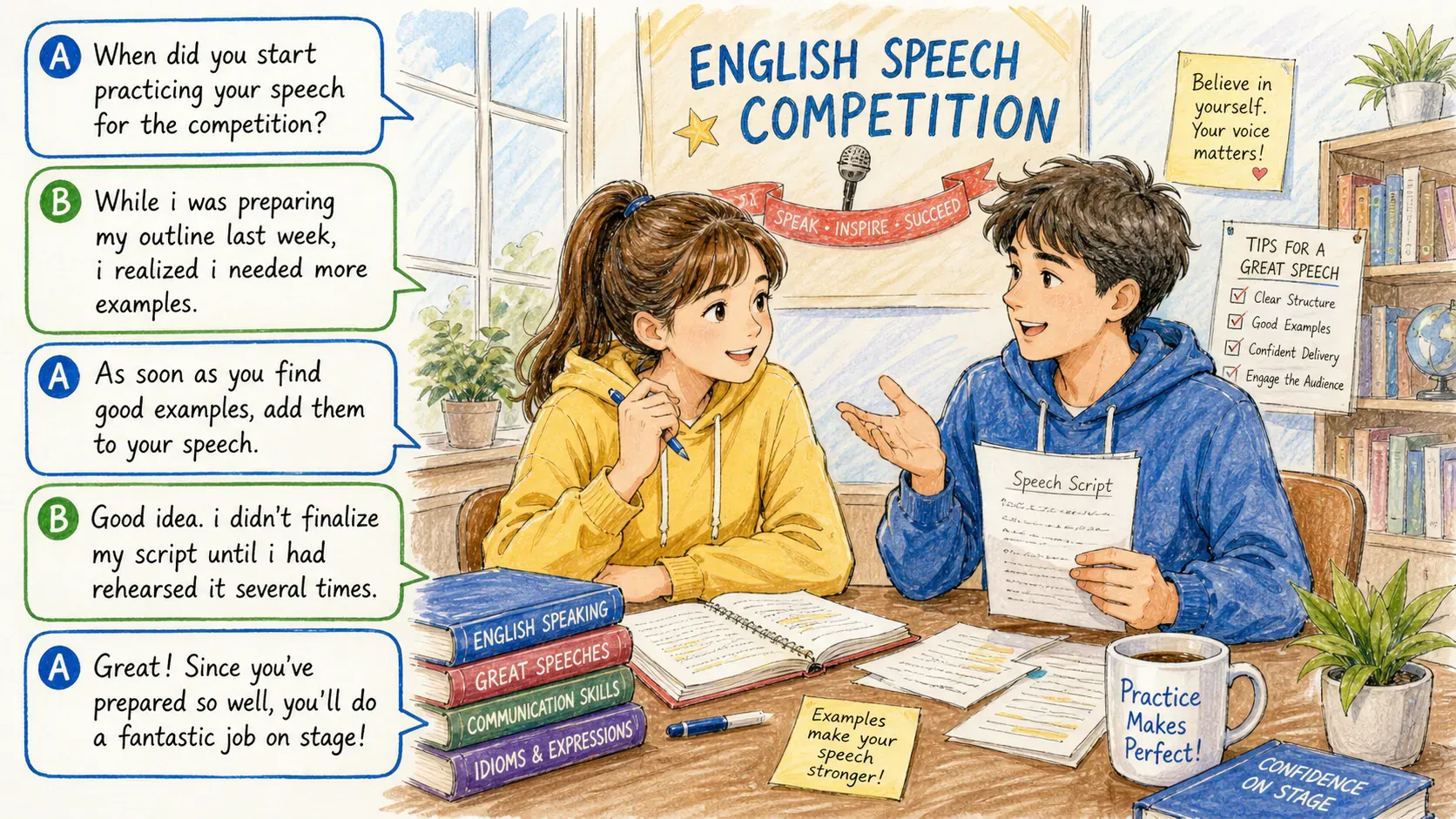
场景:学生准备参加英语演讲比赛
A:When did you start practicing your speech for the competition?
你是什么时候开始为比赛练习演讲的?
B:While I was preparing my outline last week, I realized I needed more examples.
上周我在准备大纲的时候,发现我需要更多例子。(while + 进行时,描述正在进行中的动作)
A:As soon as you find good examples, add them to your speech.
你一找到合适的例子,就把它们加到你的演讲稿里。(as soon as 强调即时性)
B:Good idea. I didn't finalize my script until I had rehearsed it several times.
好主意。我练习了好几遍之后才最终定稿。(until + 过去完成时,强调先多次练习,才定稿)
A:Great! Since you've prepared so well, you'll do a fantastic job on stage!
太好了!既然你已经准备得这么充分,舞台表现一定棒!(since 在这里表原因)
练习题
练习一(选择题)
知识点:When / While 的用法区别
“_____ I was taking a shower, the doorbell rang.”
A. As soon as
B. Until
C. While
D. Since
练习二(选择题)
知识点:时间从句不用 will 的规则
以下哪个句子有语法错误?
A. When you arrive, give me a call.
B. I'll wait here until you will come back.
C. As soon as the results are announced, I'll let you know.
D. Before she leaves, she should save her work.
练习三(选择题)
知识点:Since 与完成时的搭配
“She _____ a lot since she moved to a new city.”
A. changed
B. has changed
C. was changing
D. had changed
练习四(情景问答)
知识点:时间连接词的综合使用
请用以下四个时间连接词(when / while / as soon as / until)各造一个句子,描述你某一天的真实或假设的经历,体现四种连接词各自的时间逻辑。
练习五(情景问答)
知识点:When / While / As 的细微差别辨析
以下三个情境,请判断各用哪个连接词(when / while / as)更准确,并写出完整句子和理由。
情境一:你正在打电话,突然停电了。
情境二:随着时间推移,你对这份工作越来越有热情。
情境三:你完成任务的那一刻,大家都鼓掌了。