表达喜好与不喜好
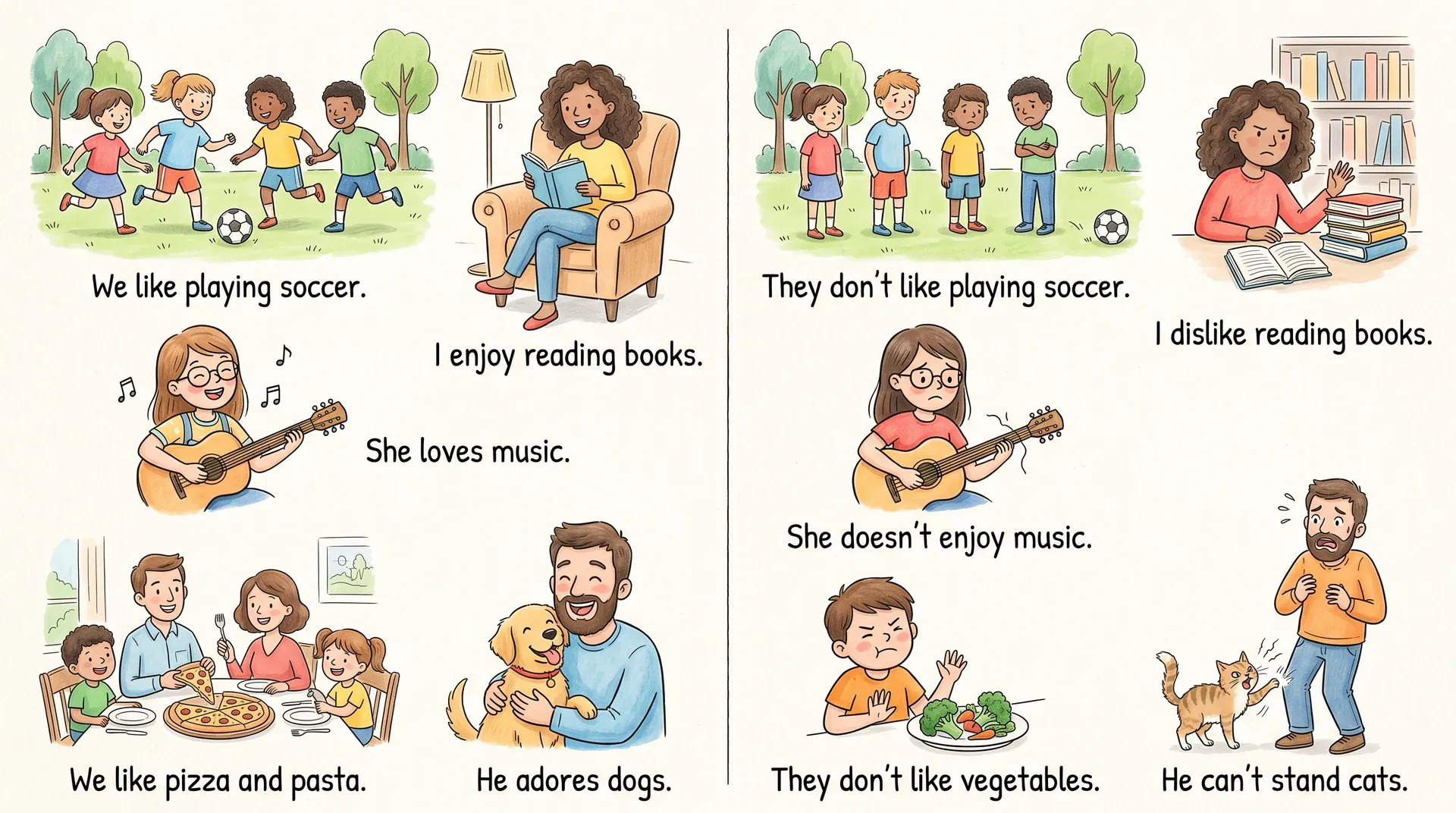
“你喜欢什么?”这个问题在英语会话中非常常见,比如和朋友聊天聊音乐、跟同事讨论周末活动,或者问别人喜欢吃什么、喜欢做什么。几乎在任何社交场合,大家都会谈到各自的喜好。很多人学英语时只会用 like 和 don't like 这两个词来表达自己的喜欢或不喜欢,其实在真实的英语交流中,还有许多表达程度和语气更细腻的说法。
例如,你想表达“我超喜欢某事”,可以用 I love... 或 I'm crazy about...,如果只是“一般般”,可以说 It's okay 或 I don't mind...,而表达“不是很喜欢”则可以说 I'm not really into...。精确地表达你的兴趣,可以让对话更自然,更容易与别人产生共鸣,不仅能准确传递你的态度,也能让别人更了解你。
会灵活地表达喜欢和不喜欢,不只是沟通的基础,也是英语表达丰富性的体现。不同的表达方式不仅反映出喜好的程度,还能传达出情感和个性。学会这些,能让你在实际交流中自如切换,更贴近真实生活的英语场景。
喜好程度的梯度表达
在英语中,表达“喜欢”或“不喜欢”其实有很多细致的层次,可以从“热情狂热”到“完全否定”形成一个连贯的光谱。掌握这些表达非常重要,因为它能帮助你更加精准地传递你的感受,也更贴近真实的英语交流。
你可以看到,单单一个“like”无法覆盖所有的语气和情绪。例如:
- “I'm obsessed with detective novels.”(我为侦探小说着迷 —— 强烈喜欢)
- “It's not really my thing.”(那不是我的菜 —— 委婉地表达不太喜欢)
- “I can't stand traffic jams.”(我受不了堵车 —— 强烈的厌恶)
在实际对话中,选用不同的表达可以让你的语气更自然,也能让对方更好地理解你的感受。比如,“I'm not really into horror movies.” 比 “I don't like horror movies.” 听上去更委婉、更有情商。而 “I'm crazy about hiking.” 比 “I like hiking.” 更能表达你的热情。
在英语文化中,直接说 “I hate...” 或 “I can’t stand...” 有时显得语气过重,尤其是在客套或正式场合。因此,像 “I'm not really into it.”、“It's not really my thing.” 这样的表达更常见——既表明了你的态度,又不会让对方觉得尴尬或受到冒犯。
你还可以通过语气副词微调喜好:
- I really like jazz music.(我很喜欢爵士乐。)
- I quite enjoy reading.(我挺喜欢读书。)
动名词与不定式
在表达喜欢、讨厌、热爱等感受时,要注意这些动词后面常接的形式。这也是英语学习的常见难点之一。
*others: 例如enjoy等核心动名词表达,只接-ing。
说明:
✓表示可用(语法正确),✗表示不可用(语法错误)。- “like/love/hate/prefer” 两种用法皆可,日常口语偏爱-ing。
- “enjoy/can’t stand/don’t mind”等,后面只能用-ing,不能用to do。
典型错误举例
- ✗ I enjoy to play tennis.
- ✗ I can't stand to wait in line.
- ✗ I don't mind to help you.
推荐表达
- ✓ I enjoy playing tennis.
- ✓ I can't stand waiting in line.
- ✓ I don't mind helping you.
规律总结:
- “like”、“love”、“prefer”后面可以接动名词(-ing)或不定式(to do),但日常口语和书面更偏向用 -ing。
- enjoy 和 don't mind 后接动名词(-ing);can't stand 后可接动名词,也可在适当语境中接不定式。
- “hate”可接 -ing,也可接 to do,但 -ing 更常见。
具体例句和常见错误
-
✗ I enjoy to play tennis.
-
✓ I enjoy playing tennis.(enjoy 后只接 -ing)
-
✗ I can't stand to wait in line.
-
✓ I can't stand waiting in line.(can't stand 后只接 -ing)
-
✗ I don't mind to help you.
-
✓ I don't mind helping you.(don't mind 后只接 -ing)
-
✓ I like to get up early. / I like getting up early.(like 两种皆可)
进阶说明: 动名词(-ing)通常用于泛指或习惯动作;不定式(to do)常用于一次性的动作或特指某件事,但这一区分很细微,母语者在使用上非常灵活,初学者用 -ing 基本不会出错。
小提示: 英语母语者在说自己喜欢/不喜欢做某件事时,通常优先选择 -ing 形式。例如:
- I like swimming.(我喜欢游泳。)
- I enjoy listening to music.(我喜欢听音乐。)
掌握这些搭配和句型,可以让你的英语喜好表达准确又地道!
让喜好表达更有说服力
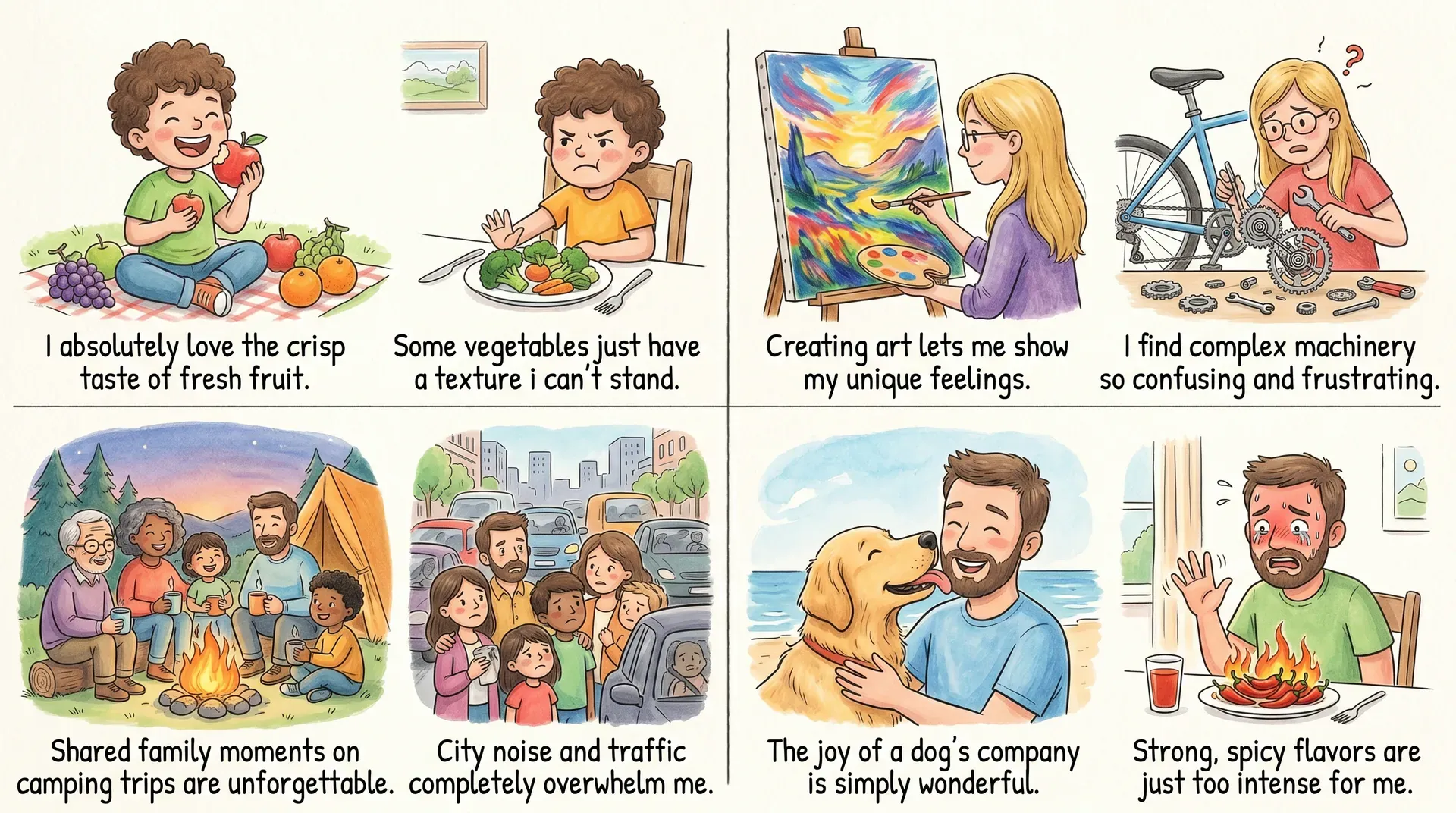
单纯说 “I like music” 虽然能表达态度,但显得简单且缺乏细节。加上理由或感受,不仅让表达更有深度,也能让对方更好地理解你,拉近距离、促进交流。以下是扩展和丰富“喜好表达”的方法:
加理由的连接词与表达方式
- I love hiking because it clears my mind. (因为……)
- I enjoy cooking since it's both creative and relaxing. (因为/由于……)
- I like early mornings. They make me feel productive.(用新句子解释说明原因。)
- I'm fond of playing chess, as it keeps my brain sharp.(as=因为)
- I prefer reading at night, which helps me unwind before bed.(用定语从句和并列句扩展理由。)
“因为”表达的多种连接词:
- because
- since
- as
- due to / thanks to(用于名词/短语)
- so / which is why(多句并列/解释)
理由的多种角度
你可以把多个理由结合起来,表达更加全面。例如:
-
I like jogging, because it's good for my health and helps me clear my mind after a busy day.
(我喜欢慢跑,因为它有益健康,而且能让我在忙碌一天后理清思绪。) -
I'm really into board games since they’re both social and stimulating.
(我特别喜欢桌游,因为它们既有社交性,又很有趣味性。)
喜好表达结构公式: 喜好动词 + 具体活动 + 加连接词/理由(because, since, as...)
更多表达范例
- I'm really into photography because I love capturing special moments.(我很迷摄影,因为我喜欢记录特别的瞬间。)
- I can't stand spicy food — it always upsets my stomach.(我受不了辣的食物——它总是让我胃不舒服。)
- I enjoy gardening, as taking care of plants relaxes me.(我喜欢园艺,因为照顾植物让我很放松。)
- I love learning languages because it opens up new cultures to me.(我喜欢学语言,因为这让我能接触新文化。)
还可以用更加生动的形容词修饰自己的感受:
- I'm obsessed with jazz music because the melodies are so unique. (我极度迷恋爵士乐,因为它的旋律非常独特。)
- I'm passionate about painting. It gives me a sense of achievement. (我对绘画充满热情。它让我有成就感。)
问他人喜好
表达自己的喜好只是开始,真正的对话需要互动。主动去询问对方的兴趣、爱好,可以让聊天更加自然和轻松,同时也能够展现你对对方的关心、尊重和良好的社交能力。只有双方都有表达和交流,才能让对话持续下去,增进彼此的了解。
询问他人喜好的表达方式
对话举例
- Do you like cooking? What dishes do you enjoy making the most?
(你喜欢做饭吗?你最喜欢做哪些菜?) - Are you a fan of science fiction movies?
(你是科幻电影的粉丝吗?) - Who do you usually hang out with on weekends?
(你周末通常和谁一起玩?)
比较喜好——prefer 的用法
- I prefer tea to coffee.(比起咖啡,我更喜欢茶。)
- I prefer reading to watching TV.(比起看电视,我更喜欢阅读。)
- Between hiking and cycling, I'd choose hiking.(在徒步和骑行之间,我会选择徒步。)
- I'd rather stay home than go out on rainy days.(雨天时我宁愿呆在家。)
小贴士:
-
prefer A to B 是固定结构,注意是 to 不是 than——不要说 “I prefer tea than coffee”。
-
可以用 “would rather” 或 “would prefer” 做委婉比较:
- I'd prefer to eat out tonight.(我今晚更想在外面吃饭。)
- I'd rather watch a movie than go shopping.(我宁愿看电影也不想去购物。)
通过这些句型和技巧,你能让询问和表达喜好变得更地道、更有内容,也能推动对话继续发展,让彼此的交流更有深度和乐趣!
不同场合的表达风格
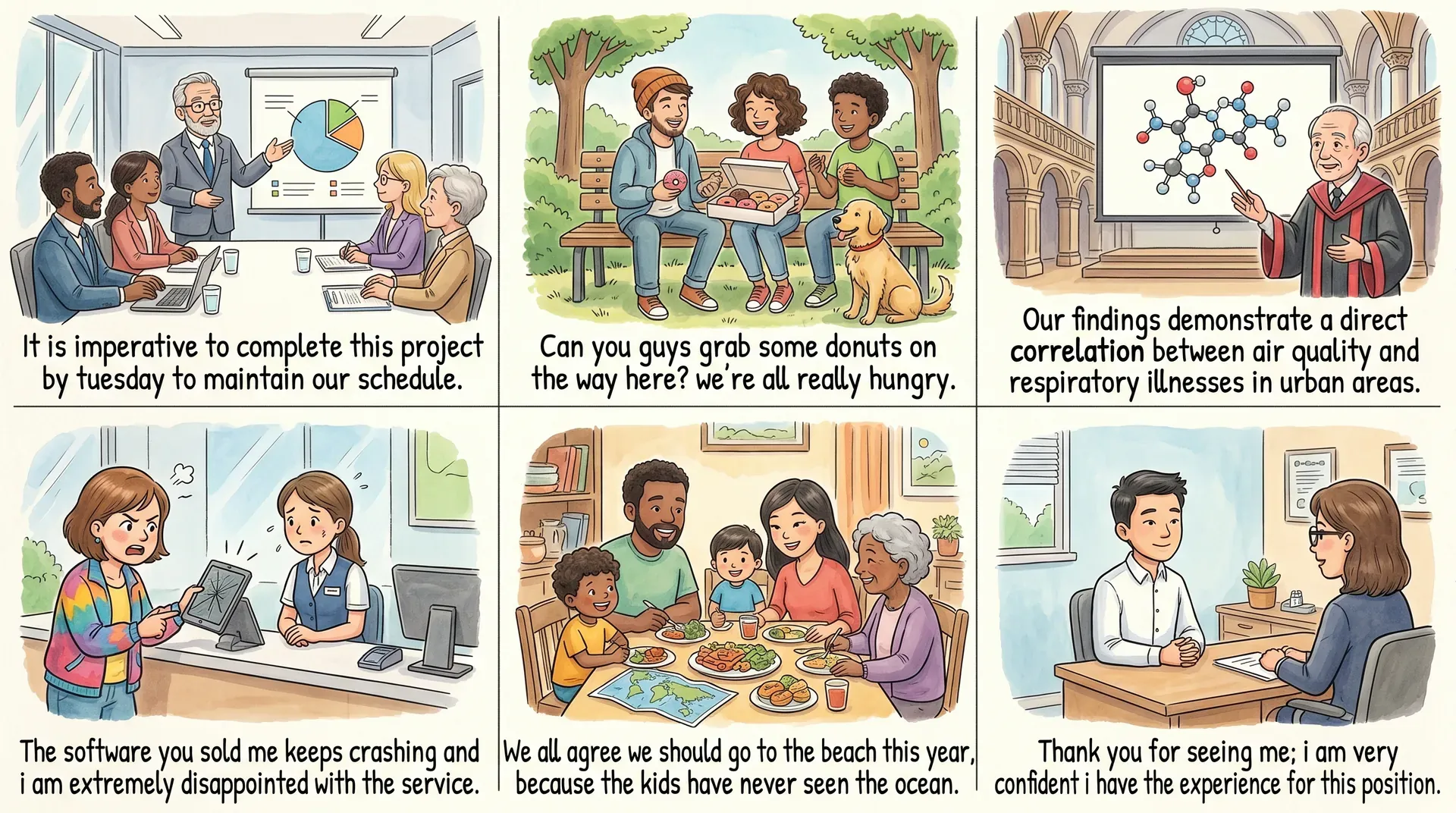
同样表达“我喜欢音乐”,不同语境下的表达方式会有很大差异。选择合适的表达,不仅可以更清晰地传达你的态度,还可以展现你的英语地道程度和情商。
正式场合(如工作面试/演讲/学术交流等):
I have a genuine passion for classical music. I've been playing the piano for ten years, and it has taught me a great deal about discipline and creativity.
(我对古典音乐有真正的热情。我弹琴已经十年了,这使我学会了自律和创造力。)
半正式场合(比如认识新朋友、社交小聚):
I'm really into music, especially jazz and folk. I enjoy going to live concerts with friends, and sometimes we even try new genres together.
(我很喜欢音乐,特别是爵士乐和民谣。我喜欢和朋友一起去听现场演唱会,有时候我们还会尝试一些新风格。)
非正式场合(和朋友随意聊天,表达更放松):
I'm obsessed with this new band! They're amazing. I can't stop listening to their latest album—I've had it on repeat all week.
(我最近超迷这个新乐队!真的很厉害。我一整周都在单曲循环他们的新专辑,根本停不下来。)
可以看到,这三种表达虽然都传递了喜欢音乐的信息,但是用词、句式和语气有很大不同。正式场合用词更有分量结构较完整,半正式场合语气轻松自然,非正式则强调热情和真实感受,词汇更加夸张和个性化。弄懂这些风格区别,能帮助你在不同场合用英语表达得更自信、更贴切,也更容易和他人建立联系。
场景对话
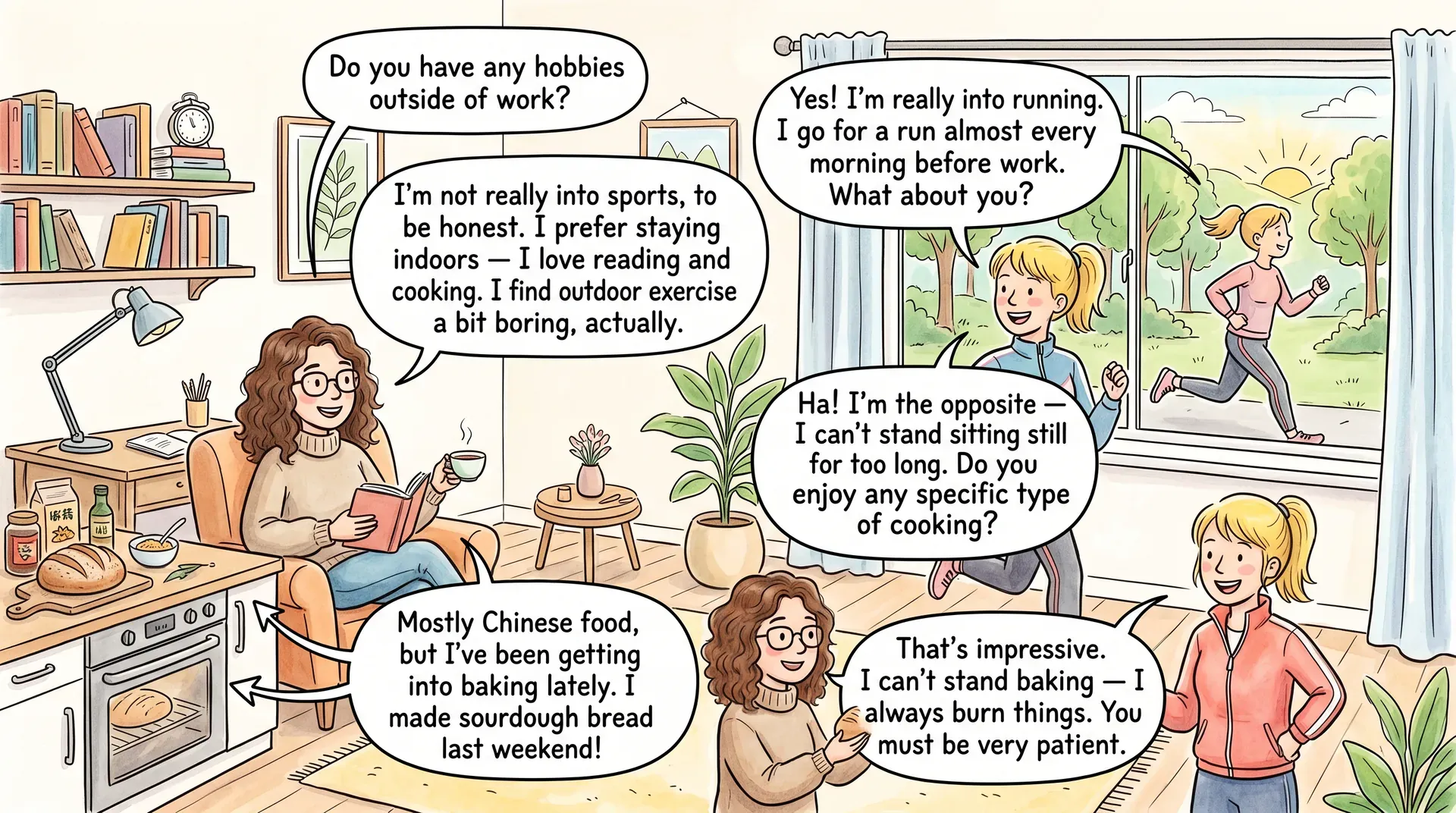
以下是两个朋友在聊彼此的爱好:
A: Do you have any hobbies outside of work?
(你工作之外有什么爱好?)
B: Yes! I'm really into running. I go for a run almost every morning before work. What about you?
(有!我特别喜欢跑步。我几乎每天早上上班前都去跑一跑。你呢?)
A: I'm not really into sports, to be honest. I prefer staying indoors — I love reading and cooking. I find outdoor exercise a bit boring, actually.
(说实话,我不是很喜欢运动。我更喜欢待在室内——我很爱阅读和做饭。说实话,我觉得户外运动有点无聊。)
B: Ha! I'm the opposite — I can't stand sitting still for too long. Do you enjoy any specific type of cooking?
(哈哈!我正相反——我受不了长时间坐着不动。你喜欢做什么特别的菜?)
A: Mostly Chinese food, but I've been getting into baking lately. I made sourdough bread last weekend!
(主要是中餐,但最近开始迷上烘焙了。上周末做了酸面包!)
B: That's impressive. I can't stand baking — I always burn things. You must be very patient.
(真厉害。我受不了烘焙——我总是把东西烤糊。你一定很有耐心。)
解析: 这段对话展示了多种喜好表达的自然运用:“I'm really into running”(喜欢跑步)、“I'm not really into sports”(不喜欢运动)、“I prefer staying indoors”(更喜欢待在室内)、“I can't stand sitting still”(受不了静坐)、“I've been getting into baking lately”(最近迷上烘焙)。注意“I've been getting into...”这个短语——用现在完成进行时表达“最近开始产生兴趣”,是非常地道的表达,比“I recently like baking”自然得多。
练习题
练习一(选择题):enjoy 后的正确语法形式
知识点:enjoy 后只能接动名词(-ing),不能接不定式(to)
以下哪个句子语法正确?
A. I enjoy to swim in the ocean.
B. I enjoy swimming in the ocean.
C. I enjoy swim in the ocean.
D. I enjoyed to swimming in the ocean.
练习二(选择题):prefer 的正确用法
知识点:prefer A to B 的固定结构,不是 prefer A than B
以下哪个句子表达“我更喜欢喝绿茶而不是咖啡”?
A. I prefer green tea than coffee.
B. I prefer coffee to green tea.
C. I prefer green tea to coffee.
D. I prefer to green tea more than coffee.
练习三(选择题):表达不喜欢的委婉方式
知识点:选择合适程度的不喜欢表达,避免语气过激
你被邀请去看一部恐怖电影,但你不喜欢看恐怖片,哪种拒绝方式最礼貌?
A. I hate horror films. They are disgusting.
B. Horror films are the worst thing ever.
C. I'm not really into horror films, to be honest. They're not my thing.
D. Why would anyone like horror films?
练习四(情景问答):加入理由和程度的喜好表达
知识点:从简单喜好表达扩展为有层次、有理由的完整表达
将以下简单句扩展,为每个喜好/不喜好加入:① 更精确的程度词汇;② 一个具体的理由或解释
① I like coffee.(我喜欢咖啡。)
② I don't like crowded places.(我不喜欢人多的地方。)
③ I like cooking at home.(我喜欢在家做饭。)
练习五(情景问答):喜好话题对话练习
知识点:综合运用喜好表达、询问他人、比较偏好进行完整对话
情境: 你和一位刚认识的朋友在聊各自的课余爱好。请写一段 8-10 行的对话,包含:① 至少两种不同程度的喜好表达;② 至少一次询问对方喜好;③ 使用 prefer A to B 进行比较;④ 至少一次加入理由