日常生活描述短文
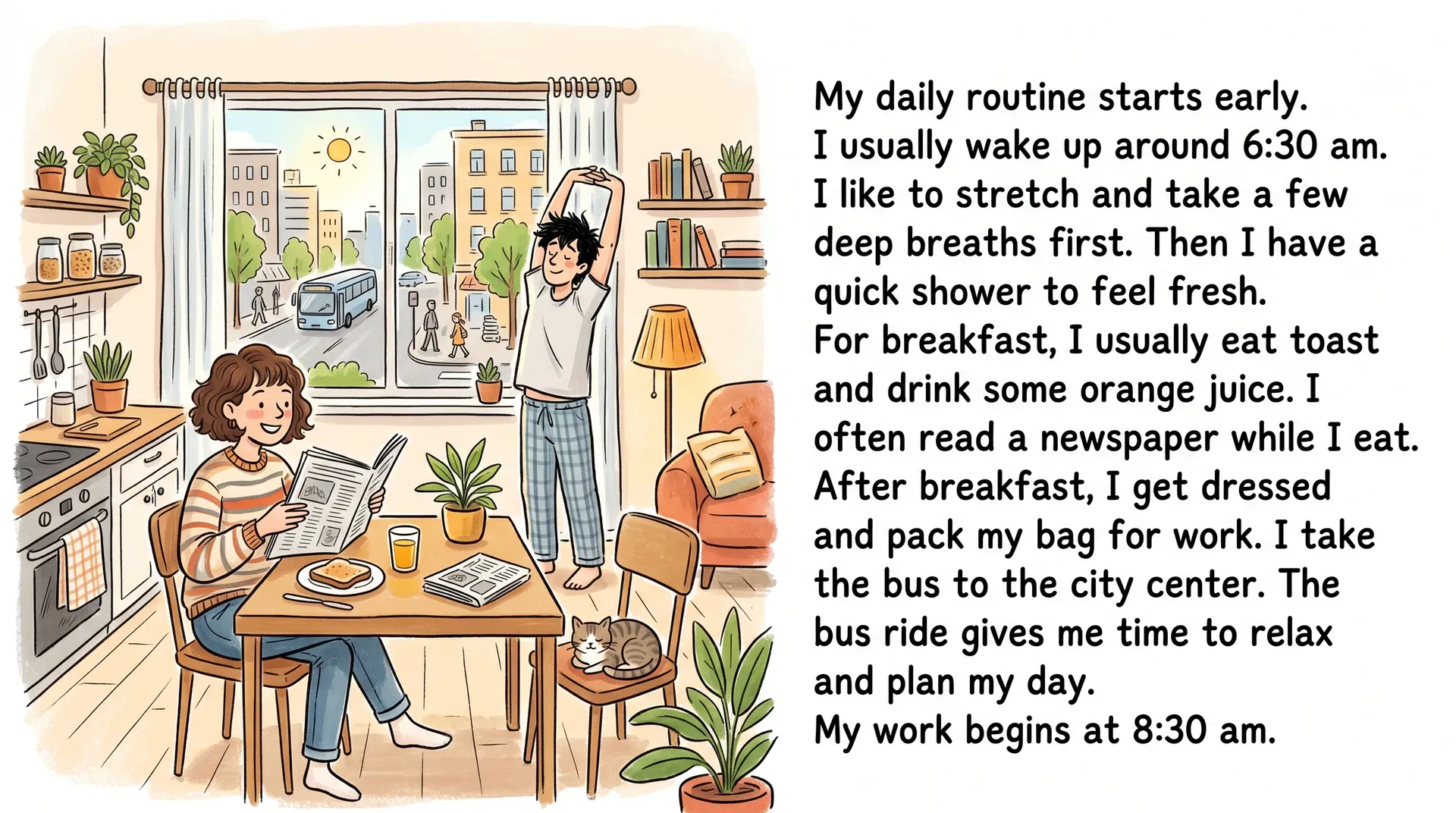
“日常生活描述类”短文是一种以时间为序,详细描写一天或一段时期日常活动的英语文体。它的内容通常涵盖从清晨到夜晚的各类事务,包括起床、饮食、学习、工作、娱乐和休息等环节;语言结构紧密围绕日常作息与常见活动展开,常用时间信号词(如 in the morning, after school, at night)连贯推进事件顺序。
这类短文广泛出现于英语考试阅读题、教科书范文以及真实生活的日记、博客等场景,同时也是初学者进行写作和口语练习的重要类型。掌握这类描述的基本套路和表达,不仅有助于提升阅读速度、抓住关键信息,还能直接增强日常沟通和听力理解的能力。学习时建议关注时间线的推进、频率副词的搭配和活动之间的常用连接方式,这些都是理解和表达日常生活内容的“标志性线索”。
日常描述短文的特征
日常生活描述短文有几个显著且易于识别的特征,了解这些特征能帮助你在阅读时迅速抓住重点、理清文章脉络:
这些特征相互配合,让日常生活类短文信息集中、线索清晰,适合快速提取主要内容。阅读时建议先“扫”时间信号词,再根据频率副词判断哪些活动是每天坚持、哪些偶尔发生,最后理顺时间线,有助于更高效地理解整体内容。
此外,许多日常描述性短文还会巧妙地在不同句子中穿插细节、原因或补充说明,比如通过短语、破折号或者定语从句来交代每个活动的具体情况。这时要特别关注关联词和标点,它们往往提示了信息补充或转折,有助于我们更好地还原作者描述的生活场景。
如果在阅读时遇到不熟悉的词或短语,不必立刻停下来查词典,可以先根据整体时间顺序和已知活动推测含义,抓住主要脉络后再回头精读细节。这样既能提升阅读效率,也更贴近真实考试和生活中的“快速获取关键信息”的需求。
精读范文一:一个中学生的一天
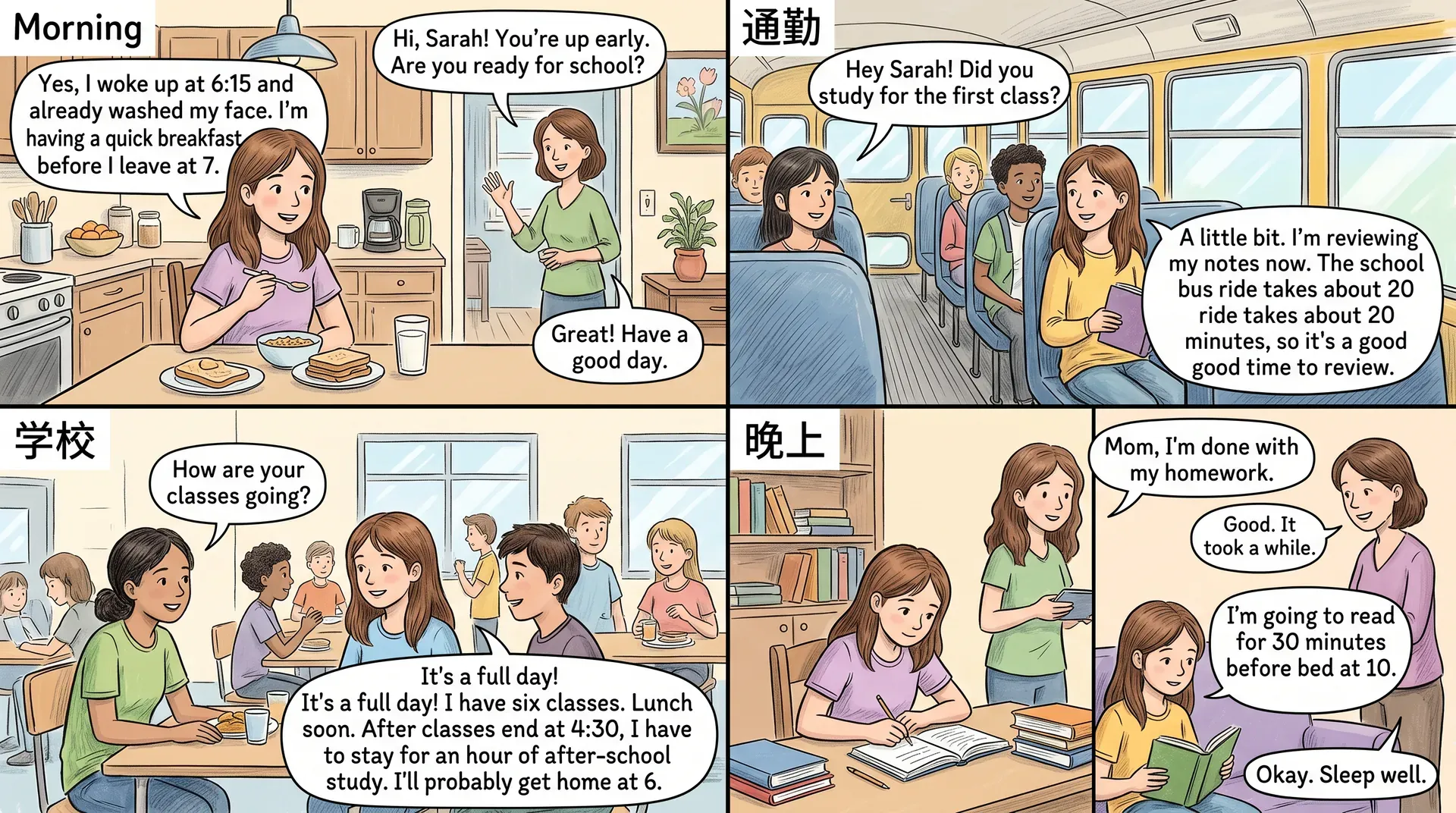
这篇短文描述了一个中学生的典型工作日:
Li Hua is a 15-year-old student at Nanjing Middle School. Every morning, she wakes up at 6:15 and gets up immediately. She washes her face, brushes her teeth, and eats a quick breakfast — usually rice porridge or a steamed bun — before leaving home at 7.
Li Hua takes the school bus every day. The journey takes about 20 minutes. On the bus, she sometimes reviews her notes for the day's first class.
At school, she has six classes in total. She has lunch in the school canteen at noon and sometimes takes a short nap in the classroom during the break. After school at 4:30, she stays for one hour of after-school study. She gets home at around 6.
In the evening, Li Hua does her homework, which usually takes two to three hours. After finishing, she reads for 30 minutes — she loves Chinese literature. She goes to bed at 10.
逐段分析:
第一段的时间流是:6:15起床 → 洗漱 → 吃早饭 → 7:00出门。注意这里用了破折号后的补充说明:“usually rice porridge or a steamed bun”,这是对“quick breakfast”的具体化,增加了真实感。
第二段引入了通勤信息,“takes about 20 minutes”是表达时长的标准结构,take + 时间 = 花费……时间。“sometimes reviews her notes”——注意 sometimes 在动词前的位置,符合上一章学到的频率副词规则。
第三段描述校内活动,包含了“has lunch”“takes a nap”“stays for after-school study”三个紧凑的活动,每个都用了准确的动词搭配。“stay for + 活动”表示“留下来参加某活动”,是非常实用的表达。
第四段是晚间活动,“which usually takes two to three hours”是定语从句,进一步说明作业的时间消耗,这类补充说明在描述性短文里很常见,需要能识别并理解。
阅读这类短文时,建议第一遍只关注时间信号词,把文章的时间骨架勾勒出来:6:15 → 7:00 → 在学校(午饭/小睡/放学)→ 晚上(作业/阅读)→ 10:00睡觉。有了时间骨架,细节内容就能各就各位,理解起来会更快。
时间信号词完整清单
在日常描述类短文中,“时间信号词”是一条主线,把叙述的各个活动链接成清晰的时间流。熟练识别这些词汇,不仅能迅速建立文本的时间轴,更能帮助梳理事件顺序,提升理解速度。下方涵盖了最常见的时间信号词,并做了适当扩充:
补充说明:
- 很多时间信号词会结合具体活动或时段出现,比如“after lunch”(午饭后)、“before bedtime”(睡觉前)、“during the class break”(课间)。
- 时间顺序词(如 first, then, next, finally)常见于段落过渡或事件列举,使叙述有条理。
重点结构解析:
“after + 名词/动名词”是连接两件事发生顺序的万能句型,写作和阅读中都极为常见,例如:
- After breakfast, she leaves home. (吃完早饭后,她出门。)
- After finishing homework, she reads for 30 minutes.(做完作业后,她读30分钟书。)
- After getting home, he takes a shower.(到家后,他洗个澡。)
同类型结构还有“before + 名词/动名词”:
- Before going to bed, she listens to music.(睡觉前,她听音乐。)
- Before leaving for work, he checks his emails.(上班前,他查收邮件。)
阅读时,建议标记下这些时间信号词,尝试在空白处画一条“时间线”,把对应的活动串起来。随着练习增多,对文章结构的把握会变得越来越高效!
精读范文二:一个上班族的周末
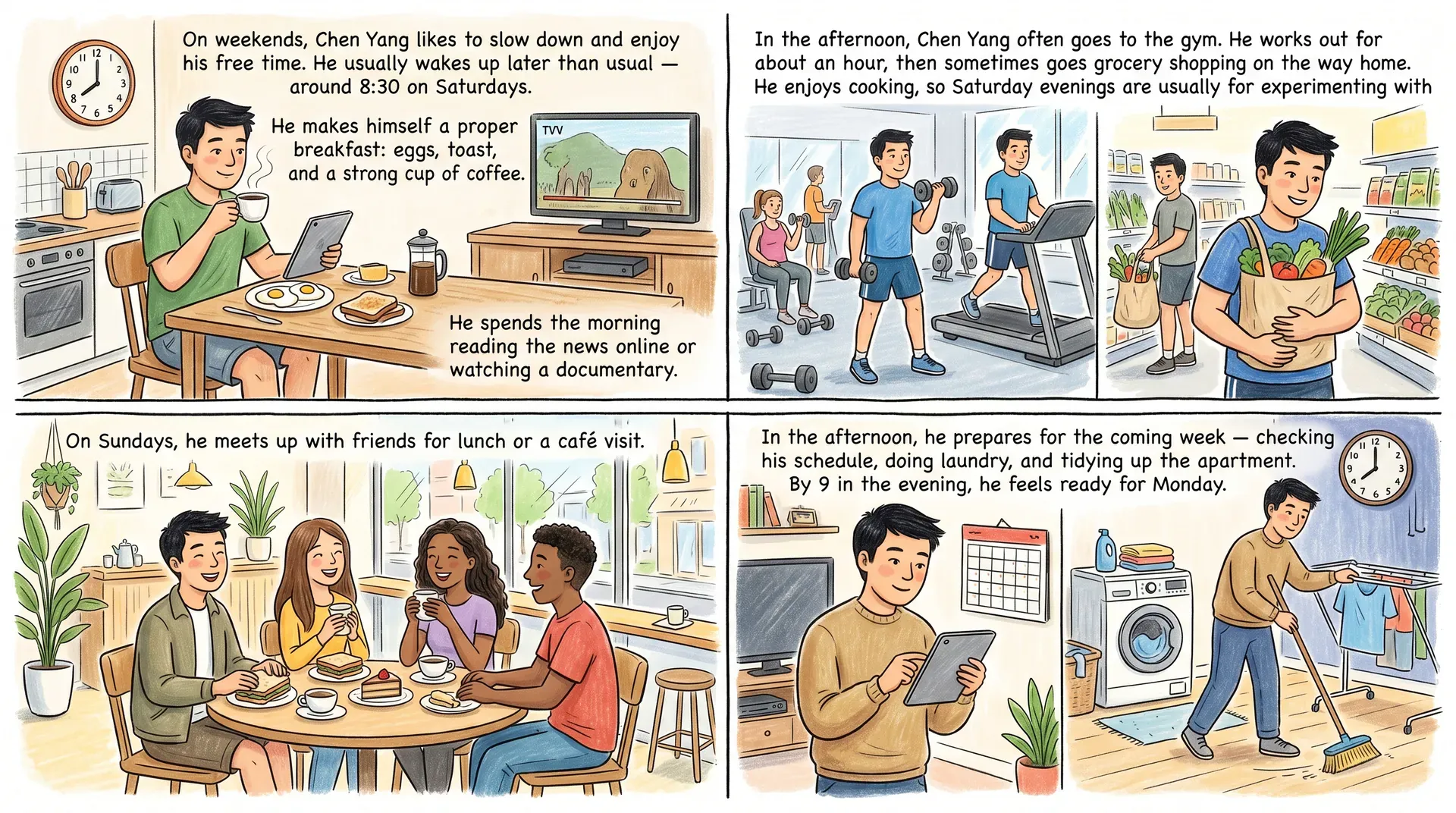
这篇短文展示了稍有不同的模式——周末的安排,语言节奏更轻松:
On weekends, Chen Yang likes to slow down and enjoy his free time. He usually wakes up later than usual — around 8:30 on Saturdays. He makes himself a proper breakfast: eggs, toast, and a strong cup of coffee. He spends the morning reading the news online or watching a documentary.
In the afternoon, Chen Yang often goes to the gym. He works out for about an hour, then sometimes goes grocery shopping on the way home. He enjoys cooking, so Saturday evenings are usually for experimenting with new recipes.
On Sundays, he meets up with friends for lunch or a café visit. In the afternoon, he prepares for the coming week — checking his schedule, doing laundry, and tidying up the apartment. By 9 in the evening, he feels ready for Monday.
重点表达解析:
“likes to slow down”中,slow down 是短语动词,表示“放慢脚步/减速”,用于形容休息状态非常贴切。
“later than usual”是“比平时晚”的固定表达,是比较结构的实际应用。类似的结构还有:earlier than usual(比平时早)、more than usual(比平时多)。
“makes himself a proper breakfast”中,make + 反身代词 + 名词 = 给自己做某事,“a proper breakfast”中 proper 表示“像样的、正式的”,暗示这和工作日的草草了事不同。
“experimenting with new recipes”(尝试新食谱)中,experiment with 是“尝试/实验”的动词短语,加 -ing 是因为在介词 for 后面要用动名词形式。
“By 9 in the evening, he feels ready for Monday”中,by + 时间 = 到……时候(某个时间点之前/到那时)。这里表达的是“到晚上9点的时候,他感觉已经准备好迎接星期一了”——是一种非常自然的结束段落的句式。
对比分析:工作日 vs 周末短文
对比两篇短文,我们不仅可以看出词汇上的差异,还能感受到不同情境下叙述语气和整体氛围的变化。从日常工作日到周末,英语短文的写作手法、习惯用语、细节描写都各有特色。例如:
| 对比项目 | 工作日 (Li Hua) | 周末 (Chen Yang) |
|---|---|---|
| 起床时间 | 6:15 起床,突出时间精准。 | 8:30 起,突出差异。 |
| 节奏逻辑 | 快节奏,强调先后顺序。 | 慢节奏,突出自主安排。 |
| 频率表达 | 高频习惯,生活规律。 | 频率灵活。 |
| 内容特色 | 任务导向,关注必做事项。 | 兴趣导向,注重休闲。 |
| 叙事视角 | 客观理性,条理清楚。 | 主观感性,细节和情感丰富。 |
可以看到,工作日的短文往往更注重“时间点”和“流程”,比如:at 6:15(几点起床)、at 4:30(几点放学,约6点到家)、after finishing homework(做完作业之后)等,阅读时给人一种有条不紊、快节奏的感觉。周末的叙述则明显放慢步调,更多体现兴趣、习惯和情绪,比如“he likes to slow down”,“he enjoys cooking”,“he feels ready for Monday”等,表达上更具个人色彩。
此外,短文中段落的划分也值得注意:平日短文按时间推进,经常每一段就是一天或半天的活动分界,多用时间信号词起始段落。而周末短文则往往以活动类型(健身、烹饪、社交)或者以一天为单位自由切换,语句节奏更灵活,多见逗号、破折号等辅助表达。
这种对比分析帮助我们理解,英语写作要根据具体场景调整描述方式:工作日着重体现效率、规划,周末则可展现放松、兴趣和生活细节。阅读时,我们也应关注这些细腻区分,体会不同时间背景下词汇和表达的合理选择。
阅读策略复习
短文阅读总体分两步:
第一步:快速略读(Skimming)
目的是获取文章的整体结构,不是理解每个词。做法:只读每段的第一句话,同时标出时间信号词,用 30 秒勾勒出文章的时间骨架。
第二步:带问题寻读(Scanning)
根据题目的要求,带着具体问题回到文章中找答案。不要从头到尾再读一遍,而是用目光在文章中“扫描”,找到题目涉及的关键词,再仔细读那一段。
练习题
练习一(选择题):时间信号词的功能
知识点:识别时间信号词在日常描述短文中的导航作用
阅读以下句子:
First, Wang Mei wakes up and gets ready. Then she has a quick breakfast. After that, she takes the bus to work.
以下哪个选项准确描述了文中事件的顺序?
A. 坐公共汽车 → 吃早饭 → 起床准备
B. 起床准备 → 吃早饭 → 坐公共汽车
C. 吃早饭 → 起床准备 → 坐公共汽车
D. 坐公共汽车 → 起床准备 → 吃早饭
练习二(选择题):take + 时间 的结构
知识点:“It takes + 人 + 时间 + to do sth”表示花费时间的结构
以下哪个句子正确表达“她上学要花45分钟”?
A. She spends 45 minutes to go to school.
B. It takes 45 minutes for she to go to school.
C. It takes her 45 minutes to go to school.
D. She takes 45 minutes going to school.
练习三(选择题):推断作者的日常习惯
知识点:从短文细节推断人物的特点或规律
阅读以下段落:
Every morning, Zhang Lin sets three alarms. The first one goes off at 6:00, but she usually turns it off and goes back to sleep. The second alarm at 6:15 is also often ignored. She finally gets up when the third alarm rings at 6:30 — and then she has exactly 25 minutes to get ready before she has to leave at 6:55.
关于 Zhang Lin,哪个推断最合理?
A. 她通常提前准备好,从不匆忙。
B. 她每天睡到7点以后才起床。
C. 她不太擅长早起,每天早上时间都很紧。
D. 她有充裕的时间慢慢准备上班。
练习四(情景问答):短文综合信息提取
知识点:从日常描述短文中提取时间、活动、频率信息
阅读以下短文,回答四个问题:
Every weekday, my father wakes up at 5:30 and goes for a 30-minute run before breakfast. He always has the same breakfast: congee with pickled vegetables and a boiled egg. He leaves home at 7:15 and drives to his office, which takes about 35 minutes in traffic. At work, he usually has meetings in the morning and deals with paperwork in the afternoon. He rarely eats lunch outside — he brings a homemade lunch box every day. He gets home at around 6:30 and always cooks dinner himself. After dinner, he watches the news for 30 minutes, then reads until 10 before going to bed.
① 父亲每天早上什么时候出门?开车到公司大约需要多久? ② 他的早饭通常吃什么? ③ 他为什么很少在外面吃午饭?他怎么解决午饭问题? ④ 他晚上几点睡觉?在睡前做了什么活动?
练习五(情景问答):写一篇日常生活描述短文
知识点:综合运用时间信号词、顺序连接词和频率副词写日常描述短文
请写一篇 80-100 词的英文短文,描述你的一个家人(父母/祖父母/兄弟姐妹)或朋友的典型工作日。要求:① 包含起床/上班/晚间活动三个时间段;② 至少使用三个时间信号词;③ 至少使用两个频率副词;④ 包含至少一个“After + 活动”的句型