谈论过去的经历

很多英语学习者在谈论“过去的事”时,遇到的最大困惑往往不是“发生了什么”,而是“该怎么用英语表达得自然、准确”。比如,想表达“我去过日本”,有的人会说 “I visited Japan last year”,也有人会说 “I've been to Japan”。这两句话虽然都能翻译成“我去过日本”,但实际上它们背后的语法结构和传达的重点是不同的。
“I visited Japan last year” 使用的是一般过去时,明确说的是“去年”这一具体的时间点发生的事情,强调的是“发生在过去某一时刻的动作”;而 “I've been to Japan” 则用的是现在完成时,更强调“去过”这一经历本身,并不指明具体哪一年,只是说明“有过这种体验”。
英语母语者在回忆自己的经历、描述故事或聊到生活的时候,会根据想要突出“时间点”“经历本身”还是“事件结果”,自如地选择不同的时态表达。比如,如果想突出“我的人生中有这样一个经历”,就会用现在完成时;如果想描述“在某年发生过什么”,则用一般过去时。理解、掌握这些细致的时态和用法差异,不仅能避免中式表达的生硬,还能让你的英语讲述更地道、更生动、更容易让对方共情和理解。
过去式与现在完成时
过去式(Simple Past)
用于描述发生在特定过去时间点的事件或动作,通常和表示具体时间的词(一段时间、哪个年、某个小时等)连用,强调事情本身发生的时间点。
常见时间状语包括:yesterday, last night, last year, in 2019, when I was a kid, two days ago, this morning (已经结束的情况)等。
“I visited Japan in 2022.”— 我2022年去了日本。
“I lived in Beijing for three years.”— 我在北京住了三年。(现在已经不住了)
“When I was in college, I worked part-time.”— 我上大学的时候做兼职。
“She called me yesterday.”— 她昨天给我打了电话。
“We saw that movie last week.”— 我们上周看了那部电影。
过去式还经常用于讲述过去的习惯,配合 used to 或 would 使用:
“I used to play basketball after school.”— 以前我放学后常打篮球。
“When we were kids, we would go swimming in the river every summer.”— 小时候我们每年夏天都会去河里游泳。
现在完成时(Present Perfect)
用于描述从过去某一时刻到现在已经发生的动作、经历,或者过去发生到现在依然有影响的事情。关键点在于:
- 不强调动作发生的“具体时间点”,更突出“经历/影响/结果”
- 习惯上与“表示时间跨度或模糊时间”的副词连用,比如:ever, never, already, yet, before, just, recently, so far, lately, for, since 等。
“I've been to Japan before.”— 我曾经去过日本。(有过这种经验,没说哪年去的)
“I've never tried sushi.”— 我从来没尝过寿司。(至今为止)
“Have you ever lived abroad?”— 你有没有在海外生活过?
“She has just finished her homework.”— 她刚刚完成了作业。
“We've known each other for ten years.”— 我们认识十年了。(从十年前认识到现在)
“It has rained a lot recently.”— 最近雨下得很多。(强调对现在的影响)
注意:现在完成时常常表达“人生经历”“截止到现在的成就/结果”、或“从过去持续到现在”。比如:
“I've worked here since 2019.”— 我从2019年起就在这里工作。(现在还在)
“He has broken his leg, so he can't walk.”— 他腿断了,所以现在不能走路。(结果造成现在的影响)
最常见的错误: 在现在完成时中加入具体的过去时间词。“I have visited Japan in 2022.”这句话是错的。
有明确过去时间点(如 last year, in 2022, yesterday)时,必须用过去式,不能用现在完成时。现在完成时只配合“ever, never, already, yet, before, recently, so far, for, since”等不指明具体点的词使用。
正确:I've been to Japan before. (对方不知道时间 or 时间不重要)
错误:I've been to Japan in 2022.
正确:I visited Japan in 2022.
谈论人生经历的核心句型
询问经历
“Have you ever...?”— 你曾经……过吗?这是询问对方人生中是否有某种经历、做过某事最常用的句型。
常见用法有:
- “Have you ever tried sky-diving?”(你有没有尝试过跳伞?)
- “Have you ever been to Europe?”(你有没有去过欧洲?)
- “Have you ever eaten durian?”(你有没有吃过榴莲?)
- “Have you ever seen snow?”(你见过雪吗?)
- “Have you ever met a celebrity?”(你见过名人吗?)
此外,也可用来拉开对话,比如:
- “Have you ever wished you could fly?”(你有没有想过自己能飞?)
- “Have you ever felt really scared?”(你有没有真的很害怕过?)
肯定回答
“Yes, I have. I [did it] in [year/time].” 可以加上具体时间,让信息更丰富:
- “Yes, actually — I went there back in 2019.” (是的,其实我2019年去过那里。)
- “Yes, I have. I tried it for the first time last summer.” (是的,我尝试过。我第一次尝试是在去年夏天。)
- “I've done it once/twice/a few times.”(我做过一次/两次/几次。)
- “I've been there several times already.”(我已经去过好几次了。)
- “I've experienced that before, it was amazing.”(我以前体验过,很棒。)
可以补充具体细节,让交流更自然有趣:
- “Yes, I have. I visited Europe when I was a student.”(是的,上学的时候去过欧洲。)
- “Yes, I did it once during college.”(上大学期间做过一次。)
否定回答
“No, I've never...”— 不,我从来没有……
- “No, I've never tried sky-diving.”(不,我从来没跳过伞。)
- “I haven't had a chance to yet.”(我还没有机会……)
- “Not yet — but I really want to!”(还没有——但我很想试试!)
- “It's on my list — I'd love to one day.”(在我的清单上——希望有一天能……)
- “No, but it sounds exciting.”(没有,但听起来很刺激。)
还可以用更详细的表达丰富对话:
- “No, I've never traveled abroad, but I hope I can in the future.”(没有,但我希望以后有机会。)
- “No, I haven't, but I'm open to it!”(没有,但我很愿意尝试!)
“过去进行时”与场景描述
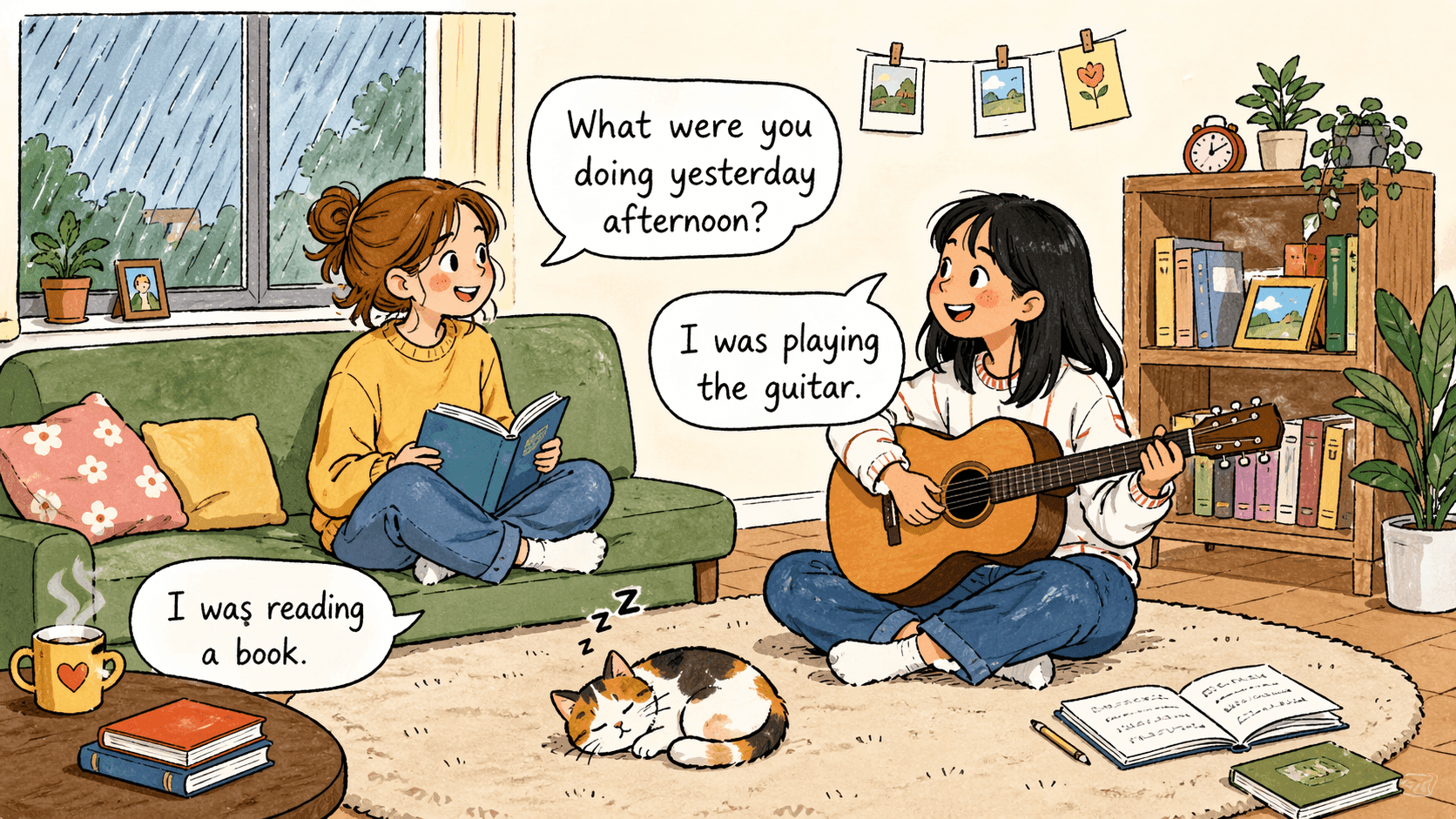
仅仅说一句“I went to Beijing”会显得信息单薄。讲好一个故事,通常需要交代背景(当时的情景)和事件(发生了什么)。过去进行时(was/were + V-ing)用于描述“某一时刻背景下正在发生的动作”,突出故事的氛围、场景、对比。
常见用法:
- 描述一段时间内持续的动作(事情发生的背景);
- 用于说明一个短动作打断(或发生在)一个长动作之中。
例句扩充:
- “When I arrived, it was raining heavily.”
(当我到达时,正在大雨。) - “I was walking through the market when I suddenly heard someone calling my name.”
(我正在穿过市场,突然听到有人叫我的名字。) - “We were sitting on the beach, watching the sunset, when the phone rang.”
(我们正坐在沙滩上看日落,这时电话响了。) - “She was studying in her room when the power went out.”
(她正在房间学习时突然停电了。) - “They were having dinner when I knocked on the door.”
(他们正在吃晚饭时我敲了门。)
还可以配合always/constantly类型副词,表达“过去常常/总是做某事”:
- “He was always losing his keys when he was younger.”
(他年轻时总是丢钥匙。)
故事编排提示:
- 先用过去进行时交代事件发生背景,再用一般过去时描述具体事件,能让你的叙述更生动连贯。
- 例如:“I was waiting for the bus when I met an old friend.”(我正在等公交时偶遇了一位老朋友。)
对话示范:分享旅行经历
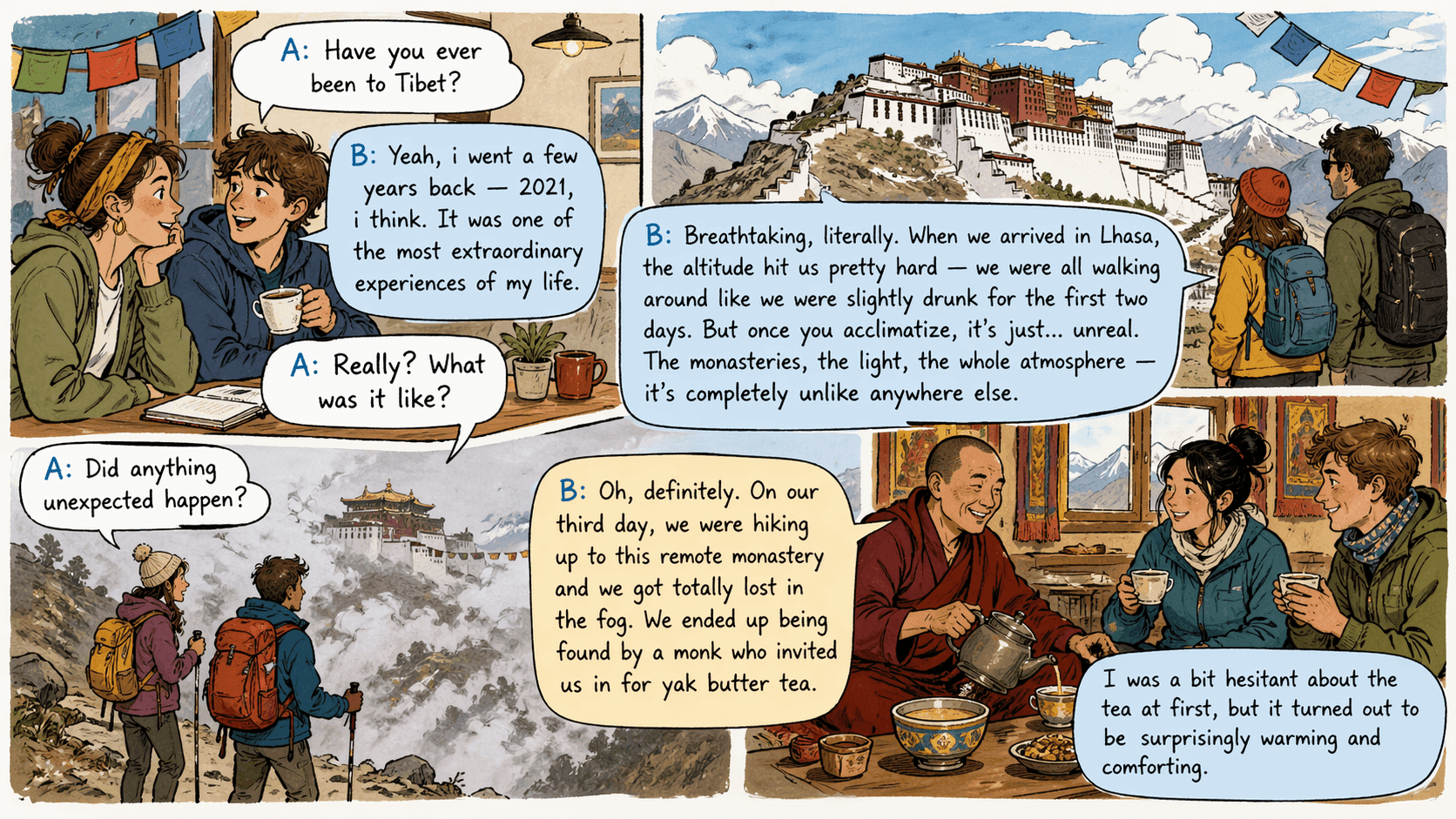
A: Have you ever been to Tibet?
(你去过西藏吗?)
B: Yeah, I went a few years back — 2021, I think. It was one of the most extraordinary experiences of my life.
(去过,我几年前去的——我想是2021年。那是我人生中最非凡的经历之一。)
A: Really? What was it like?
(真的?那里是什么样子的?)
B: Breathtaking, literally. When we arrived in Lhasa, the altitude hit us pretty hard — we were all walking around like we were slightly drunk for the first two days. But once you acclimatize, it's just... unreal. The monasteries, the light, the whole atmosphere — it's completely unlike anywhere else.
(真的令人叹为观止。当我们到达拉萨时,高原反应对我们打击很大——头两天我们走路都像是微醺了一样。但一旦适应了,那里就是……不真实的。寺院、光线、整个氛围——和任何其他地方都完全不同。)
A: Did anything unexpected happen?
(发生了什么意外的事吗?)
B: Oh, definitely. On our third day, we were hiking up to this remote monastery and we got totally lost in the fog. We ended up being found by a monk who invited us in for yak butter tea. I was a bit hesitant about the tea at first, but it turned out to be surprisingly warming and comforting.
(哦,肯定有。第三天,我们徒步去一个偏远的寺院,在雾中完全迷路了。最后被一位僧侣发现,他邀请我们进去喝了酥油茶。一开始我对那茶有点犹豫,但结果它出乎意料地让人暖和,令人感到安慰。)
表达解析:
“The altitude hit us pretty hard.”——“hit”在这里用作比喻,表示高原反应“猛地袭来”,比“affected us”更生动。
“Like we were slightly drunk”——用比喻来描述高原反应的感觉,画面感强,比“we felt dizzy”更能让人共情。
“Surprisingly warming and comforting”——“surprisingly”在这里不是说“惊讶”,而是表示“出乎我的预期”,用在描述超出预期的感受时非常地道。
用来丰富故事的时间与过渡词
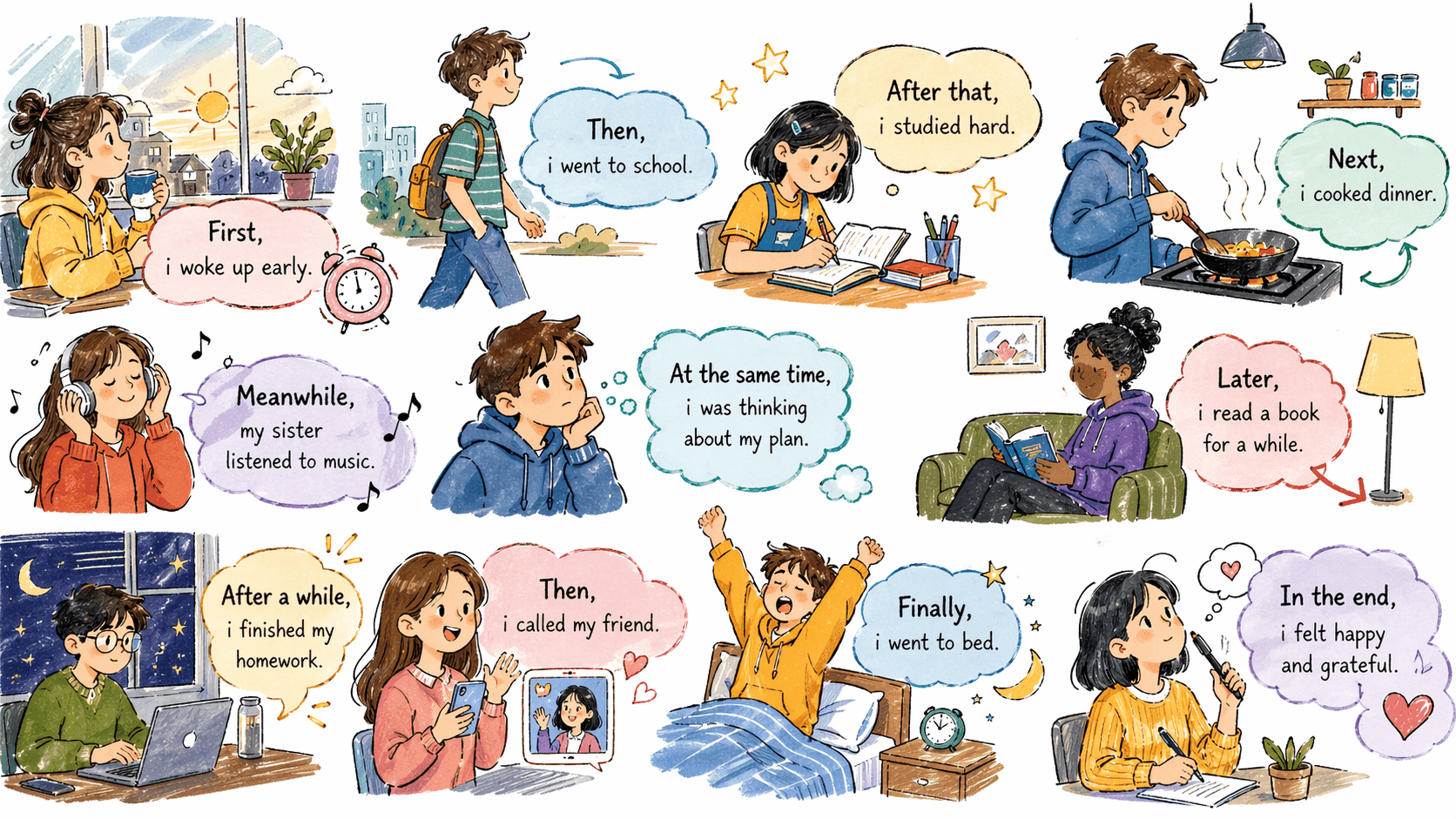
好故事需要清晰的时间线和流畅的过渡:
“First...”/ “To start with...”— 首先……
“Then...”/ “After that...”— 然后……
“Eventually...”/ “In the end...”— 最终……
“Suddenly...”— 突然……
“At that point...”— 在那个时候……
“Looking back on it...”— 回想起来……
“It turned out that...”— 结果发现……
“Before I knew it...”— 不知不觉间……
“The next thing I knew...”— 我下一刻意识到……(用于戏剧性的转折)
谈论过去的感受与影响
好的经历分享不只是罗列事件,还要说出这段经历对你产生了什么影响:
“That trip really changed the way I see things.”
(那次旅行真的改变了我看待事物的方式。)
“It made me realize how much I'd been taking for granted.”
(它让我意识到我把多少东西视为理所当然了。)
“I came back a completely different person.”
(我回来的时候完全像变了一个人。)
“Looking back, I'm so glad I did it even though I was terrified at the time.”
(回想起来,我很庆幸我做了,尽管当时我很害怕。)
“It was one of those experiences that stays with you.”
(那是那种一直伴随你的经历之一。)
练习题
练习一(选择题)
知识点:过去式与现在完成时的区别
你想问朋友“你有没有吃过印度菜?”,最正确的表达是?
A. Did you eat Indian food?
B. Have you ever eaten Indian food?
C. Did you ever eat Indian food?
D. Have you eaten Indian food yesterday?
练习二(选择题)
知识点:过去进行时描述背景
你在讲一个故事:“当时我正在图书馆学习,突然停电了。”正确的英语表达是?
A. I studied in the library when the power went out.
B. I was studying in the library when the power went out.
C. I had studied in the library when the power went out.
D. I study in the library when the power went out.
练习三(选择题)
知识点:谈论经历的影响
你想表达“那次意外让我意识到,生命可以在瞬间改变。”最自然的英语表达是?
A. That accident thought me life can change.
B. That accident made me realize how quickly life can change.
C. That accident let me to realize life can change in a moment.
D. That accident was a realization that life changes.
练习四(情景问答)
知识点:用现在完成时和过去式交替讲述经历
情境: 你的朋友问你“Have you ever had a really memorable travel experience?”(你有没有过一次非常难忘的旅行经历?)请用英语回答(6-8句话),包含:先用现在完成时表明你有过这种经历,再切换到过去式讲述具体故事,最后说说这段经历对你的影响。
练习五(情景问答)
知识点:讲述一个有意外转折的故事
情境: 请用英语讲述一件“计划与结果完全不同”的经历——可以是旅行、工作、考试、约会或日常小事,要有背景、经过和出人意料的结局(6-8句话),尽量用上“It turned out that...”或“Before I knew it...”等过渡词。