交通与乘车
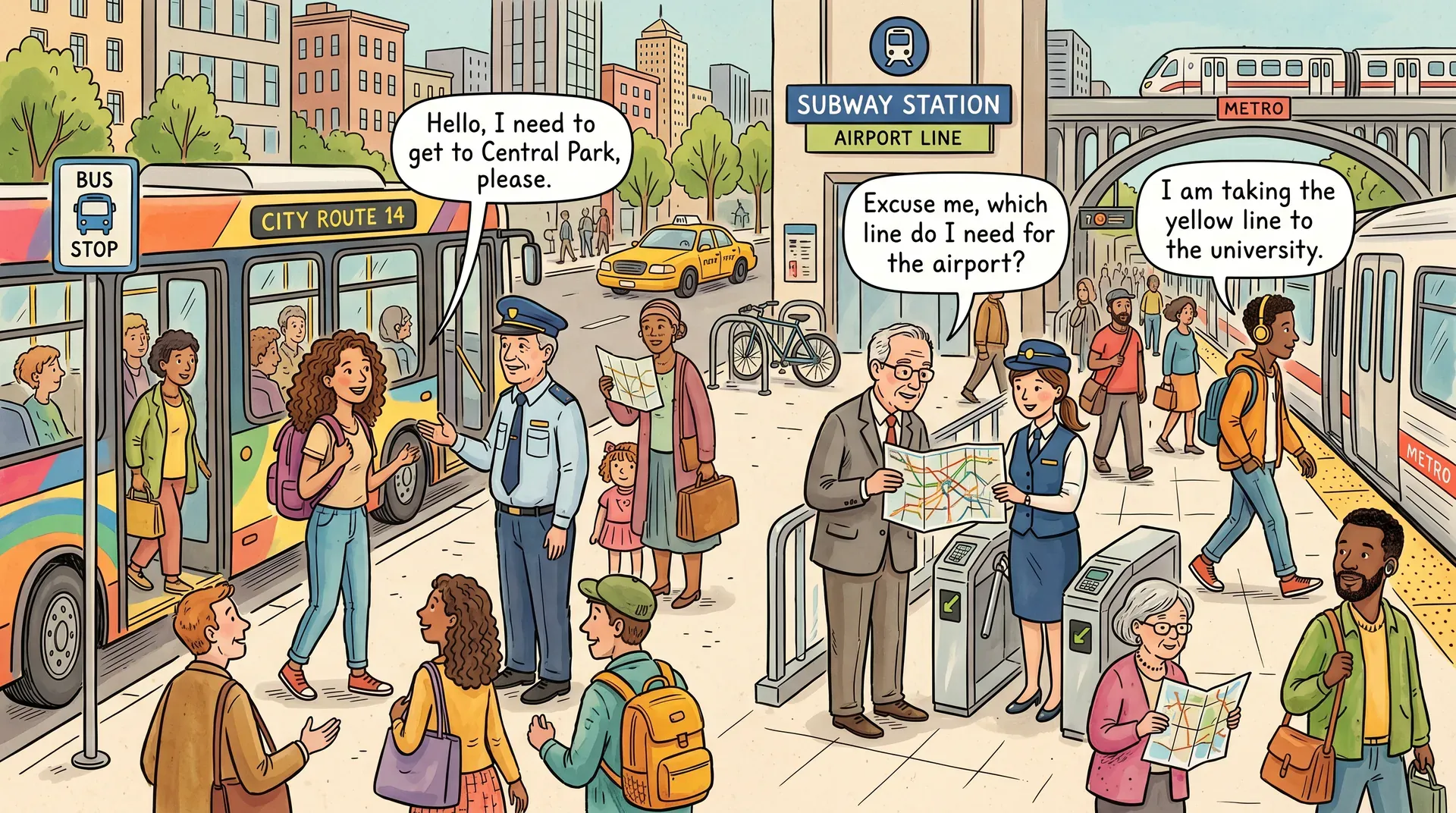
出行是现代生活中不可或缺的一部分。不论是在国内通勤、短途旅行,还是在国外旅游和商务出行,我们都经常会用到城市的公共交通系统。例如,乘坐地铁、公交车或打车,去往目的地、上下班、会见朋友或临时应对突发情况。实际出行中,我们常常需要提前规划路线、查询哪条线路最便捷、了解票价、弄清是否需要中途换乘,以及选择合适的购票方式。特别是在英语环境下,与工作人员、司机或乘客沟通时,能够清晰表达自己的需求和疑问非常重要。
比如,向地铁工作人员询问怎么换乘、向出租车司机确认路线、或者在遇到交通中断、不熟悉路况时,能及时获得帮助,避免走错方向或耽误行程。此外,利用手机导航和实时交通信息辅助判断,也已经成为现代人出行的习惯。掌握相关表达,不仅能减少旅途中的困扰,还能带来更顺畅、愉快的出行体验。
乘地铁与公交
地铁和公交是城市交通最常用的方式。出行前需要知道的核心信息:路线、换乘、票价、站数。
问路线
“Which line goes to Oxford Circus?”— 哪条线可以去牛津广场?
“Does this train go to Paddington Station?”— 这趟车去帕丁顿车站吗?
“Which direction should I take for Victoria Station?”— 去维多利亚车站应该乘哪个方向?
“Where do I transfer for the British Museum?”— 去大英博物馆在哪里换乘?
“Does this bus go to Tower Bridge?”— 这辆公交车去塔桥吗?
“Which stop should I get off for Covent Garden?”— 去考文特花园我在哪一站下?
问站数和时间
“How many stops is it to Green Park?”— 到绿园还有几站?
“How long does it take to get to King's Cross?”— 到国王十字车站要多久?
“Is Heathrow Airport far from here?”— 希思罗机场离这里远吗?
问票价和购票
“How much is the fare to Baker Street?”— 到贝克街票价多少?
“A one-way ticket to Westminster, please.”— 一张去威斯敏斯特的单程票
“A return ticket to Camden Town, please.”— 一张去卡姆登镇的来回票
“Where can I buy a transit card?”— 在哪里可以买交通卡?
“How do I top up this Oyster card?”— 这张牡蛎卡怎么充值?
在英式英语中,地铁叫“the Underground”或“the Tube”(伦敦);在美式英语中,叫“the subway”。公交车是“bus”(全球通用)。 “tube”在口语里专指伦敦地铁,如果你在伦敦问路,说“Which tube line goes to Oxford Street?”对方会立刻明白你在问什么。
乘出租车与网约车
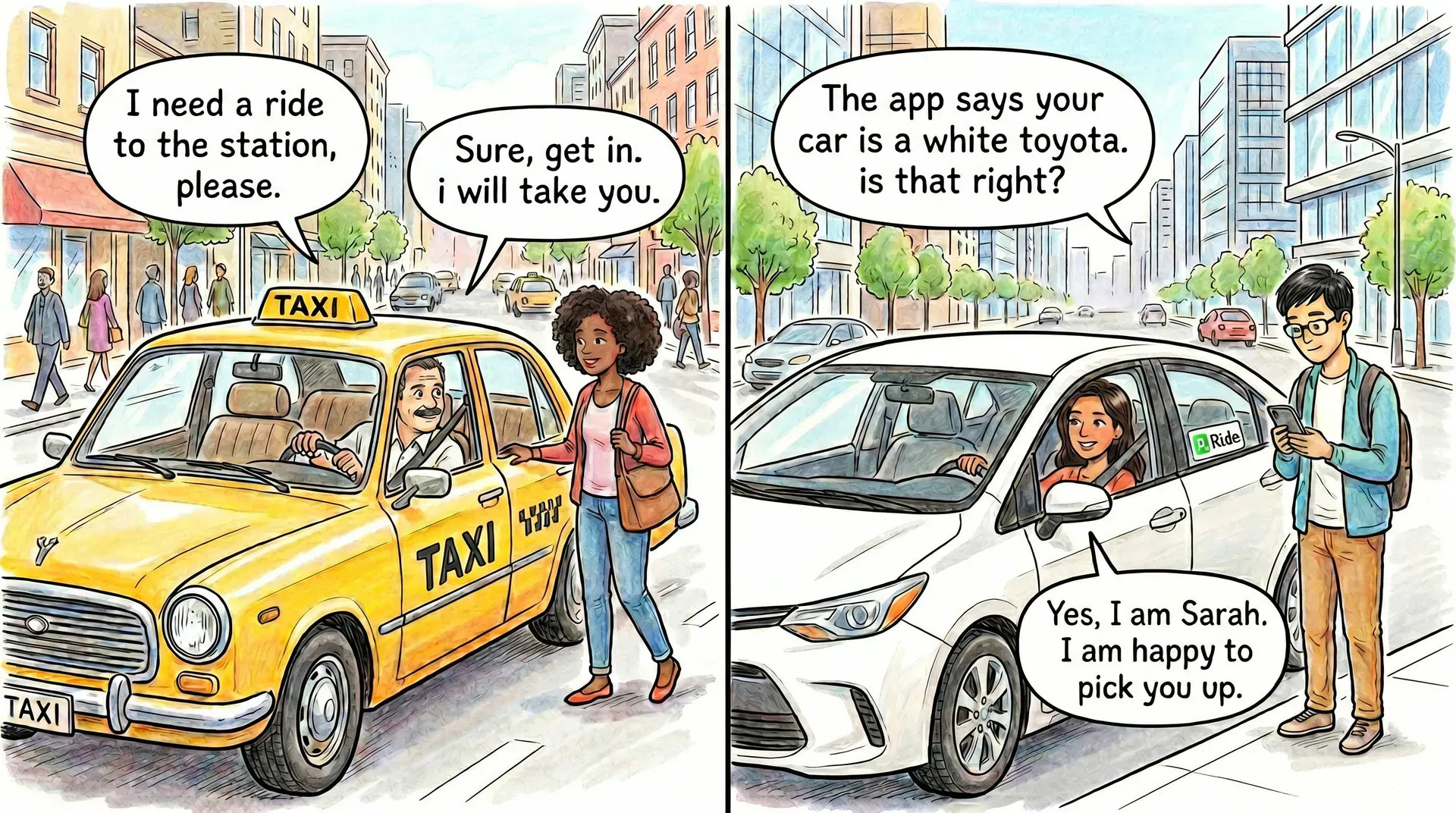
乘坐出租车或网约车时,掌握常用表达非常实用。下面结合具体地点和常见场景,扩展完整对话句型:
叫车上车
“To Heathrow Airport, please.”— 去希思罗机场,谢谢
“Could you take me to 20 Baker Street?”— 能载我去贝克街20号吗?
“I need to get to Paddington Station by 9 o'clock. Is that possible?”— 我需要九点前到达帕丁顿火车站,可以吗?
“I'm going to the British Museum, please.”— 请带我去大英博物馆
“Please take me to Covent Garden.” — 请带我去考文特花园
确认路线和偏好
“Can we avoid the traffic on Oxford Street?”— 可以避开牛津街的堵车路段吗?
“Please use the fastest route to King's Cross Station.”— 请走去国王十字车站最快的路线
“Is it okay if I pay by card?”— 我可以用银行卡支付吗?
询问费用和时间
“How much will it cost to get to the Natural History Museum?”— 去自然历史博物馆大概多少钱?
“How long will it take to Canary Wharf at this time?”— 这会儿去金丝雀码头要多久?
“Is traffic bad around Piccadilly Circus right now?”— 现在皮卡迪利广场附近堵车严重吗?
路途中的需求
“Could you turn up the air conditioning?”— 空调能开大一点吗?
“Could you turn down the air conditioning?”— 空调能调低一点吗?
“Could you open the window, please?”— 能开下窗户吗?
“Could you go a bit faster? I'm running late.”— 能快一点吗?我快迟到了
“Could you please slow down a little?”— 能开慢一点吗?
“I'll get off here, thank you.”— 我在这里下,谢谢
“Keep the change.”— 不用找零了
结合具体地点,会让对话更加自然、更贴合真实场景,助力你顺利出行。
对话示范:乘地铁问路
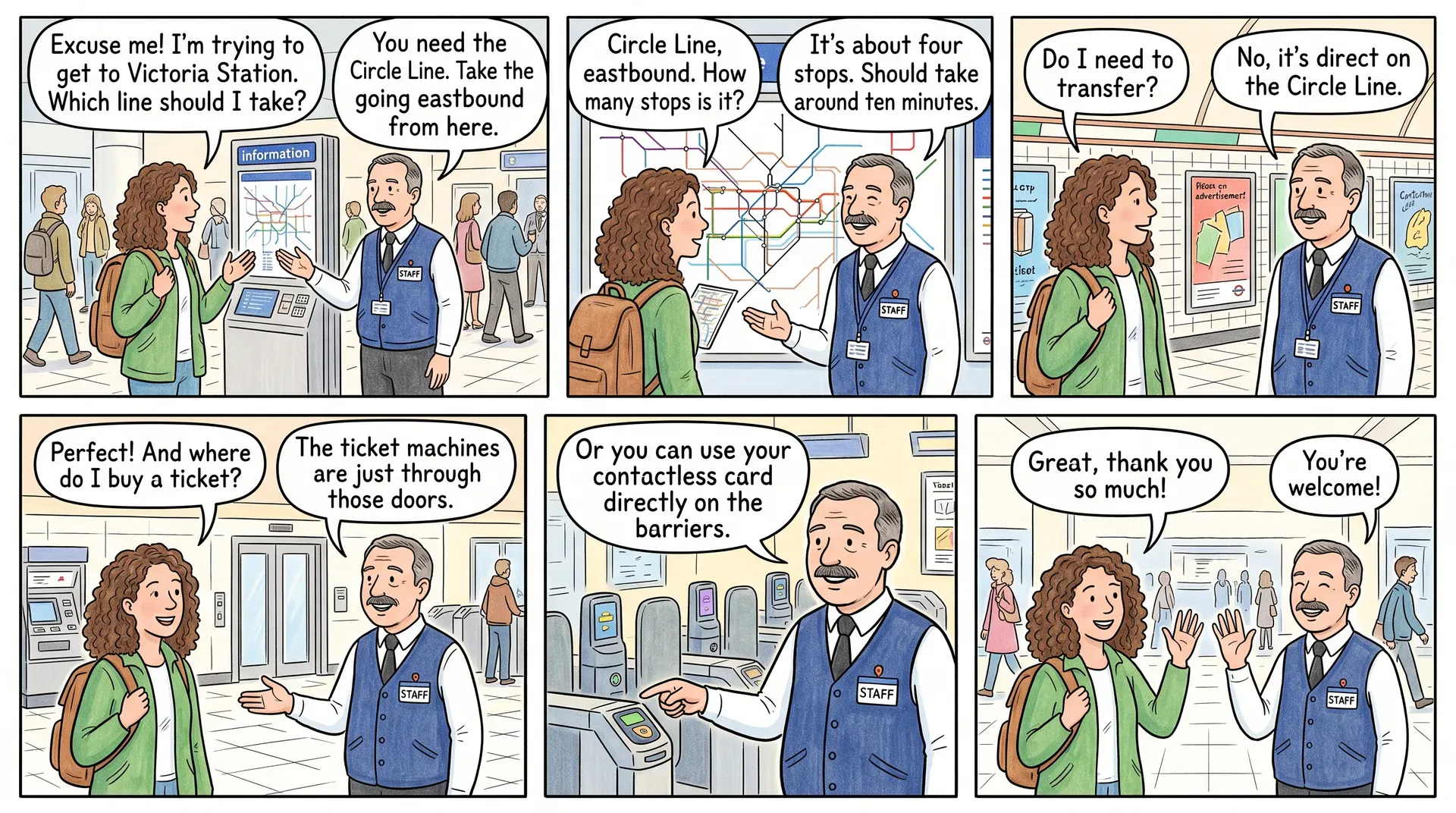
乘客(Passenger): Excuse me! I'm trying to get to Victoria Station. Which line should I take?
(打扰一下!我要去维多利亚站。我应该乘哪条线?)
工作人员(Staff): You need the Circle Line. Take the Circle Line going eastbound from here.
(你需要乘环线。在这里乘环线往东方向。)
Passenger: Circle Line, eastbound. How many stops is it?
(环线,往东。有几站?)
Staff: It's about four stops. Should take around ten minutes.
(大约四站。大概十分钟。)
Passenger: Do I need to transfer?
(需要换乘吗?)
Staff: No, it's direct on the Circle Line.
(不用,环线直达。)
Passenger: Perfect! And where do I buy a ticket?
(太好了!在哪里买票?)
Staff: The ticket machines are just through those doors. Or you can use your contactless card directly on the barriers.
(自动售票机就在那些门里面。或者你可以直接用非接触式卡在闸机刷卡。)
Passenger: Great, thank you so much!
(太好了,非常感谢!)
关键表达:
“eastbound / westbound / northbound / southbound”——方向词后加“-bound”表示朝某方向行进。这组词在地铁站、机场和火车站的标示牌上非常常见,认识它们能避免坐反方向。
“contactless card”(非接触式卡/刷卡支付)——现在很多城市的公交地铁都支持直接用银行卡或手机刷卡进闸,不需要买纸质票。
常见交通信息
处理交通中的常见问题
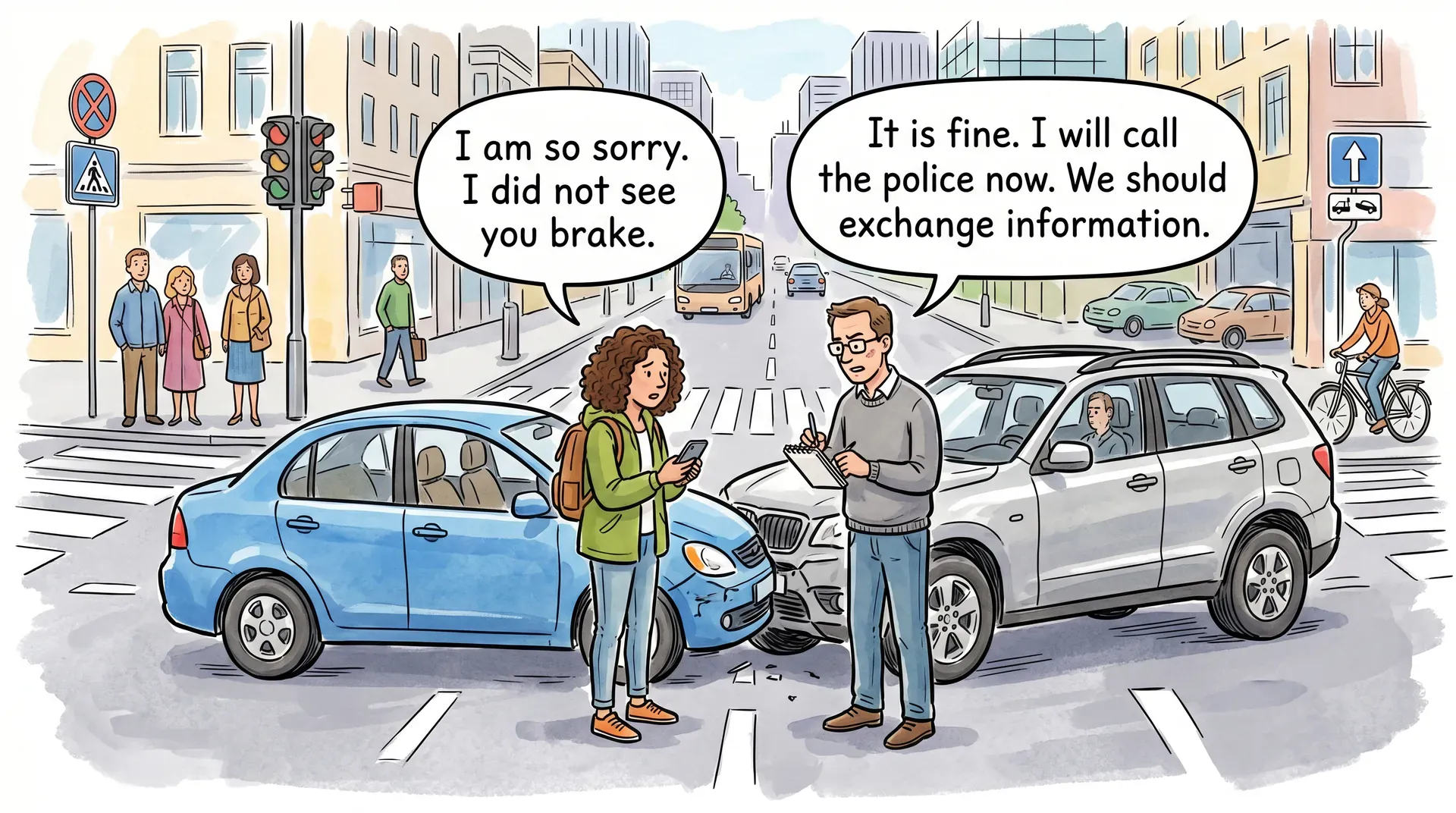
坐过站
“Excuse me, I think I missed my stop. What should I do?”
(打扰一下,我觉得我坐过站了。我应该怎么办?)
“Which station is the next one?” — 下一站是哪里?
“Is there a way to get back to "Beijing Railway Station" from here?” — 从这里可以怎么回“北京火车站”?
补充:如果需要回到原来的站,可以问:
“How do I get back to "Beijing Railway Station"? Should I change trains at the next station?”
(我怎么回“北京火车站”?需要在下一站换乘吗?)
坐错车
“I think I'm on the wrong train. Does this go to "Zhongguancun"?”
(我觉得我坐错车了。这辆车去“中关村”吗?)
补充:在公交车上也可用类似表达:
“Excuse me, is this the right bus for "Zhongguancun"?”
(请问,这辆公交车到“中关村”吗?)
需要在某站提醒
“Could you let me know when we get to "Tiananmen Square"?”
(到“天安门广场”能提醒我一下吗?)
补充:还可以说:
“Could you please tell me when it's time to get off at "Tiananmen Square"?”
(到“天安门广场”下车时请告诉我一声好吗?)
出租车绕路
“This doesn't seem right. Are we going the right way?”
(这路线好像不对。我们走对路了吗?)
“If possible, could you please take the fastest route?”
(如果可以的话,请走最快的路线好吗?)
乘坐出租车去陌生地方时,建议提前在手机上显示目的地的地图,或者把地址用英文写下来给司机看。“Could you show me on your GPS where we are now?”(能在你的导航上显示我们现在在哪里吗?)是一个很好用的问句,能让你掌握路线进度。
此外,遇到困难时,也可以拨打出租公司或地铁的客服电话寻求帮助:“Could I speak to the customer service, please?”(可以帮我联系一下客服吗?)
练习题
练习一(选择题)
知识点:交通方向词的正确理解
地铁站牌显示“Circle Line — Eastbound”,这表示:
A. 环线,往西方向
B. 环线,往东方向
C. 东线,所有方向
D. 循环线,终点站
练习二(选择题)
知识点:乘出租车上车第一句话
你进了出租车,想让司机送你去机场,下面哪个表达最简洁自然?
A. Hello! I am wanting to go to the airport.
B. Airport, please.
C. To the airport, please.
D. Can you drive me to the place where planes go?
练习三(选择题)
知识点:公共交通票种的区别
你想买一张从伦敦去牛津、当天来回的火车票,应该买哪种?
A. Single ticket
B. Return ticket
C. Transit card
D. Platform ticket
练习四(情景问答)
知识点:在地铁站向工作人员问路
情境: 你在伦敦地铁,需要从当前站(King's Cross)去 Paddington Station,完全不知道该怎么走。请用英语写出你向地铁工作人员问的问题,包含:① 你的目的地 ② 问应该乘哪条线、哪个方向 ③ 确认是否需要换乘
练习五(情景问答)
知识点:乘坐出租车时处理问题
情境: 你乘坐出租车去酒店,但你注意到司机走的路好像不对——你用手机导航看了一下,发现车子在绕路,本来应该直走的,司机却绕了一大圈。请用英语礼貌但坚定地表达你的疑虑(3-4句)。