家庭住所与食物饮料
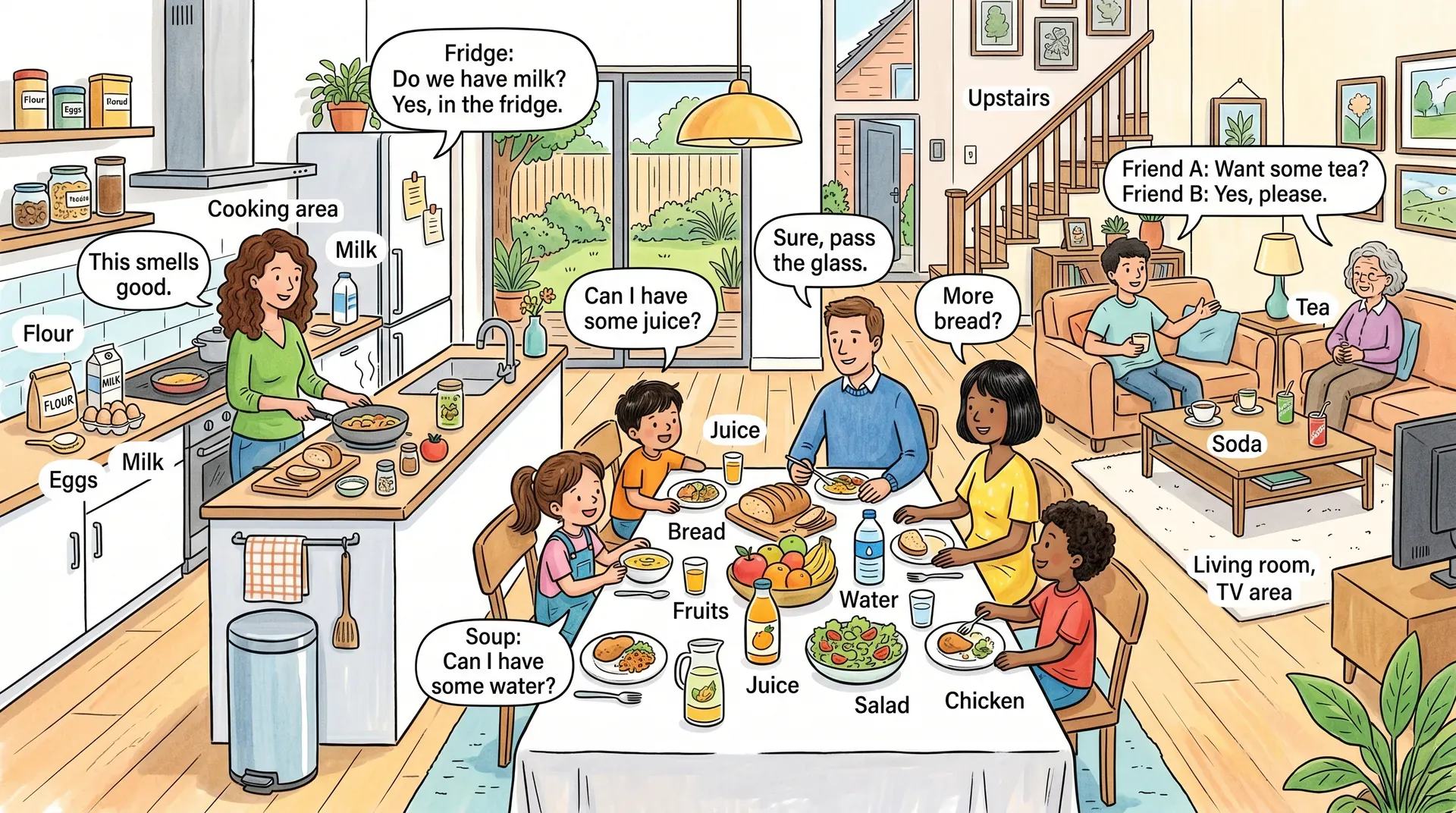
家,是每个人每天待得最久、最放松的地方。无论是工作、学习还是休息,家都承载着我们一天中大部分的生活。而吃饭,则是每日生活中不可或缺的环节,不同的家庭、地区和文化也孕育出丰富多样的饮食习惯。在日常英语交流中,关于住所类型、房间布置、家居物品、饮食结构、餐桌礼仪等相关词汇和表达极为常用。无论是向外国朋友介绍你住在什么样的住所,你的家有哪些房间与设施,还是与他人交流一天的饮食安排和家常菜肴,这些表达都能帮助你更自然、自信地沟通。
此外,学会用英语描述“某个地方有什么“(例如介绍家里的不同房间里都放着哪些物品),能让你的信息更完整、表达更地道。这是英语基础交流能力中非常重要的一环。掌握了这些内容,你会发现与人交流日常生活变得更加自信与顺畅,同时也能在跨文化交流中展示更真实、丰富的自我。
住所类型
英语里有多种不同的住所类型,每种都有专属的词汇,不可以随便替换:
人们最常混淆的是 house 和 apartment。英语里的 house,可以指独栋、半独立或联排住宅,并不特指独栋住宅,也就是有自己外墙和独立空间,有独立门牌号、通常带院子的那种房子,这类住房在北美和欧洲较常见。apartment 则是楼房里的一套单元,是高楼里的一个家庭空间,中国大多数城市居民居住的就是 apartment,而不是 house。
在用英语介绍自己住所时,尤其要注意不能把 apartment 说成 house,否则会让外国朋友误以为你住的是郊区别墅或有私家花园的独栋大宅。正确区分这两个词,表达会更准确、更贴近实际生活。
房间与家居
英语里“bathroom”在北美语境中既可以指含浴缸/淋浴的浴室,也可以委婉地指厕所(toilet)。在公共场合需要找厕所时,说“Where is the bathroom?”或“Where is the restroom?”更礼貌,直接说“Where is the toilet?”在美国语境中显得有点突兀,但在英国完全正常。
家具与家电
家里的物品按房间分组记忆,效果最好:
rice cooker(电饭锅) 是中国家庭厨房中特有且必不可少的小家电。这个词在日常生活描述中经常被提到,因为绝大多数中国家庭都会用电饭锅来煮米饭,甚至用它做粥或者蒸菜。
它在中国家庭饮食文化中地位独特,基本属于每户必备。很多外国人第一次听到 rice cooker 这个表达时会感到非常新鲜,因为在西方,电饭锅并不是每个家庭的标配,这往往引发有趣的文化交流和讨论,也可以借此向外国朋友介绍中国的饮食习惯和厨房生活。
存在句型
这是描述“某个地方有什么东西”的专用句型,英语初学者必须掌握:
基本结构:
- There is + 单数名词 + 地点
- There are + 复数名词 + 地点
肯定句:
- There is a big sofa in the living room. (客厅里有一张大沙发。)
- There are three bedrooms in our apartment. (我们公寓里有三个卧室。)
- There is a rice cooker on the kitchen counter. (厨房台面上有一台电饭锅。)
否定句:
- There isn't a garden. (没有花园。)
- There aren't any chairs in the study. (书房里没有椅子。)
疑问句:
- Is there a gym in the building? (这栋楼里有健身房吗?)
- Are there any shops nearby? (附近有商店吗?)
注意:There is 用于单数可数名词或不可数名词;There are 用于复数可数名词。当列举多个物品时,如果第一个是单数,用 There is:
- There is a sofa and two chairs in the room.(房间里有一张沙发和两把椅子。)
食物
食物词汇数量庞大,按类别分组记忆效率最高:
pork(猪肉)、beef(牛肉)、lamb(羊肉)这三个词只指“肉”本身;pig(猪)、cow(牛)、sheep/lamb(羊)是动物的名字。这是英语里一个有趣的现象——表示动物和表示食物用的是完全不同的词,据说这源于英国历史上贵族吃肉、农民养畜的社会分层。无论如何,做菜时一定用 pork/beef/lamb,不能说“I eat pig.”
饮料
| 英文 | 中文 | 可数性 | 常用搭配 |
|---|---|---|---|
| water | 水 | 不可数 | a glass of water |
| tea | 茶 | 不可数 | a cup of tea |
| coffee | 咖啡 | 不可数 | a cup of coffee |
| milk | 牛奶 | 不可数 | a glass of milk |
| juice | 果汁 | 不可数 | a glass of juice |
| soda | 碳酸饮料 | 可数 | a can of soda |
| beer | 啤酒 | 可数/不可数 | a bottle of beer |
| wine | 葡萄酒 | 不可数 | a glass of wine |
饮料中的液体类词汇(water / tea / coffee / milk / juice)泛指液体时通常不可数;点餐时 a water、two teas 可表示一份水、两份茶。要表达数量,需要借助容器表达:
- a cup of tea(一杯茶)
- two glasses of juice(两杯果汁)
- a bottle of water(一瓶水)
- three cans of soda(三罐汽水)
描述家的完整表达
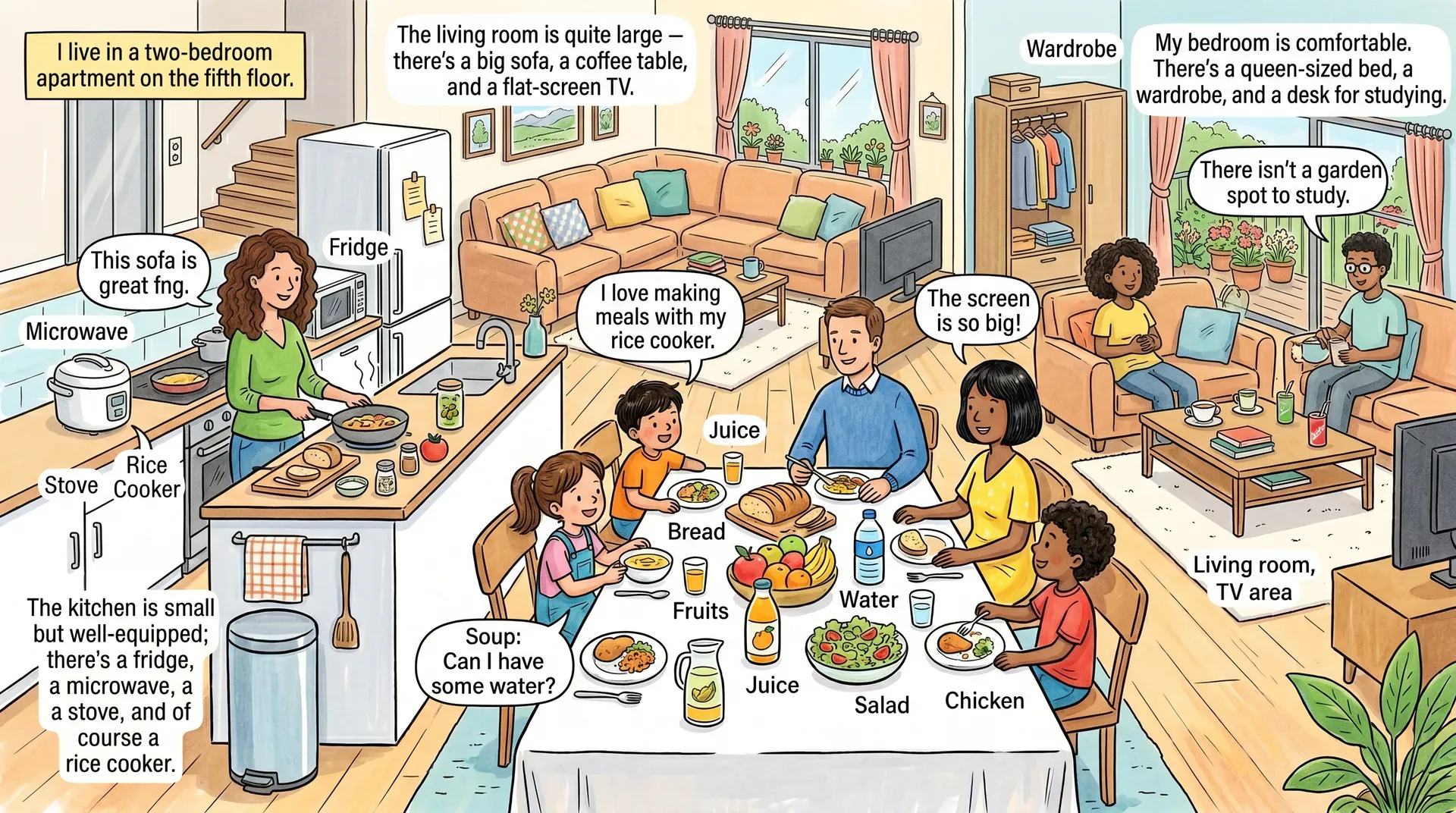
把住所词汇、家具词汇和存在句型结合起来,就能完整描述一个家:
I live in a two-bedroom apartment on the fifth floor. The living room is quite large — there's a big sofa, a coffee table, and a flat-screen TV. The kitchen is small but well-equipped; there's a fridge, a microwave, a stove, and of course a rice cooker. My bedroom is comfortable. There's a queen-sized bed, a wardrobe, and a desk for studying. There isn't a garden, but there's a nice balcony where I grow some plants.
(我住在五楼的两居室公寓里。客厅相当宽敞——有一张大沙发、一个茶几和一台平板电视。厨房很小,但设备齐全:有冰箱、微波炉、炉灶,当然还有电饭锅。卧室很舒适。有一张双人床、一个衣柜和一张书桌供我学习。没有花园,但有一个漂亮的阳台,我在上面种了些植物。)
这段描述的结构是:先说住所类型和楼层,再逐个房间描述,每个房间先说整体印象,再用 There is/are 列举具体物品。
完整场景对话
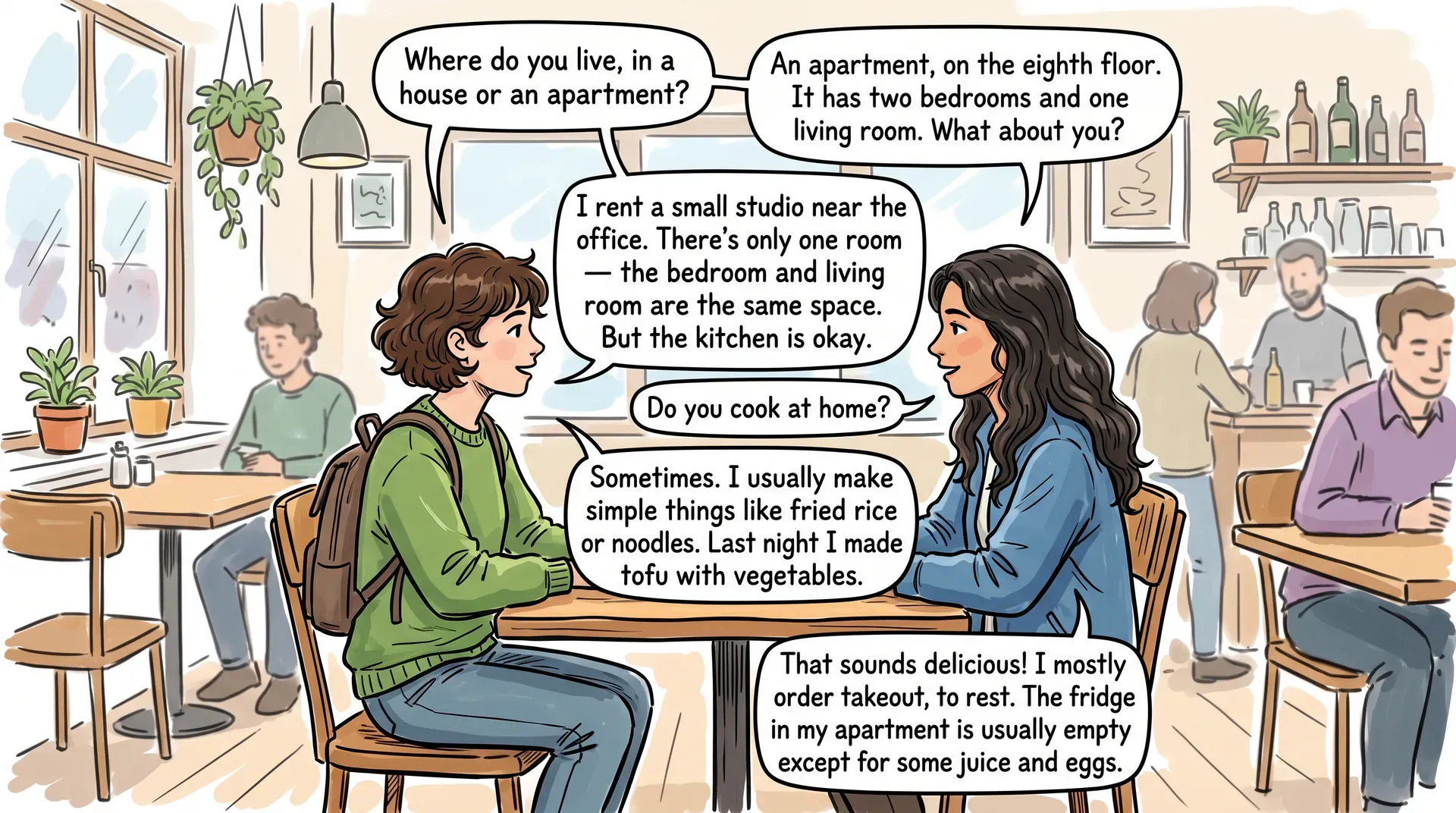
以下对话是两位朋友在讨论各自的家:
A: Where do you live, in a house or an apartment?
(你住在独栋房子还是公寓?)
B: An apartment, on the eighth floor. It has two bedrooms and one living room. What about you?
(公寓,在八楼。两室一厅。你呢?)
A: I rent a small studio near the office. There's only one room — the bedroom and living room are the same space. But the kitchen is okay.
(我在公司附近租了一间小单间。只有一个房间——卧室和客厅是同一个空间。不过厨房还不错。)
B: Do you cook at home?
(你在家做饭吗?)
A: Sometimes. I usually make simple things like fried rice or noodles. Last night I made tofu with vegetables.
(有时候。我通常做些简单的,比如炒饭或面条。昨晚做了豆腐炒蔬菜。)
B: That sounds delicious! I mostly order takeout, to be honest. The fridge in my apartment is usually empty except for some juice and eggs.
(听起来很好吃!说实话,我大多数时候都点外卖。我公寓的冰箱里通常空空的,就剩一些果汁和鸡蛋。)
解析: B 说“The fridge... is usually empty except for some juice and eggs”,其中 except for(除了……之外)是一个非常实用的表达,表示整体为空,只有一个例外。“order takeout”(点外卖)是描述现代饮食习惯最常用的短语,在中国语境下几乎每天都用得上。
练习题
练习一(选择题):There is 还是 There are?
知识点:There is 用于单数/不可数,There are 用于复数
以下哪个句子语法正确?
A. There are a sofa in the living room.
B. There is three chairs around the table.
C. There are some apples on the table.
D. There is many books on the shelf.
练习二(选择题):饮料的正确数量表达
知识点:不可数名词不能直接加数词,需要借助容器单位表达数量
以下哪个表达是正确的?
A. Can I have two teas, please?
B. Can I have two cups of tea, please?
C. Can I have a tea, please?
D. Can I have two cup of tea, please?
练习三(选择题):肉类词汇
知识点:区分动物名称和食物名称
你在餐厅想点猪肉炒饭,应该怎么说?
A. I'd like fried rice with pig.
B. I'd like fried rice with pork.
C. I'd like fried rice with swine.
D. I'd like pig fried rice.
练习四(情景问答):用英语描述你的家
知识点:综合运用住所词汇和 There is/are 句型
请用 5-8 句话描述你现在住的地方,要求包含:① 住所类型和大小;② 至少三个房间的描述;③ 每个房间至少用一次 There is/are 句型;④ 至少提到两件家用电器
练习五(情景问答):饮食习惯描述
知识点:食物词汇与日常饮食描述
情境: 你正在和外国朋友分享中国的日常饮食习惯。请用英语描述一个普通中国家庭的典型一天三餐(早/午/晚),至少用到 6 个食物或饮料词汇。