描述地点与场所
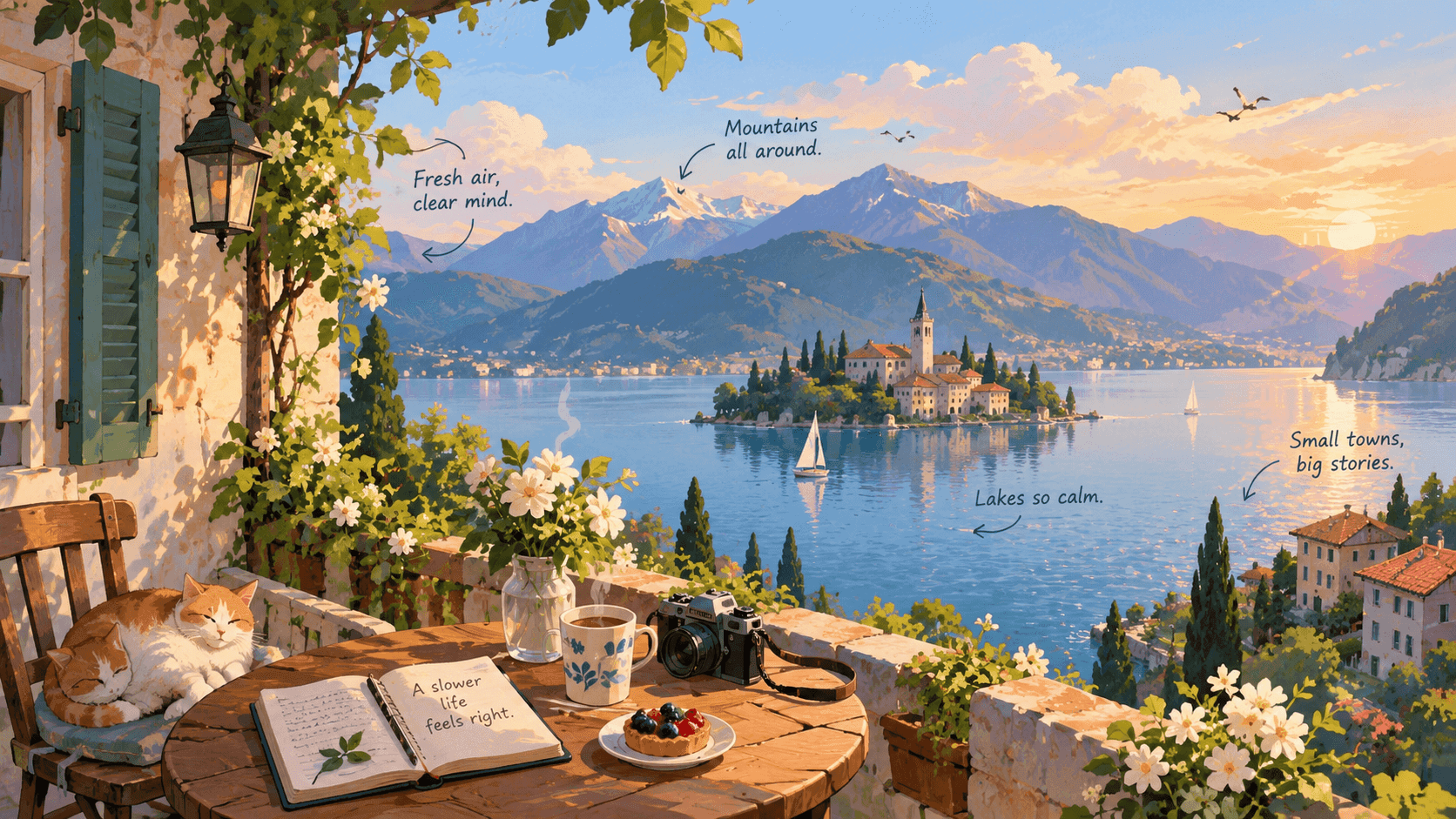
描述一个地方,远远不只是简单地说一句“It's beautiful”就可以了。真正生动传神的地点描写,应该能够让听者闭上眼睛也能“看到”你说的画面,感受到那个地方独特的气氛、环境、特色,和你所看到的真实细节。
具体来说,除了外表美丽,你可以描述:它的位置(比如是在大城市的市中心、安静的郊区,还是靠近河岸或山脚),它的规模(是一条隐秘的小巷、一个充满人气的夜市,还是城市的地标性建筑),有哪些特别的元素(比如历史悠久的老建筑、色彩明快的涂鸦墙、林荫大道、灯火通明的餐馆、宁静的公园,或者当地人常去的市场)等等。
氛围细节也很重要,比如这个地方“安静悠闲、适合慢慢散步”,还是“热闹非凡、人声鼎沸”;空气中是不是弥漫着美食的香气,耳边是否能听到街头艺人弹唱或小贩的吆喝声;白天和夜晚的感觉是否完全不同。这些都能帮助听者更好地想象和理解你介绍的场所。
最后,别忘了加入你自己的看法或评价——比如“我觉得这里特别值得一来”、“虽然游客很多,但氛围非常地道”、“夏天会很热闹,冬天则安静许多”、“我每次来都觉得心情很好”等等。你表达的不仅是“是什么”,还有“你怎么看”,这样内容就会更有感染力。
描述地点的四步框架
描述任何地方,都可以用这个四步框架来组织,让你的描述更有条理、细节更丰富、信息量更大:
第一步:位置(在哪里) 说明这个地方的位置,可以结合城市、地标、方位等信息。例如:
“It's located in the south of China.” (它位于中国南部。)
“It's in the city center, next to the main train station.” (它在市中心,紧邻火车总站。)
“It's situated along the banks of the river.” (它坐落在河岸边。)
如果需要,也可以提到与其他著名地点的距离或相对位置,比如:
“It's just a 10-minute walk from the university.” (它离大学只有10分钟的步行路程。)
第二步:特点(有什么)
介绍这个地方的特色,包括外观、历史、建筑、文化、美食、自然景观等。例如:
“It's known for its ancient temples and street food.”
(它以古老的庙宇和街头美食而闻名。)
“It has a vibrant nightlife and excellent public transport.”
(它拥有充满活力的夜生活和便捷的公共交通。)
“It's famous for its colorful graffiti walls and art galleries.”
(它以色彩斑斓的涂鸦墙和艺术画廊著称。)
“It's home to several beautiful parks and a lively weekend market.”
(这里有好几个美丽的公园和一个热闹的周末集市。)
第三步:氛围(感觉如何) 描述在这里的感受或这里的整体气氛,可以让听者身临其境。比如:
“It has a very laid-back, relaxed vibe.”
(这里的氛围非常悠闲轻松。)
“The atmosphere is buzzing — always full of energy.”
(这里气氛热烈,总是充满活力。)
“The streets are peaceful and quiet, perfect for a morning walk.”
(街道安静而祥和,非常适合晨间散步。)
“In the evening, the whole area comes alive with music and laughter.”
(傍晚时分,整个地区都被音乐和欢笑点亮,变得热闹起来。)
第四步:个人评价(你怎么看)
加入个人的观点或建议,让描述变得更加生动真实。例如:
“I'd highly recommend it.”
(我强烈推荐这里。)
“It's definitely worth a visit, but avoid the tourist traps.”
(绝对值得一去,但最好避开那些专门针对游客的地方。)
“I always feel inspired after spending some time here.”
(每次在这里待一会儿,我都会受到启发。)
“It's my favorite place to relax when I need a break from the busy city.”
(当我需要从城市的喧嚣中喘口气时,这是我最喜欢放松的地方。)
“Spring is the best time to visit, in my opinion.”
(在我看来,春天是来这里最好的时节。)
描述城市
基础句型
- “[城市] is located in the [方向] of [国家].”— [城市]位于[国家]的[方向]
- “It's a [大小][类型] city with a population of about [人口].”
- “It's known/famous for its [特色].”— 它以[特色]闻名
- “It's one of the most [形容词] cities in [地区].”
例如:
Xi'an is located in the northwest of China. It's an ancient city with a population of about 12 million. (西安位于中国的西北部,是一座拥有大约一千二百万人口的古老城市。)
Melbourne is a large, modern city in the south of Australia. It's famous for its coffee culture and diverse food scene. (墨尔本是澳大利亚南部一座大型现代化城市,以其咖啡文化和多样的美食闻名。)
更多补充表达:
- “It's the capital of [地区/省份].”— 它是[地区/省份]的首府。
- “The city dates back over a thousand years.”— 这座城市有一千多年的历史。
- “It attracts millions of visitors every year for its [著名景点/特色].”— 因其[特色]而每年吸引无数游客。
- “It's a major financial center in the region.”— 它是该地区的重要金融中心。
描述城市氛围
“It has an amazing energy — always busy and vibrant.”
(它有一种惊人的活力——总是忙碌而生机勃勃。)
“It's a city that never really sleeps.” (它是一座不眠之城)
“It has a very cosmopolitan feel.” (它有一种非常国际化的感觉)
“It's more relaxed and laid-back compared to the bigger cities.”
(和大城市相比,它更轻松、节奏更慢。)
补充一些氛围相关的表达:
The pace of life here is fast, but people are always friendly.
(这里生活节奏很快,但人们总是很友善。)
The city can feel a bit overwhelming at first, but you get used to it.
(这座城市起初可能让人有些应接不暇,但你会慢慢习惯。)
There's always something happening — from street performances to night markets.
(这里总有一些热闹的事情发生——从街头表演到夜市应有尽有。)
The historic center is charming and full of life, especially on weekends.
(老城区非常有魅力,尤其是在周末,总是充满活力。)
对话示范:介绍自己的城市

A: I've never been to Chengdu. What's it like?
(我从未去过成都。那是个什么样的地方?)
B: Oh, you should definitely go! It's in the southwest of China, in Sichuan province. It's a pretty big city — over 20 million people — but somehow it doesn't feel overwhelming.
(哦,你一定要去!它在中国西南部,四川省。是个相当大的城市——两千多万人口——但不知为何,并不让人感到压迫。)
A: What's it known for?
(它以什么闻名?)
B: Spicy food, definitely — the hotpot is incredible. But it's also famous for its pandas and its teahouse culture. People in Chengdu have a reputation for really knowing how to enjoy life.
(绝对是辣食——火锅棒极了。但它也以大熊猫和茶馆文化著名。成都人以真正懂得享受生活而闻名。)
A: What does it feel like to be there?
(在那里感觉怎么样?)
B: It has this wonderful, relaxed vibe. You walk into a teahouse at 2 pm and it's packed with people playing mahjong or just chatting for hours. It's quite different from Beijing or Shanghai — less rushed.
(那里有一种美妙的、轻松的氛围。下午两点走进茶馆,里面坐满了打麻将或只是聊天好几个小时的人。它和北京或上海很不同——节奏更慢。)
表达解析:
“It doesn't feel overwhelming.”——城市太大时给人带来的压迫感,用“overwhelming”(让人不知所措的)来描述非常贴切。
“People in Chengdu have a reputation for...”——“have a reputation for + 名词/动名词”是描述某地或某群体的特点时非常地道的句型。
“Less rushed”——用比较级描述一个地方的特点,比“more relaxed”更有对比感,让描述更有层次。
描述场所与氛围

描述一个具体的地方,除了介绍其位置和主要特色外,“氛围”往往是最让人记忆深刻、最能打动人的部分。一个地方的氛围,能让你产生放松、兴奋、温暖、惬意等各种不同的感受,也能够体现当地文化特色。合理描绘氛围不仅能丰富你的描述,还能让听众产生身临其境的画面感。
描述氛围
- “vibrant” — 充满活力的
Chengdu has a vibrant nightlife with lots of live music and bars.
成都拥有充满活力的夜生活,有很多现场音乐和酒吧。
- “bustling” — 熙熙攘攘的、热闹的
The city center is always vibrant, with people chatting and street artists performing.
市中心总是充满活力,人们交谈,街头艺人表演。
- “cozy” — 温馨舒适的(适合形容小咖啡馆、小餐厅、家庭旅馆等)
It's a cozy little cafe with soft music playing.
这是家温馨的小咖啡馆,里面播放着柔和的音乐。
- “intimate” — 私密的、温馨的(常用于小众场所、私密聚会空间)
It's a very intimate restaurant, perfect for a date.
这是一家非常私密的餐厅,很适合约会。
- “laid-back” — 随性悠闲的、节奏缓慢的
The city has a laid-back atmosphere—you never feel stressed.
这座城市氛围悠闲,你从不会感到压力。
- “lively” — 热闹活跃的
It's a lively area full of street performers.
这是个充满街头艺人的热闹区域。
- “trendy” — 时髦的、潮流的
It's a trendy district popular among young people.
这里是年轻人喜爱的潮流街区。
- “authentic” — 原汁原味的、地道的(有传统特色)
They serve authentic local food here.
这里提供正宗的本地美食。
- “touristy” — 旅游气息浓重的(通常带轻微负面评价)
It's a bit touristy, but still interesting.
虽然旅游气息比较浓,但仍然有趣。
- “off the beaten track” — 人迹较少、非大众旅游地(常用于推荐小众景点)
If you want something off the beaten track, visit the old town nearby.
如果你想去人少的小众地方,可以去附近的古镇。
可扩展举例
- “picturesque” — 风景如画的
- “serene” — 宁静的、安详的
- “crowded” — 拥挤的
- “welcoming” — 热情友好的
- “artistic” — 富有艺术气息的
- “historic” — 富有历史感的
- “charming” — 迷人的、有魅力的
氛围描述常用句型与表达
句型可以帮助你灵活地将上面词汇用于实际描述。
It has a very [形容词] vibe / atmosphere.
它有一种非常……的氛围。
- It has a very welcoming vibe.(它有一种非常热情友好的氛围。)
It feels [形容词] when you're there.
你在那里会觉得很……。
- It feels cozy when you're there.(你在那里会觉得很温馨。)
The whole area has a [形容词] feel to it.
整个区域有一种……的感觉。
- The whole area has a lively feel to it.(整个区域有一种充满活力的感觉。)
There's something [形容词] about the place.
这个地方有种……的气质。
- There's something magical about the place.(这个地方有种神奇的气质。)
You get a real sense of [名词] here.
你能在这里感受到……。
- You get a real sense of history here.(你能在这里感受到历史的气息。)
It's bustling with [人/活动].
这里因……而热闹。
- It's bustling with locals and tourists.(这里因本地人和游客而热闹。)
尝试根据你去过的一个地方,选择两个氛围关键词,并用上面的句型写一句英文描述,再用中文翻译出来。这样可以帮助你快速积累实用表达。
位置关系
在描述一个地点的时候,说明它在什么位置或者和周边事物的关系也非常重要。清楚地表达位置关系,可以帮助别人更好地找到或理解该地点。例如描述它靠近某个著名地标、位于某个街道上、在什么建筑物旁边等,都能够让你的表达更加具体、实用。
补充说明:
- “by”常用来描述靠近自然景观,如by the lake(湖边)、by the river(河边)。
- “at the intersection of ...” 表示“在……的交叉口”。例如:at the intersection of Main Street and Park Avenue(在主街和公园大道的交叉口)。
- “close to / near” 都表示“靠近”,用法灵活,可替换。
个人评价:有立场的表达
描述地点时,加入个人评价,会让你的描述更有说服力,也更能引发对话:
推荐
- I'd highly recommend it.(我强烈推荐。)
- It's definitely worth the trip.(绝对值得一去。)
- It's one of my favorite places.(这是我最喜欢的地方之一。)
客观推荐(有条件)
- It's great, but it can get very crowded in summer.(很好,但夏天会非常拥挤。)
- It's worth visiting, just avoid weekends if you can.(值得一去,如果可以的话避开周末。)
- It's a bit touristy, but the food is still amazing.(旅游气息比较浓,但食物仍然很棒。)
不推荐
- Honestly, it didn't quite live up to my expectations.(说实话,它没有完全达到我的期望。)
- It's nice enough, but I'm not sure it's worth the journey.(还不错,但我不确定是否值得专程去。)
练习题
练习一(选择题)
知识点:描述氛围的词汇选择
你去了一家小咖啡馆,室内灯光昏黄温暖,只有几张小桌子,非常适合安静地读书或和朋友聊天。用哪个词描述它的氛围最贴切?
A. Vibrant
B. Bustling
C. Cozy
D. Touristy
练习二(选择题)
知识点:地点描述的四步框架使用
你在介绍上海,下面哪个描述最完整、最有层次?
A. Shanghai is big and modern.
B. Shanghai is in eastern China. It's a huge, modern city known for its skyline and incredible food scene. It has an amazing, fast-paced energy — always buzzing. I think it's one of the most exciting cities in the world.
C. Shanghai is nice. You should go there.
D. Shanghai has many people and buildings.
练习三(选择题)
知识点:“touristy”的正确含义
当你说一个地方“It's a bit touristy”,你在表达什么?
A. 那里的旅游设施非常好
B. 那里非常值得作为旅游目的地
C. 那里旅游气息浓重,商业化明显,可能缺少原汁原味的体验
D. 那里主要是给游客设计的景点,当地人不去
练习四(情景问答)
知识点:用四步框架描述你的家乡或熟悉的城市
情境: 你的外国朋友从没听说过你的家乡(或你选择的任何一个中国城市),问你“What's your hometown like?”(你的家乡是什么样的?)请用英语回答(5-6句话),用四步框架:位置 → 特点 → 氛围 → 个人评价。
练习五(情景问答)
知识点:描述一个具体场所的氛围
情境: 请描述你去过的一个你印象最深的地方(可以是餐厅、公园、市场、咖啡馆或任何场所)。用英语写出4-5句话,包含:场所的基本信息 + 氛围描述(用具体的感官细节)+ 你的个人评价。