过去进行时

英语时态中,一般过去时主要用于描述过去已经发生并完成的动作、事件或事实,常常回答“发生了什么”这个问题。例如:“他昨天去了商店”、“我上周见到了朋友”。这种时态能够帮助我们回顾和陈述过往的经历、事实或者已经结束的习惯,句子结构也相对简单明了。
相比之下,过去进行时则着重表达在过去某一特定时刻或时间段内,某个动作正在进行,突出动作的持续性或背景。例如:“昨天下午三点我正在看书”,“昨晚八点他们还在吃晚饭”。过去进行时经常用来刻画当时的气氛、环境或正在进行中的背景活动。
在实际交流和写作中,这两种时态往往会配合使用。过去进行时为故事或事件提供“背景板”——交代当时正在发生着什么——而一般过去时则推动情节发展,记录突然发生的主要事件。比如:“I was reading when the phone rang.”(我正在看书,这时电话响了。)——其中“我正在看书”是背景,“电话响了”则是事件本身。
通过合理搭配这两种时态,我们可以让表达变得更真实、更生动,能够更自然地还原当时的场景或突发的状况,让语言表达富有层次,叙述也会变得更加有画面感和感染力,这一点在口语和写作中都非常重要。
构成规则:was / were + 动词 -ing
过去进行时的构成由两部分组成:was / were + 动词 -ing 形式。其中 was 用于主语是 I / he / she / it(即第一人称单数和所有三单),were 用于主语是 you / we / they(即第二人称以及所有复数)。这一点与 be 动词在其他时态中的用法是一致的。动词 -ing 形式的构成规则同现在进行时:以一般动词加-ing(如 play → playing),以不发音的 e 结尾需去 e 再加 ing(如 dance → dancing),重读闭音节末尾辅音需双写辅音后加 ing(如 run → running)。
结构口诀:“主语 + was/were + 动词-ing”。
I was reading. She was cooking. They were watching a movie. We were having dinner.
我正在读书。她正在做饭。他们正在看电影。我们正在吃晚饭。
否定句
否定句在 was/were 后加 not,构成 wasn't / weren't。例如:
-
I was not (wasn't) watching TV.
我没在看电视。 -
They were not (weren't) playing outside.
他们没有在外面玩。
疑问句
疑问句将 was/were 提到主语前面,构成“Was/Were + 主语 + 动词-ing...?” 例如:
-
Was she sleeping?
她那时正在睡觉吗? -
Were you listening to music?
你那时正在听音乐吗? -
Were they playing outside?
他们那时正在外面玩吗?
小结
结构如下:
肯定句:主语 + was/were + 动词-ing
否定句:主语 + was/were + not + 动词-ing
疑问句:Was/Were + 主语 + 动词-ing...
这种结构可以帮助你灵活表达过去某时正在发生的动作、描绘背景或并行事件。掌握它,英语表达将会更自然丰富!
用法一:过去某时刻正在进行的动作
过去进行时的第一个用法是:描述在过去某个具体时间点,某个动作“正发生”或“正在进行”。常常搭配“at + 具体时间”,比如:at 8 o'clock last night(昨晚8点)、at that moment(那一刻)、at this time yesterday(昨天这个时候)等,强调动作的持续性和发生的状态。
这样的句子经常用来说明某段时间你的状态或者你正在做的事情。例如:
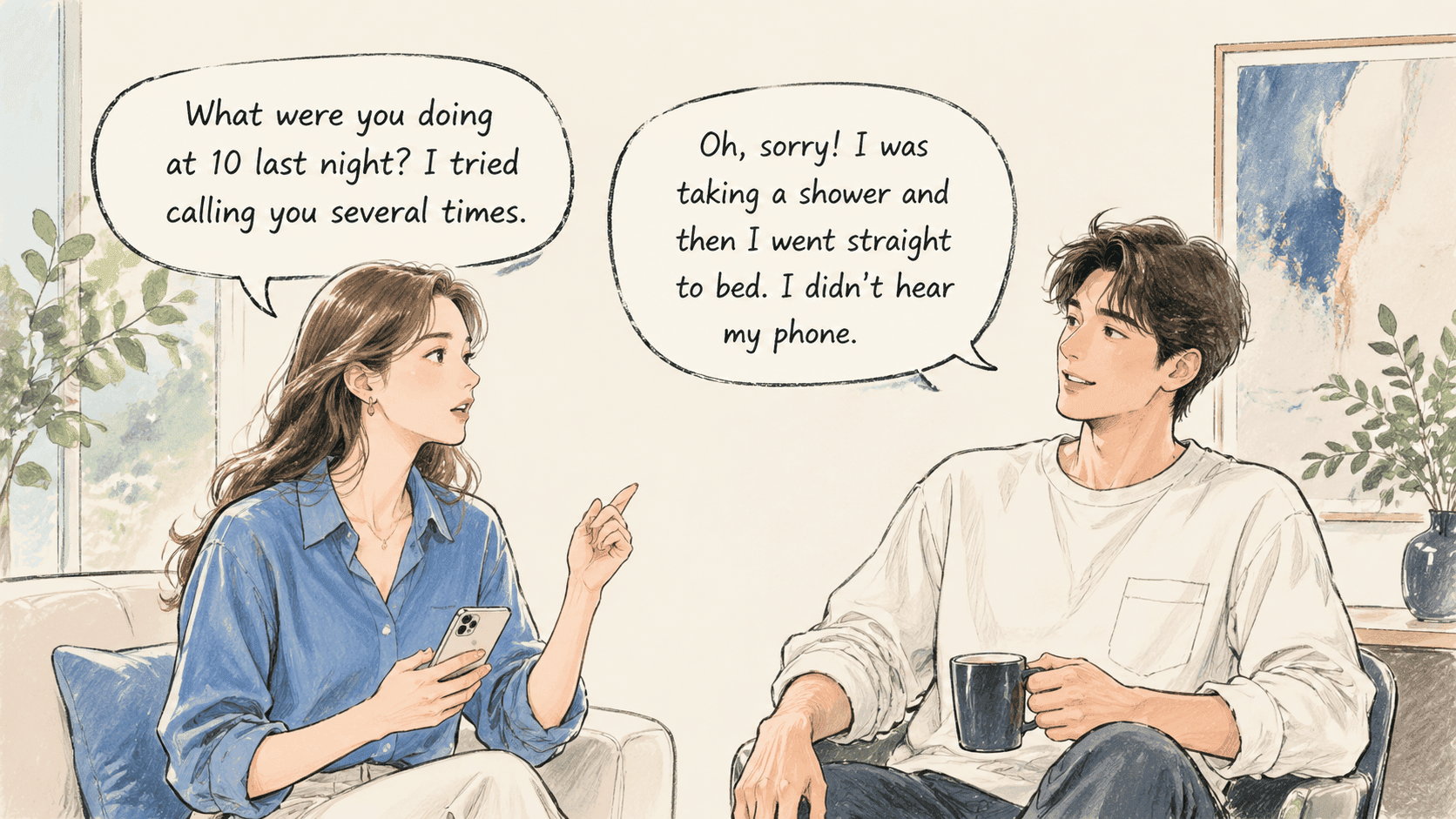
A:What were you doing at 10 last night? I tried calling you several times.
你昨晚10点在干什么?我打了你好几次电话。
B:Oh, sorry! I was taking a shower and then I went straight to bed. I didn't hear my phone.
哦,抱歉!我当时正在洗澡,然后直接去睡了,没有听到手机。
这里的“I was taking a shower”就用到了过去进行时(被问及的时间点,洗澡这个动作正在进行中)。
At this time yesterday, I was sitting on a plane heading to Guangzhou.
就在昨天这个时候,我正坐在飞往广州的飞机上。
At 8 o'clock last night, she was still working in the office.
昨晚8点,她还在办公室工作。
When I saw Tom at noon, he was eating lunch.
中午我碰到汤姆时,他正在吃午饭。
这种结构也经常用来解释为何某个时间段内没能做某事。例如:“Sorry, I wasn't answering your calls because I was having a meeting at that moment.”(对不起,我没接电话,因为那时我正开会。)
用法二:过去正在进行的动作被打断
过去进行时最常见、最经典的用法之一,是描述一个正在进行中的背景动作被一个突然发生的短暂事件“打断”。这也是讲述故事和叙述事件发展时经常需要表达的结构。
通常用 when 或 while 连接两个动作:
- while + 过去进行时 :强调“在……过程中”
- when + 一般过去时 :引入“打断”或“突然发生”的短动作
I was cooking dinner when my friend called me.
我正在做晚饭,这时朋友给我打了电话。
这里“我在做饭”是背景(过去进行时),朋友打电话是突然冒出来的事件(一般过去时)。
While she was walking to the station, she suddenly remembered she had left her laptop at home.
她正走去车站的途中,突然想起把笔记本电脑落在家里了。
这个结构经常出现在带有“unexpected”(意外)、“suddenly”(突然)、“without warning”(突然间)等情感色彩的描述中。
He was driving on the highway when his tire blew out. He managed to pull over safely.
他正在高速公路上开车,这时轮胎突然爆了。他设法安全地靠边停了下来。
多补充一些相关短语和 patterns:
-
I was just about to leave when the phone rang.
我正打算离开,这时电话响了。 -
While we were studying, it started to rain heavily.
我们在学习的时候,外面突然开始下大雨。 -
The kids were playing in the yard when their mom called them for dinner.
孩子们正在院子里玩,这时他们的妈妈喊他们吃晚饭。
要点小结:
- “背景”动作:用过去进行时(was/were + doing)
- “打断/短暂”事件:用一般过去时(did)
when 和 while 的区别:
- while 后面常接持续的动作(过去进行时),如 while you were talking;
- when 后面可接瞬间性动作(一般过去时),如 when I got home。 掌握这个习惯搭配,叙述故事更流畅、更地道!
用法三:设置故事背景
在写作和讲故事时,过去进行时常用来设定“背景场景”,帮助营造氛围或交代“故事开头时有多种动作正在发生”,通常这些都是背景,主要情节用一般过去时推动。
It was a cold November night. The wind was howling outside, the rain was beating against the windows, and I was sitting alone by the fireplace reading an old novel — when suddenly the doorbell rang.
那是一个寒冷的11月夜晚。外面风在呼啸,雨水拍打着窗户,我独自坐在壁炉旁读一本旧小说——就在这时,门铃突然响了。
这里 “was howling”, “was beating”, “was sitting” 都是用过去进行时,描写背景和氛围。而“the doorbell rang” 用一般过去时表主线事件。
再来看一些写作和叙事中常见的此结构句子:
-
People were chatting, children were playing, and music was playing in the background when the lights suddenly went out.
人们在聊天,孩子们在玩耍,背景里还播放着音乐,这时灯突然灭了。 -
The sun was setting, birds were singing, and everything seemed peaceful until the phone rang.
太阳正落山,鸟儿在歌唱,一切都显得很宁静,直到电话突然响起。 -
At that moment, I was reading, my sister was cooking, and our parents were watching TV.
那一刻,我正在看书,我妹妹在做饭,爸爸妈妈在看电视。
用过去进行时可以让叙述显得生动、画面感十足,仿佛让听者看到“场景正在发生”。无论是发生在某个时刻的动作、被打断的背景动作,还是渲染故事氛围,只要需要表现“过去某个时间点正在进行”,就该用过去进行时。尽量多用不同情景和例句去体会其用法,这样不仅有助于英语表达流畅,也更容易理解英语语境下的“时态感”!
过去进行时与一般过去时
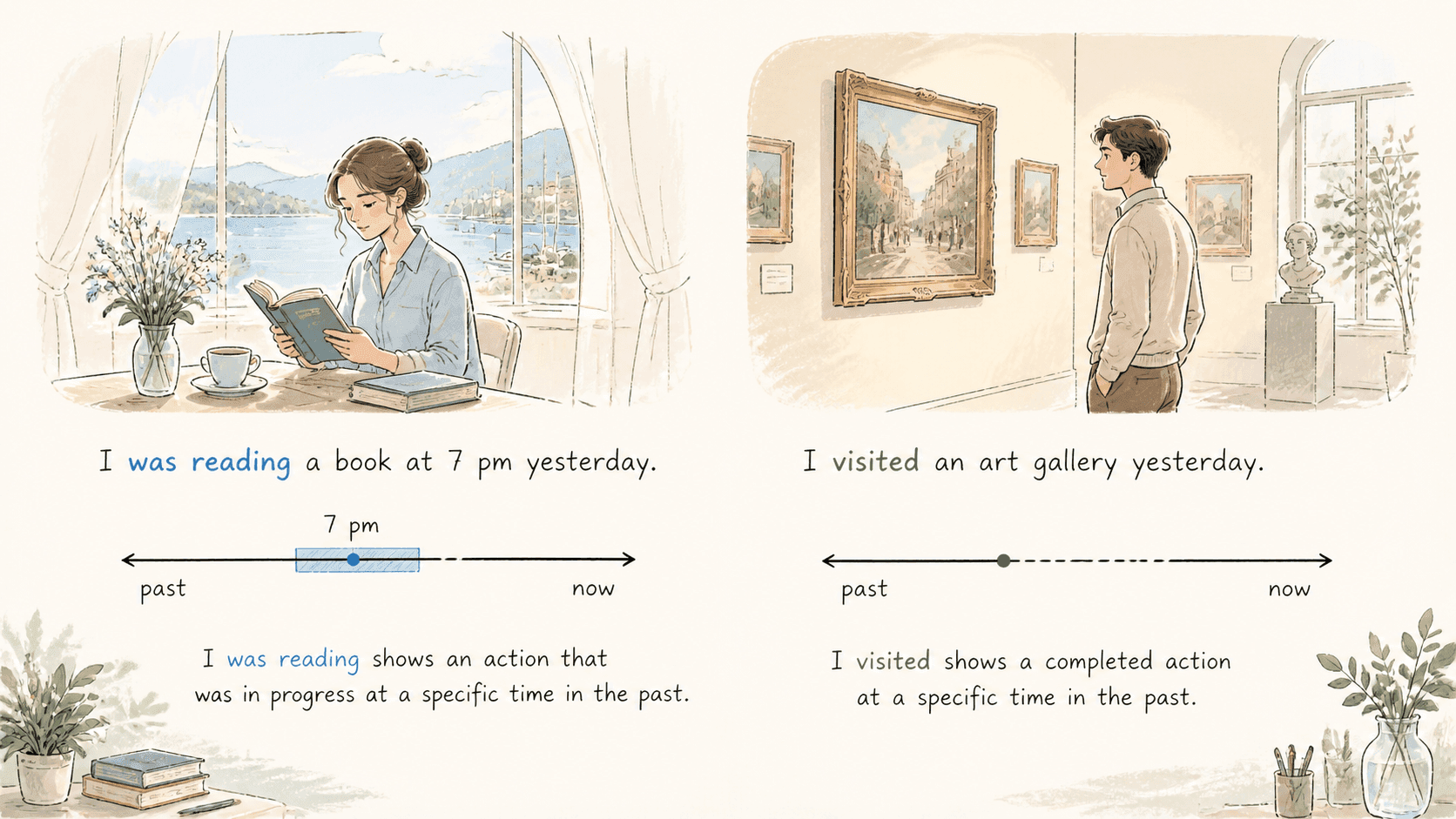
这两个时态在叙事中经常结合使用,但各自有明确的分工:
-
过去进行时用于描述某时正在进行/延续的动作(如 She was sleeping at 9.),而一般过去时用于表达已经发生的一件事(如 She fell asleep at 9.)。
-
在讲述故事时,过去进行时用于营造背景氛围(如 It was raining outside.),而一般过去时推动主要情节的发展(如 He opened the door and walked in.)。
-
当长动作被短动作打断时,长动作用过去进行时(如 I was studying...),短暂/打断动作用一般过去时(如 ...when the power went out.)。
下面例句说明两种时态的配合用法:
Yesterday afternoon, I was playing basketball in the gym. Suddenly, I slipped and fell, hitting my arm on the floor. Now my arm is badly bruised, but luckily it’s not broken.
昨天下午,我正在体育馆打篮球。突然我滑倒了,把胳膊磕在了地板上。现在胳膊有点严重淤青,还好没有骨折。
这个例子里,"I was playing basketball" 使用过去进行时,交代了正在进行的背景动作;"I slipped and fell, hitting my arm" 则用一般过去时,描述了发生的主要事件。通过两种时态的配合,清楚展现了事件的来龙去脉和背景氛围。
-
I was cooking dinner when the lights went out.
我正在做饭,这时灯突然灭了。 -
While the children were playing in the park, it started to rain heavily.
孩子们在公园玩的时候,突然下起了大雨。 -
He was reading a book when someone knocked on the door.
他正在看书,这时有人敲门。
这些例句都体现:过去进行时(was/were + 动词-ing)突出动作的背景或延续性,而一般过去时则描述发生的主要事件或突发情况。灵活运用这两种时态,能让表达更加流畅、画面更生动。
两个动作同时进行
当两个动作在过去同一时间段内同时进行,通常这两个动作都要用过去进行时,常用 while 来连接它们,强调“正在进行的两个动作是并行发生的”。while 可以放在句首或句中,两个动作的主语可以相同也可以不同。
While I was cooking, my husband was helping the kids with their homework.
我做饭的时候,我丈夫在帮孩子做作业。
She was talking on the phone while her colleague was presenting the slides.
她打电话的时候,她的同事正在展示幻灯片。
同样地,while 也可以连接由同一个人做的两件事:
-
While I was listening to music, I was reading a magazine.
我在听音乐的同时,还在看杂志。 -
While they were traveling around Europe, they were making lots of new friends.
他们在欧洲旅游的时候,也在不断结交新朋友。
还可以把 while 放到句中,结构是:主语1 + was/were + v-ing + while + 主语2 + was/were + v-ing:
-
My brother was watching TV while I was finishing my homework.
我在写作业的时候,我哥哥在看电视。 -
The children were playing games while their father was cooking dinner.
孩子们在玩游戏的时候,爸爸在做晚饭。
有时 even as 也可以表达类似的“同时”,但 while 更常用、更口语化。
这种结构强调两件事同步进行,while 在句子中起到“同时”的连接作用。通过这样表达,可以很好地描绘出某个过去时刻、两件事并行发生的“画面感”,让你的描述更丰富、更有层次。在叙述生活习惯、工作流程、描述某段往事时非常常用。
可以尝试用一些自己的例子进行练习,比如:
-
While I was waiting for the bus, I was reading the news on my phone.
我等公交的时候,一边在手机上看新闻。 -
My friends were chatting while we were walking in the park.
我们在公园散步的时候,我朋友们一直在聊天。
在写作或口语表达中灵活使用这种结构,会让你的英语显得更自然、更地道。
练习题
第一题(选择题)
知识点:was / were 的选择
下面哪个句子的 was / were 用法是正确的?
A. You was working very hard last night.
B. My parents was watching TV when I got home.
C. The children were playing in the garden all afternoon.
D. She were sleeping when the alarm went off.
第二题(选择题)
知识点:when / while 在“被打断”结构中的用法
下面哪个句子正确描述了“一个动作被另一个动作打断”?
A. While the phone rang, I was cooking dinner.
B. I was reading when my cat knocked the book off the table.
C. When I was watching TV, the storm.
D. She was calling when talked to him.
第三题(选择题)
知识点:过去进行时与一般过去时在叙事中的配合
阅读以下句子,选出时态搭配最正确的一项:
A. I cooked dinner when my friend was called me.
B. While we were hiking, it started to rain heavily.
C. The sun was shining, and then we have a picnic.
D. She was fall asleep while watching the movie.
第四题(情景问答)
知识点:过去进行时 + 一般过去时的叙事结构
描述一个你亲身经历过(或能想象的)突发事件:某件意外的事,打断了你正在做的事。使用过去进行时描述当时正在做的事,用一般过去时描述打断你的那件事。
第五题(情景问答)
知识点:用过去进行时设置故事背景
用过去进行时写出一个“场景描写”片段:描述一个你印象深刻的场景(可以是旅途中、聚会上、某个特别的早晨等),用2~3句过去进行时描述当时的背景氛围,再用一句一般过去时说出发生了什么事。