写时间顺序段落
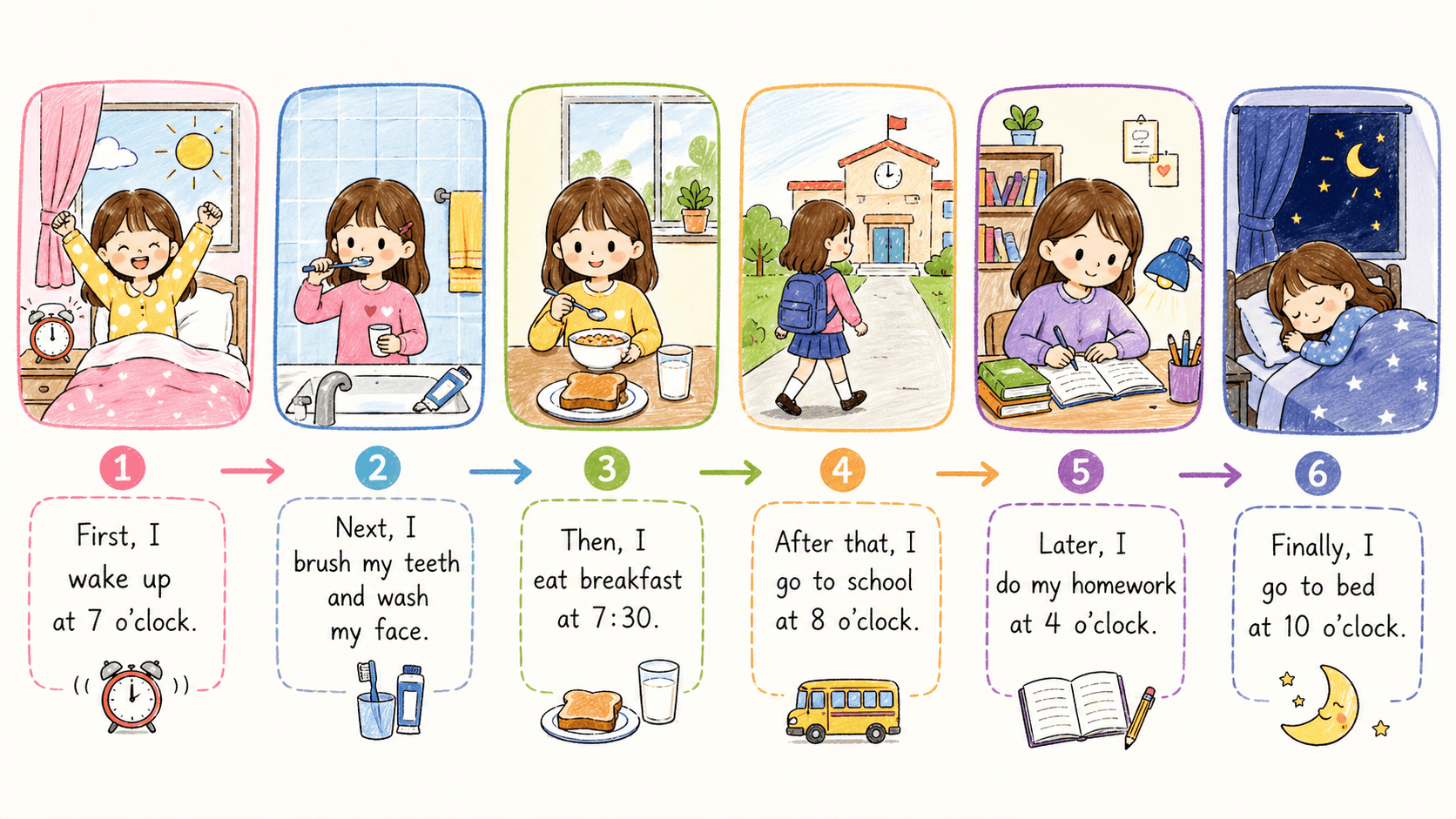
在英语写作中,时间顺序是一种极其常见也很自然的表达方式,也是清晰叙事和说明不可或缺的重要手段。当我们描述一件事情的经过、回忆一天的活动、说明某个操作流程,或者讲述一个小故事时,几乎都会按照事件发生的先后顺序来安排内容。这样的结构不仅能帮助读者清楚地把握事情的发展脉络,理顺整个事件的逻辑关系,还能让叙述显得条理分明,易于理解和跟进。
在时间顺序写作中,我们常常会用到各种各样的时间连接词。比如“first(首先)”、“then(然后)”、“after that(之后)”、“finally(最后)”等,这些词语像“桥梁”一样,把不同的事件或步骤自然、流畅地串联起来。恰当使用这些连接词,能够帮助我们清晰地表达事件的因果关系、发展顺序和最终结果,让段落读起来不至于杂乱无章。合理安排时间线,也可以让读者像亲身经历一样,随着叙述一步步推进,理解每一个细节的来龙去脉。
无论是在日常生活中的经历叙述、流程说明,还是写作简单的英文小故事,掌握好时间顺序结构和常见的时间连接词,都会让你的表达思路更清晰,内容更容易被理解和记住。只有把握住“什么时候发生了什么”,我们才能写出有条理、有画面的好段落,让读者读起来明白,也更愿意继续读下去。
什么是时间顺序段落?
时间顺序段落是英语写作中重要的段落类型之一,其主要特点是内容的展开完全依照事件的实际发生顺序来进行。这种段落结构通常有以下显著特征:
这种结构有助于使写作更有条理,更易让读者理解每个事件之间的因果和关联。
典型应用场景:
- 讲述一次旅行或外出经历
- 描述如何完成某项任务(如做饭、完成作业等)
- 记录一天或某段时间的日程安排
- 叙述一个历史事件的经过
- 详细解释一个操作流程的步骤
- 回忆某件事情的发展变化或个人成长经历
不只是限于讲故事,“说明文”、日常事务回忆、科技说明等也非常适宜用时间顺序写法。
时间顺序连接
在构建时间顺序段落时,时间连接词起到承上启下、衔接事件的作用。合理灵活地选择和运用这些连接词,可以让叙述更加流畅和易懂。除了经典连接词外,还可以尝试多样表达,使文章更有变化和表现力。
还可以根据描写内容选择不同的时间连接表达,如:“That evening”、“A few hours later”、“Soon afterwards”、“Right before...”、“From then on”等,用以丰富句型、强化逻辑。如果段落较长,建议在每一环节前都加入时间连接词,有助于使叙述步骤清晰、连贯。
段落结构模板
一个时间顺序段落通常包含三个主要部分:开头介绍(主题句)、中间发展(顺序展开)、结尾总结(结果或感悟)。下面给出详细结构说明及举例。
-
开头(主题句)
点明“什么时候、什么事件、什么人”,设定时间背景,介绍主角和发生的场景,为后文做铺垫。
英文示例:Yesterday, I had a really exciting day. (昨天,我度过了非常激动人心的一天。)
Making a cup of coffee is easy if you follow these steps. (如果你按照这些步骤来做,煮一杯咖啡很容易。)
-
中间(经过/发展句)
按照时间顺序描述主要过程或事件经过,可用时间连接词如 First, Then, Next, After that 等,细致叙述每个环节,适当展开细节、心理描写。
英文示例:First, I poured some water into the kettle. (首先,我把一些水倒进了水壶。)
Then, I waited for it to boil. (然后,我等水烧开。)
Next, I placed the coffee grounds in the filter. (接着,我把咖啡粉放进滤纸里。)
-
结尾(结尾句/感受)
总结事情的结果、影响,或表达感受、体会,让段落收束。可用 Finally, In the end, At last, Looking back 等表达。
英文示例:Finally, I enjoyed a delicious cup of coffee. (最后,我享用了一杯美味的咖啡。)
Looking back, the whole experience taught me to be patient. (回头看,这次经历教会了我要有耐心。)
模板示意:
- 主题句(时间、事件、对象)
- First, … (事件一/第一步)
- Then, … / Next, … (事件二/第二步)
- After that, … (事件三/第三步,可以根据需要继续展开)
- Finally, … / At last, … (结果或结局)
- 总结句(感受/评价/反思,选填)
这样写出来的时间顺序段落条理分明,易读易懂,也利于读者追踪事件的全过程。
示范段落一:叙述一次意外事件
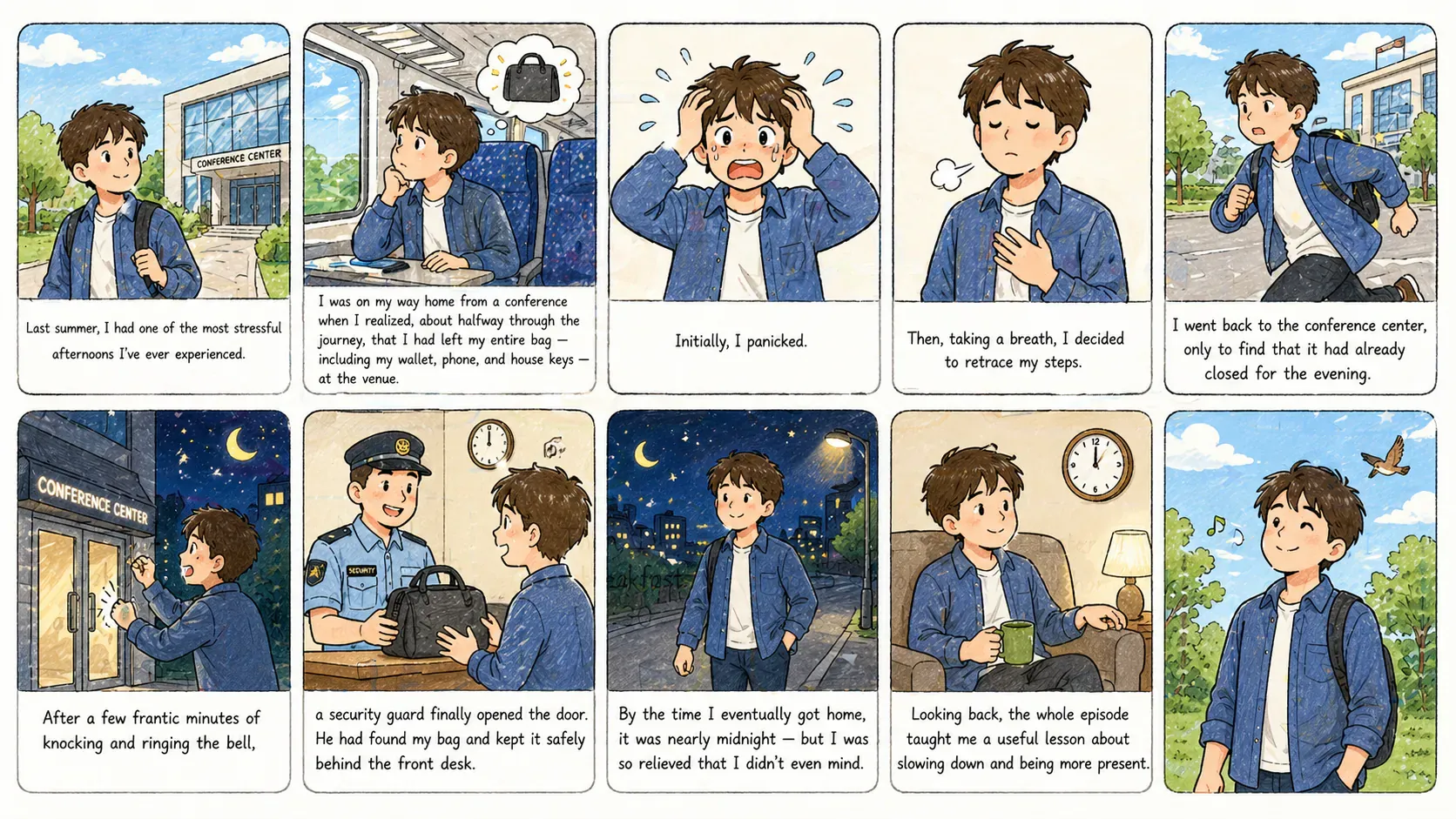
Last summer, I had one of the most stressful afternoons I've ever experienced. I was on my way home from a conference when I realized, about halfway through the journey, that I had left my entire bag — including my wallet, phone, and house keys — at the venue. Initially, I panicked. Then, taking a breath, I decided to retrace my steps. I went back to the conference center, only to find that it had already closed for the evening.
(去年夏天,我经历了迄今为止最紧张的一个下午。我正在从一个会议回家的路上,到了大约一半的路程时,我意识到我把整个包——包括钱包、手机和家门钥匙——忘在了会场。起初,我慌了。然后,深呼吸,我决定原路返回。我回到了会议中心,却发现它已经关门了。)
After a few frantic minutes of knocking and ringing the bell, a security guard finally opened the door. He had found my bag and kept it safely behind the front desk. By the time I eventually got home, it was nearly midnight — but I was so relieved that I didn't even mind. Looking back, the whole episode taught me a useful lesson about slowing down and being more present.
(在几分钟疯狂地敲门和按门铃之后,一位保安终于开了门。他找到了我的包,安全地放在前台后面。等我终于回到家时,已经将近午夜了——但我太如释重负了,甚至没有在意。回想起来,整件事给我上了一堂有用的课:放慢脚步,活在当下。)
结构分析:
- 主题句:“I had one of the most stressful afternoons...”(引出话题)
- “I was on my way home when I realized...”(背景 + 突发)
- “Initially... Then... I went back... only to find...”(顺序展开)
- “After a few frantic minutes... finally...”(过程细节)
- “By the time I got home”(到达时间点)
- “Looking back...”(总结反思)
示范段落二:描述一个操作流程
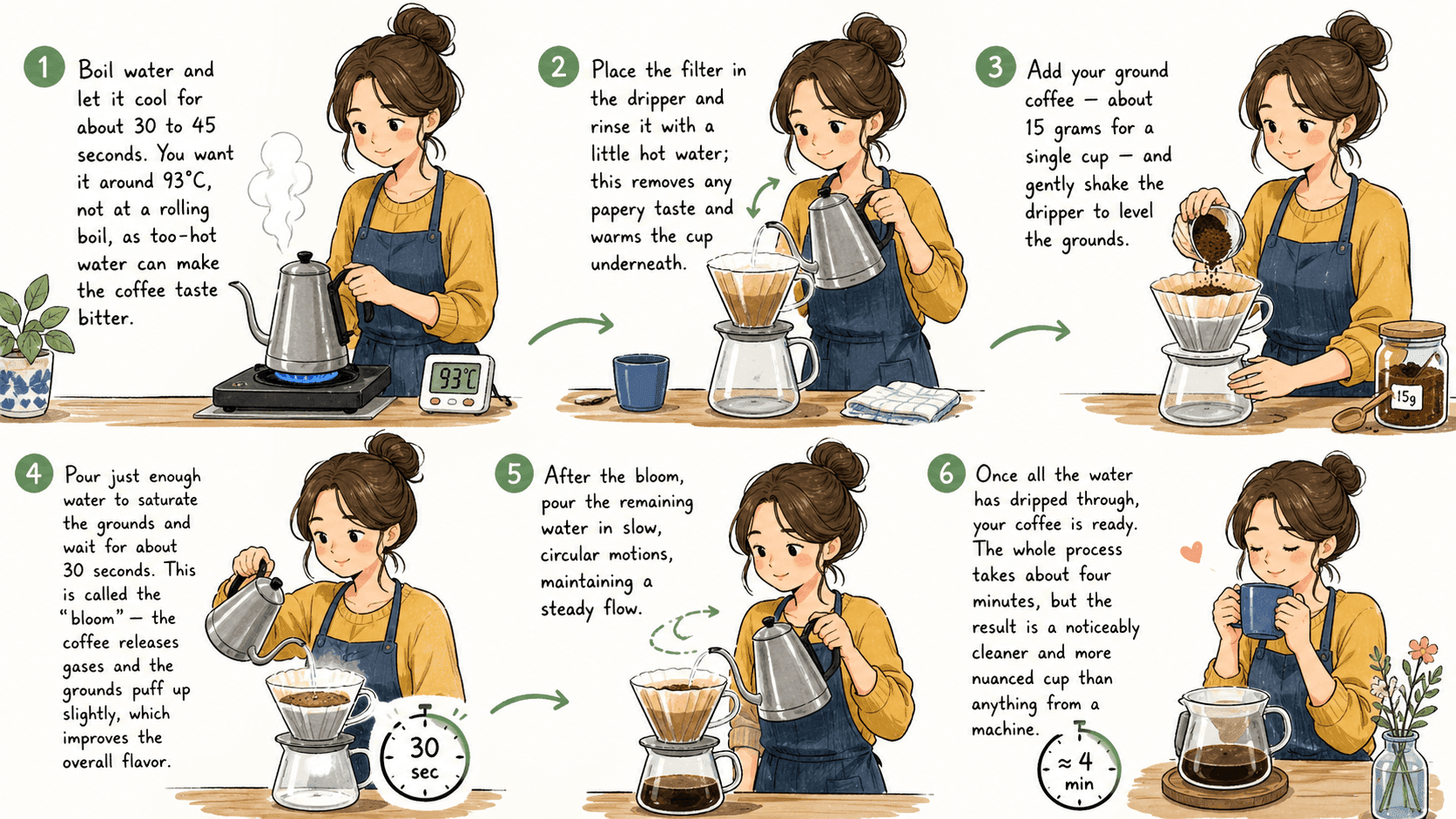
Making a good cup of pour-over coffee is both simple and meditative once you get the hang of it. Start by boiling water and letting it cool for about 30 to 45 seconds — you want it around 93 degrees, not at a rolling boil, as too-hot water can make the coffee taste bitter. While the water is cooling, place the filter in the dripper and rinse it with a little hot water; this removes any papery taste and warms the cup underneath. Then, add your ground coffee — about 15 grams for a single cup — and gently shake the dripper to level the grounds.
(学会之后,制作一杯好的手冲咖啡既简单又有冥想感。首先,将水烧开,然后让它冷却大约30到45秒——你想要它在93度左右,而不是滚沸状态,因为过热的水会让咖啡产生苦味。趁水冷却时,将滤纸放入滤杯中,用少量热水冲洗一下;这能去除纸的味道,同时预热下面的杯子。然后,加入研磨好的咖啡——一杯大约15克——轻轻摇晃滤杯使咖啡粉平整。)
Next, pour just enough water to saturate the grounds and wait for about 30 seconds. This is called the “bloom” — the coffee releases gases and the grounds puff up slightly, which improves the overall flavor. After the bloom, pour the remaining water in slow, circular motions, maintaining a steady flow. Finally, once all the water has dripped through, your coffee is ready. The whole process takes about four minutes, but the result is a noticeably cleaner and more nuanced cup than anything from a machine.
(接下来,倒入刚好够让咖啡粉湿润的水,等待约30秒。这叫做“闷蒸”——咖啡释放气体,粉层略微膨胀,这能改善整体风味。闷蒸后,以缓慢的圆周运动倒入剩余的水,保持稳定的流速。最后,一旦所有的水都滴落,你的咖啡就准备好了。整个过程大约需要四分钟,但结果是一杯比任何机器出品都明显更干净、更有层次的咖啡。)
常见错误
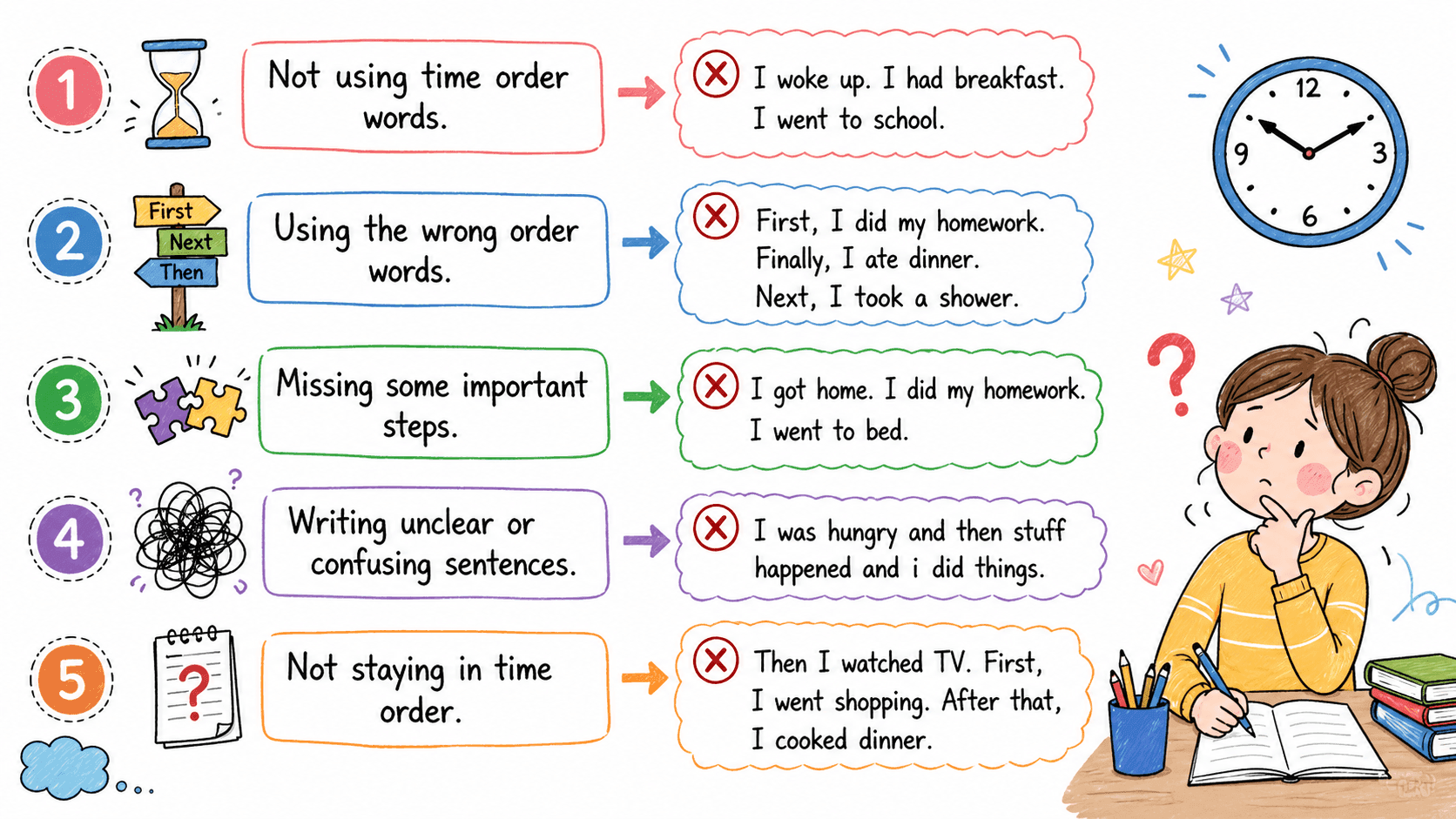
错误一:缺少过渡词,时间跳跃
在写时间顺序段落时,很多同学容易忽略过渡词的使用,导致句子之间显得孤立、没有层次。缺乏过渡词会让读者感觉只是在简单罗列事件,无法清晰地把握事件的整体脉络和因果关系。
❌ “I arrived at the airport. I checked in. The flight was delayed. I missed my connection.”
(每句话都是孤立的事实,感觉像在列清单,没有叙事感。)
比如上面的例子,你会觉得像“流水账”一样,发生的事件之间没有明显的联系,读者需要自己去猜测事件之间的时间或因果关系。
对比下正确的表达:
✅ “When I arrived at the airport, I checked in without any problems. However, shortly after, I noticed on the departures board that my flight was showing a two-hour delay. By the time it finally departed, I had already missed my connecting flight.”
(当我到达机场时,办理登机手续一切顺利。然而,不久之后,我在出发显示板上注意到我的航班显示延误了两小时。等到它终于起飞时,我已经错过了我的转机航班。)
用了“when... however... shortly after... by the time”,时间线清晰,事件之间有因果关系。
这样利用过渡词和时间状语能让事件自然衔接,读者能顺利追踪故事发展。例如:“when”说明是在到达机场后发生的事情,“however”引出转折,“shortly after”说明事情紧接着发生,“by the time”强调结果发生的时间点。建议写作中灵活使用这些时间、因果、转折连接词如:then, next, after that, suddenly, finally, therefore, because, as a result 等,让段落更连贯流畅。
错误二:时态混乱
时间顺序段落通常要求时态要前后一致,不能随意切换。如果句子时态混用,容易让人产生“过去和现在在同时发生”的错觉,影响理解。
❌ “First I went to the market, then I am buying some vegetables, and then I cooked dinner.”
(过去式和现在进行时混用,时态不一致。)
比如这句,用了“went”(过去式),”am buying“(现在进行),和“cooked”(过去式),整段话时间顺序就变得混乱。
正确写法应保持时态一致:
✅ “First, I went to the market and bought some vegetables. Then, I went home and cooked dinner.”
(首先,我去了市场,买了一些蔬菜。然后,我回家做了晚饭。)
始终用过去式,时态一致。
如果是在叙述自己过去完成的事情,请始终用过去时。保持同一段落时态统一,不仅有助于表达清晰,也让读者把握时间线。
错误三:事件细节过少、表达过于简单
有些同学常常只写结果,不写过程,让段落显得单薄。
❌ “I prepared breakfast. I ate it. I went to school.”
(只列结果,没有过程,缺乏细节。)
建议多加入一些具体细节和情感:
✅ “First, I prepared breakfast by frying two eggs and making a cup of coffee. After enjoying my meal, I quickly packed my bag and left for school, feeling excited about the day ahead.” (首先,我煎了两个鸡蛋并冲了一杯咖啡作为早餐。享用完早餐后,我迅速收拾书包,带着对新一天的期待心情前往学校。)
这样段落更细腻丰富,情节更完整,也更能吸引读者。
总结
写时间顺序段落时,避免生硬的罗列,务必注意:
- 恰当地使用过渡词/连接词
- 保持时态统一
- 增加细节和过程描述
- 合理表达因果、顺承和转折关系
这样,文章才会条理清晰、层次分明,更具表现力。
练习题
练习一(选择题)
知识点:时间连接词的选择
“她先打了个电话,_____ 出发去了机场。”选出最合适的连接词:
A. Meanwhile
B. Eventually
C. Then
D. Initially
练习二(选择题)
知识点:段落时态一致性
下列哪个段落时态最一致、最正确?
A. First, I woke up at 7. Then I am having breakfast. After that, I left for work.
B. First, I woke up at 7. Then I had breakfast. After that, I left for work.
C. First, I wake up at 7. Then I had breakfast. After that, I will leave for work.
D. First, I woke up at 7. Then I had breakfast. After that, I leave for work.
练习三(选择题)
知识点:“by the time”的用法
“By the time we arrived at the station, the last train ___.”空格中应填:
A. has already left
B. already left
C. had already left
D. will already leave
练习四(情景问答)
知识点:写一段完整的时间顺序叙事段落
情境: 请用英语写一段话(7-9句话),叙述你印象最深的一次旅行中的某一天(或某一段经历),要求:① 有清晰的时间线,用至少四个不同的时间连接词;② 时态保持一致(过去式);③ 有主题句和结尾句。
练习五(情景问答)
知识点:描述一个操作或制作流程
情境: 请用英语写一段流程说明(6-8句话),描述如何做一道你熟悉的菜或饮料(也可以是冲泡茶、做三明治等简单食物),用时间顺序连接词组织步骤,并在结尾加一句评价。